
Sigenergy has become one of the fastest-growing names in home battery storage. Its SigenStor system is sleek, modular, powerful, and increasingly popular with UK homeowners looking to store solar energy, charge batteries on cheaper tariffs, and make smarter use of the grid.
- What is the Sigenergy SigenStor system?
- What is the issue with the AC plug?
- Why does this matter more with battery storage systems?
- Is this a recall?
- Which Sigenergy products are affected?
- Was this installer error or a design flaw?
- Why were installers using twin and earth cable?
- What has Sigenergy done about it?
- Should homeowners be worried?
- What should affected customers do?
But recently, one component has been getting a lot of attention: the AC plug on certain higher-powered SigenStor Energy Controllers.
Images of overheated and damaged connectors began circulating online, especially from installers in Australia, triggering a wider debate across the solar and battery industry. Was this a product design issue? Was it an installation issue? Or was it something more complicated?
The UK’s Office for Product Safety and Standards has now published a Product Safety Report for the Sigenergy SigenStor Energy Controller with quick connect AC plug.
The report lists the risk level as low, with the hazard described as potential overheating and burns in rare cases where the plug has not been installed in accordance with the manufacturer’s instructions.
Sigenergy has initiated a modification programme involving customer warnings, inspection, and repair of affected products.
So, let’s break down what actually happened.
What is the Sigenergy SigenStor system?
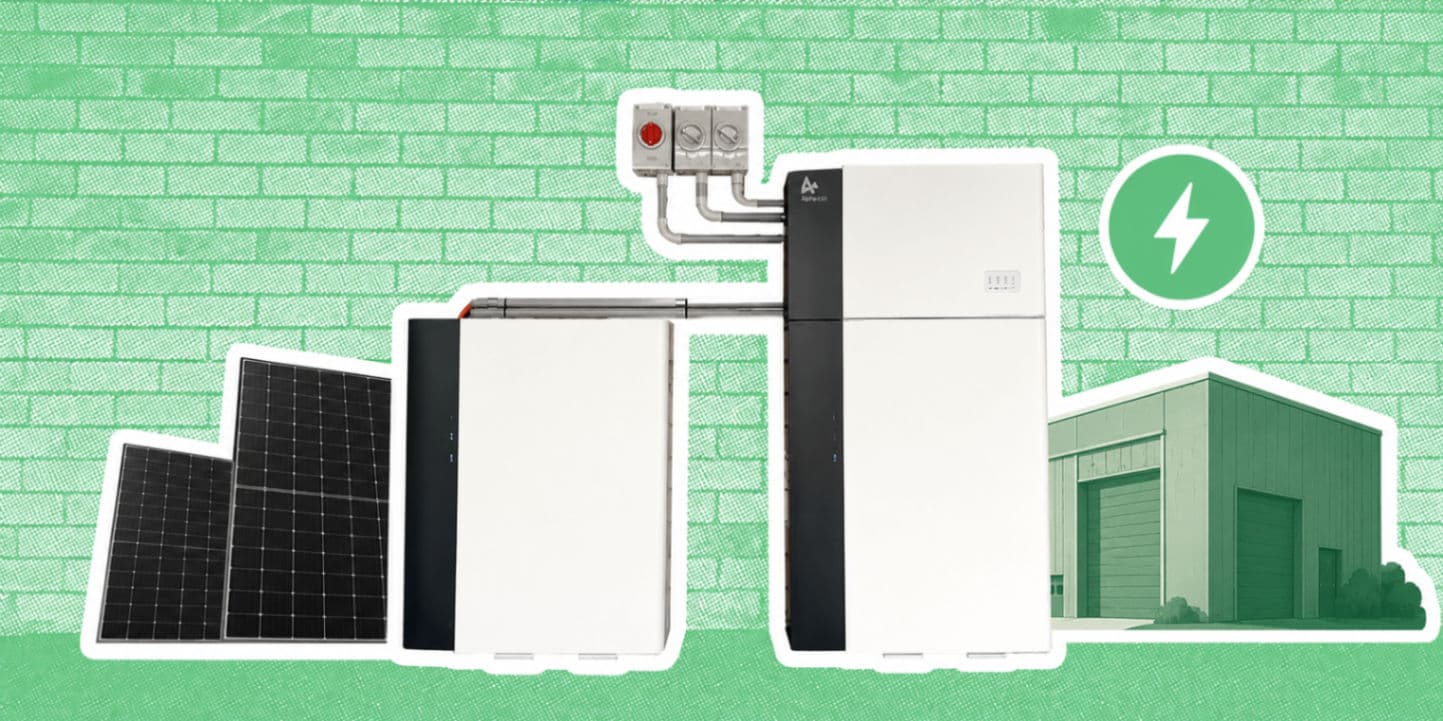
The Sigenergy SigenStor is a home energy storage system. In simple terms, it helps manage electricity from your solar panels, your home battery, and the grid.
The Energy Controller is the part of the system that manages power flow. It takes electricity from your solar panels, sends energy to and from the battery, and connects the system back to your home.
That connection back to the property is where the issue has appeared.
On certain single-phase 8kW, 10kW, and 12kW SigenStor Energy Controllers, the AC plug connector has been identified as a potential problem area if it is not installed exactly as specified.
The OPSS report specifically names the 8.0kW, 10.0kW, and 12.0kW connectors for single-phase supply.
What is the issue with the AC plug?
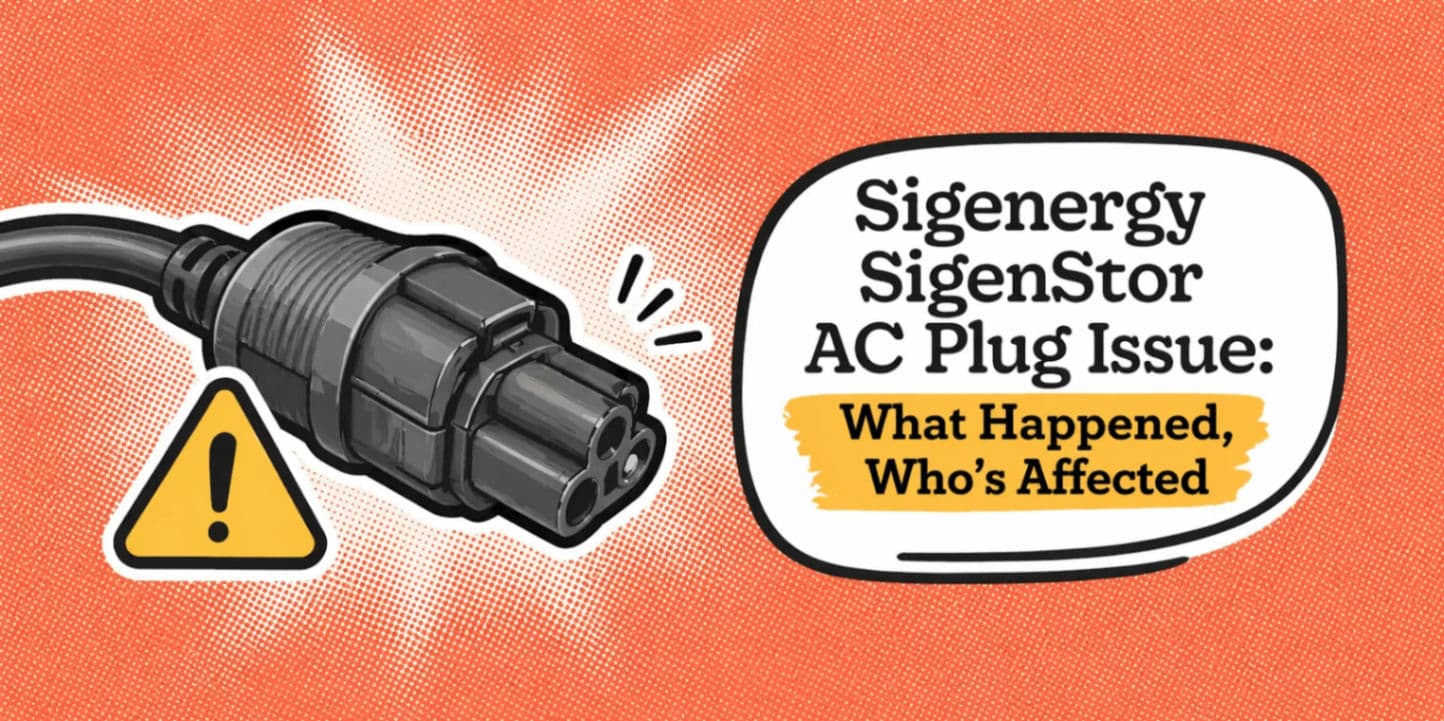
The issue relates to the AC plug connection.
In some reported cases, this connector has overheated, melted, or shown signs of damage. Understandably, that caused concern among installers and customers.
Sigenergy’s position has been that the issue is linked to installation conditions rather than a fundamental product defect. The OPSS report also states that overheating may occur in rare cases where the quick connect AC plug has not been installed in accordance with the manufacturer’s instructions.
The core debate comes down to cable choice and how the connection is terminated.
For these higher-powered models, the installation guidance requires the correct type of cable and termination method. In particular, the recommended setup uses suitable flexible cable and ferrules, which help create a secure, properly clamped connection.
Some installers, however, appear to have used twin and earth cable. Twin and earth is common in UK fixed wiring, but it does not allow the same termination method required by the manufacturer for this connector.
That matters because a poor or stressed connection can generate heat. Add high loads, repeated charging and discharging, and regular energy trading, and even a small weakness at the connection point can become a much bigger problem.
🎥 Watch our YouTube video on the inverter issue below:
Why does this matter more with battery storage systems?
Modern home battery systems are not passive bits of kit sitting quietly on the wall.
Many homeowners use batteries aggressively. They charge during cheaper overnight tariffs, discharge during peak-rate periods, export power when prices are higher, and rely on smart software to optimise energy use throughout the day.
That means current can be flowing through these connections for long periods and at high loads.
If a connection is perfect, that should be fine. If it is not properly terminated, is under mechanical strain, or has been installed using the wrong materials, heat can build up at the connector.
That is why installation quality matters so much.
Is this a recall?
In the UK, this has been published as a Product Safety Report by the Office for Product Safety and Standards, rather than a high-risk product recall.
The report classifies the risk level as low and says Sigenergy has initiated a modification programme to warn customers and arrange inspection and repair of affected products.
In Australia and New Zealand, the issue has been handled through official recall channels for certain single-phase 8kW, 10kW, and 12kW units.
Australian and New Zealand notices describe free replacement or corrective action for affected products.
For UK homeowners, the key point is this: affected systems are being proactively addressed, and customers should follow guidance from Sigenergy, their installer, or their retailer.
Which Sigenergy products are affected?
The reports relate to certain single-phase 8kW, 10kW, and 12kW SigenStor Energy Controllers using the quick connect AC plug.
The OPSS report lists the affected models as:
Product | Affected models |
Sigenergy SigenStor Energy Controller with quick connect AC plug | 8.0kW, 10.0kW, and 12.0kW connectors for single-phase supply |
The commonly installed lower-powered 3kW to 6kW units use a different connection arrangement, which is part of why there has been confusion among installers.
Was this installer error or a design flaw?
This is where the debate gets interesting.
On one side, the instructions were available and specified the correct materials and termination method. If installers used the wrong cable or failed to terminate the connector properly, that points toward an installation issue.
On the other side, some installers argued that the original connector left too little room for error.
Their argument was that a product being installed at scale should make the correct installation path obvious and should be more forgiving of real-world conditions.
The truth is probably less dramatic than the online debate.
This looks like a classic “human factors” issue. The product could be installed correctly, but the installation process may not have aligned neatly with how installers were already working, especially across a fast-growing product range with multiple inverter sizes, connector types, and changing documentation.
In other words, the problem may not be as simple as “bad product” or “bad installer”.
It is more likely a mix of rapid product growth, different connector designs across the range, cable availability, installation habits, and a termination method that needed to be followed precisely.
Why were installers using twin and earth cable?
Twin and earth is widely used in UK electrical installations. It is familiar, readily available, and often more affordable than the specified flexible cable.
In the video, Heatable checked trade counter pricing and found that the recommended materials could be significantly more expensive and less readily available than common twin and earth cable.
That does not mean installers should ignore manufacturer instructions. They shouldn’t.
But it does help explain how the issue may have appeared in the real world. When a product grows quickly, more installers start fitting it, stock availability varies, and not everyone keeps up with every manual change across every model.
That is not an excuse. It is a useful lesson.
For battery storage systems, the installation manual is not optional reading. It is part of the product.
What has Sigenergy done about it?
Sigenergy has responded with a modification and upgrade programme.
According to the OPSS report, the manufacturer has initiated a modification programme to warn customers of the risk and arrange on-site inspection and repair of affected products.
In other markets, official notices describe replacement programmes for affected single-phase 8kW, 10kW, and 12kW inverters, including updated AC plug designs and free replacement for affected customers.
The updated hardware uses a revised connector design intended to simplify installation and reduce the likelihood of incorrect termination. In practical terms, it makes the correct installation method much clearer.
That is a big move.
National upgrade programmes are expensive. They require logistics, installer coordination, customer communication, new hardware, and support. Whatever your view on the original connector, Sigenergy’s response has been proactive.
Should homeowners be worried?
If you have a Sigenergy SigenStor system, there is no need to panic.
The UK Product Safety Report classifies the risk as low and says the issue may occur in rare cases where the AC plug has not been installed in line with the manufacturer’s instructions.
That said, you should not ignore it either.
If you have a single-phase 8kW, 10kW, or 12kW SigenStor Energy Controller, contact your installer or check for any communication from Sigenergy.
Your system may require inspection, modification, or replacement depending on the model and installation.
Do not attempt to inspect or repair the AC connector yourself. This is work for a qualified installer.
What should affected customers do?
If you think your system may be affected:
Check which Sigenergy Energy Controller model you have.
Look for messages from Sigenergy, your installer, or your retailer.
Make sure your system is connected to the internet so firmware updates and monitoring can be applied where relevant.
Arrange an inspection or replacement if advised.
Do not open, remove, or modify the AC connector yourself.
If your system was installed by Heatable, contact our team and we’ll help confirm whether your unit is affected and what happens next.
What does this mean for Sigenergy as a brand?
No manufacturer is immune from product issues, especially in fast-growing sectors like home battery storage.
The real test is how a company responds.
Sigenergy could have left this as a narrow installation issue. Instead, it has initiated a modification programme, updated the hardware, supported inspections, and moved to address affected systems.
That matters.
A home battery is not just a piece of hardware. You are also buying into the software, support, installation ecosystem, warranty process, and the manufacturer’s ability to respond when something needs improving.
On that front, Sigenergy’s response should give customers more confidence, not less.
Final thoughts
The Sigenergy AC plug issue is a reminder of how important correct installation is with high-powered home energy systems.
The affected connector appears to have required very specific materials and termination methods. In some cases, those requirements were not followed, creating the potential for overheating.
At the same time, the speed of Sigenergy’s growth and the variation across its product range likely made the issue easier to stumble into than it should have been.
The good news is that the issue has been formally logged, the UK risk classification is low, and Sigenergy is actively addressing affected products through inspection, repair, and hardware updates.
For homeowners, the practical advice is simple: check your model, speak to your installer, and let a qualified professional handle the inspection.
For anyone considering a battery system, this should not put you off home storage. It should reinforce the importance of choosing a reputable installer, following manufacturer specifications, and buying from a brand that supports its products after installation.