
Make the most of your solar and battery while you wait for your export tariff to go live.
- [1] Use your big appliances when the sun is out
- [2] Don't turn everything on at once
- [3] Let your battery do what you bought it for
- [4] Check your battery settings
- [5] Got an EV? Charge it with sunshine
- [6] Actually look at your solar app
- [7] Get your export tariff paperwork sorted
- [8] Remember: you don't have to export to your current energy supplier
- Should you stop exporting electricity completely?
So, your solar panels are installed. Your battery is charged and ready to go.
Lovely.
Except your energy supplier is still taking its sweet time setting up your new import or export tariff.
Unfortunately, this bit can take longer than anyone would like.
The good news? You don’t need to sit around wasting perfectly good solar energy while you wait.
Here’s how to squeeze as much value as possible out of your solar panels and battery in the meantime.
Get £50 credit when you switch to Octopus. Existing customer? You may benefit too. T&Cs apply. One switching offer per household.
First: are you still saving money without an export tariff?
Yes.
Your solar panels will still generate electricity as normal, regardless of whether your export tariff has been activated.
And any electricity you use directly from your panels is electricity you don’t have to buy from the grid.
That’s important because, while the Smart Export Guarantee allows eligible households to get paid for electricity exported to the grid, Ofgem makes clear that you need the correct metering arrangements and an export MPAN in place.
In other words, don’t assume electricity exported before your tariff is fully active will automatically be paid for later.
For now, the game is simple: use as much of your own solar electricity as possible.
[1] Use your big appliances when the sun is out
This is probably the easiest win.
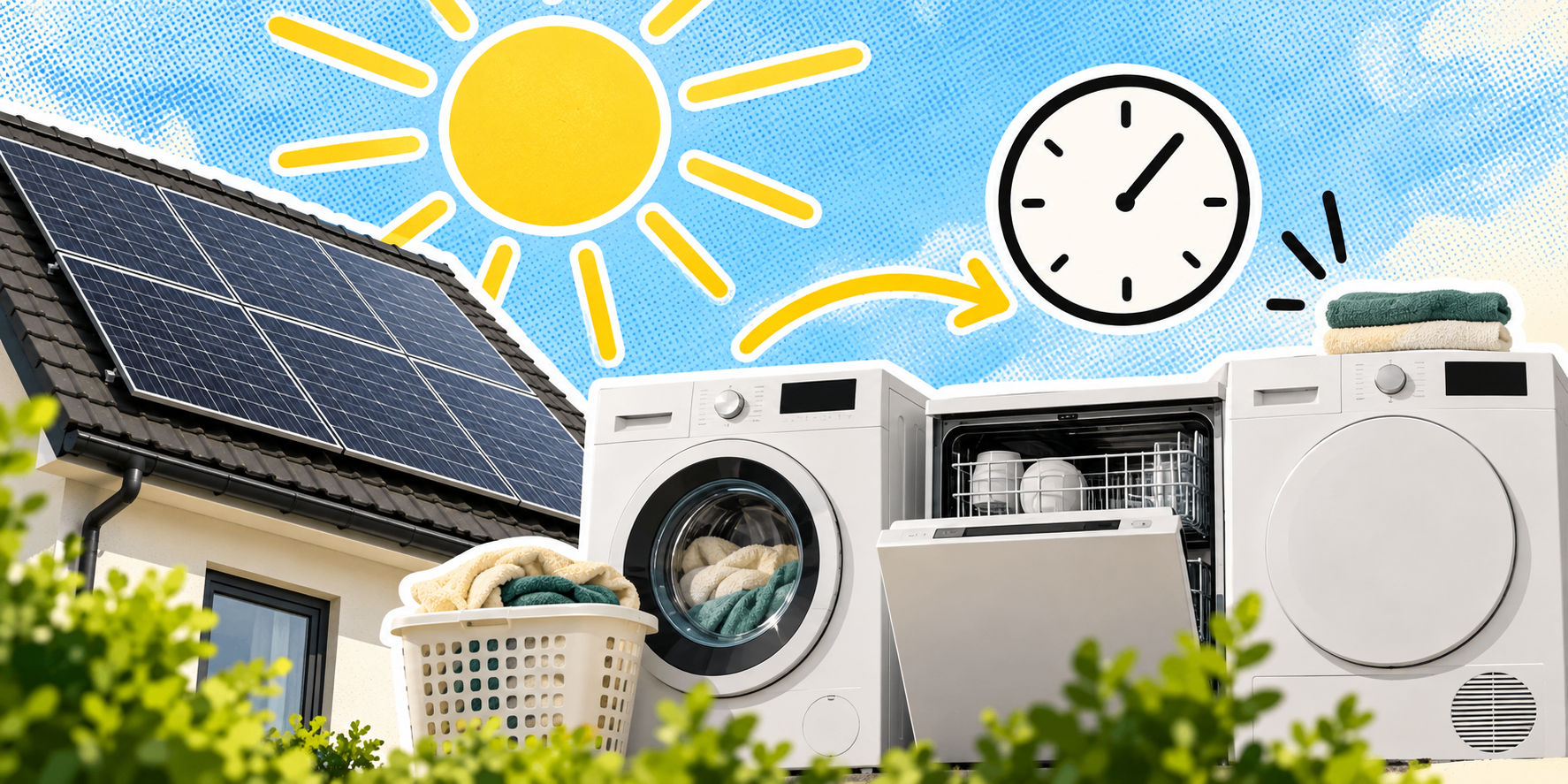
If your solar panels are generating loads of electricity at lunchtime but nobody uses it until 7pm, you could end up exporting electricity during the day and then buying it back from the grid later.
Not ideal.
Instead, where possible, run things like your:
washing machine
dishwasher
tumble dryer
EV charger
during daylight hours.
Most modern washing machines and dishwashers have delay timers, so you don't even need to be at home.
Set them to run when your panels are likely to be doing their best work and let the sun pick up some of the bill.
[2] Don't turn everything on at once
Solar panels aren't an unlimited electricity cheat code.
If your system is producing 3kW and your house suddenly demands 6kW, the remaining electricity still has to come from somewhere.
Usually, that's the grid.
So instead of running the washing machine, dishwasher and tumble dryer at the same time, spread them out:
Dishwasher at 11am.
Washing machine at 1pm.
Dryer afterwards.
Simple, but effective.
[3] Let your battery do what you bought it for
If you've got a battery, you've got a big advantage while you're waiting for your export tariff.
Rather than sending surplus solar electricity straight back to the grid, your battery can store it and give it back to you later.
While you’re waiting for your export tariff to go live, the goal is simple: use as much of your solar electricity at home as you can, store any excess in the battery, and only export what’s left.
That way, more of the electricity you generate during the day is still available in the evening, when your panels have stopped producing and you’d otherwise be buying more from the grid.
And that's exactly why battery storage and solar work so well together.
[4] Check your battery settings
This one's easily overlooked.
A lot of batteries can be programmed to charge from the grid at specific times.
Brilliant if you're on a tariff offering cheap overnight electricity.
Potentially less brilliant if you're still paying roughly the same rate all day.
If your battery completely fills itself from the grid overnight, you've got less room to store the solar energy your panels generate the following day.
Have a look in your battery app for settings such as:
Self Consumption
Solar Priority
Scheduled Charging
Time of Use
Backup Reserve
The names vary between manufacturers.
While you're waiting for your new tariff, a self-consumption or solar-first mode will often make the most sense.
Just don't go changing technical inverter or grid settings you're unfamiliar with. That's installer territory.
[5] Got an EV? Charge it with sunshine
If you've got an electric car sitting on the drive during the day, congratulations.
You've basically got another massive battery.
Charging your EV when your panels are generating can be one of the best ways to use surplus solar electricity.
Some smart EV chargers can even detect surplus solar generation and automatically adjust charging to match.
Very clever.
Just remember that a typical EV charger can demand more electricity than your solar panels are producing, so plugging your car in during the day doesn't automatically mean you're charging entirely from solar.
Your monitoring app should tell you what's actually happening.
[6] Actually look at your solar app
We know.
Another app.
But the first few weeks after getting solar installed are genuinely useful for figuring out how your house consumes electricity.
You want to keep an eye on four things:
Solar generation: How much are your panels producing?
House consumption: How much electricity are you using?
Battery level: When is it charging and discharging?
Grid import/export: Are you buying electricity or sending it away?
You'll quickly start spotting patterns.
If your battery is full by midday and you're exporting loads of electricity every afternoon, that's your cue to move more electricity use into that part of the day.
If you're still importing heavily at 6pm, you might want to preserve more battery energy for the evening.
Small changes can make a surprisingly big difference.
[7] Get your export tariff paperwork sorted
While you're doing all of the above, make sure the boring admin isn't holding things up.
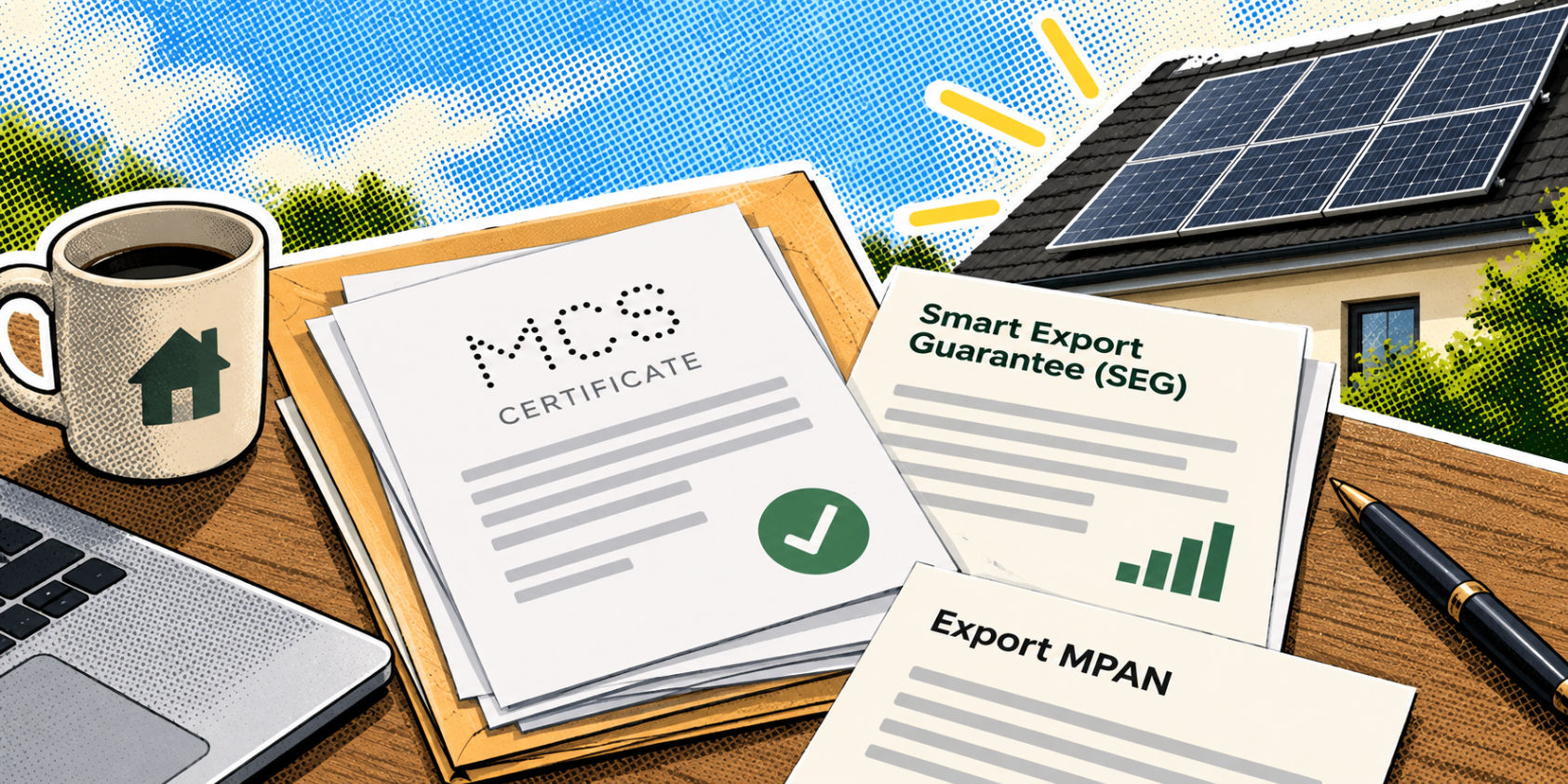
Under the Smart Export Guarantee, eligible installations generally need:
a meter capable of recording export readings
an export MPAN
an eligible renewable generation system
suitable installation certification, typically MCS or an equivalent recognised standard
Your supplier may ask for additional information too.
If something is missing, chase it now rather than discovering the problem three weeks later.
[8] Remember: you don't have to export to your current energy supplier
Here's a useful one.
Your electricity supplier and your export tariff provider don't necessarily have to be the same company.
Ofgem allows households to choose a different SEG supplier for their exported electricity.
That means you don't automatically need to accept whatever export rate your existing supplier offers.
Once your installation is ready, compare what's available.
Because if you're going to sell your electricity back to the grid, you might as well get a decent price for it.
Get £50 credit when you switch to Octopus. Existing customer? You may benefit too. T&Cs apply. One switching offer per household.
Should you stop exporting electricity completely?
We wouldn't.
Unless your installer has specifically configured your system as a zero-export installation, don't start tinkering with inverter export limits or grid settings just to avoid sending electricity away.
Instead, concentrate on increasing self-consumption.
Use electricity while the panels are generating.
Charge the battery.
Charge the car.
Then export whatever's left.
Much simpler.
So, what's the best thing to do while you wait?
If your solar panels and battery are already installed but your new tariff hasn't gone live yet, don't panic.
Your system can still save you money.
The trick is to keep as much of that solar electricity inside your own home as possible.
Run appliances during daylight hours, stagger your electricity use, make sure your battery has room for surplus solar and keep an eye on your monitoring app.
Then, once your export tariff finally goes live, anything you can't use yourself can start earning you money too.
Not a bad little upgrade.