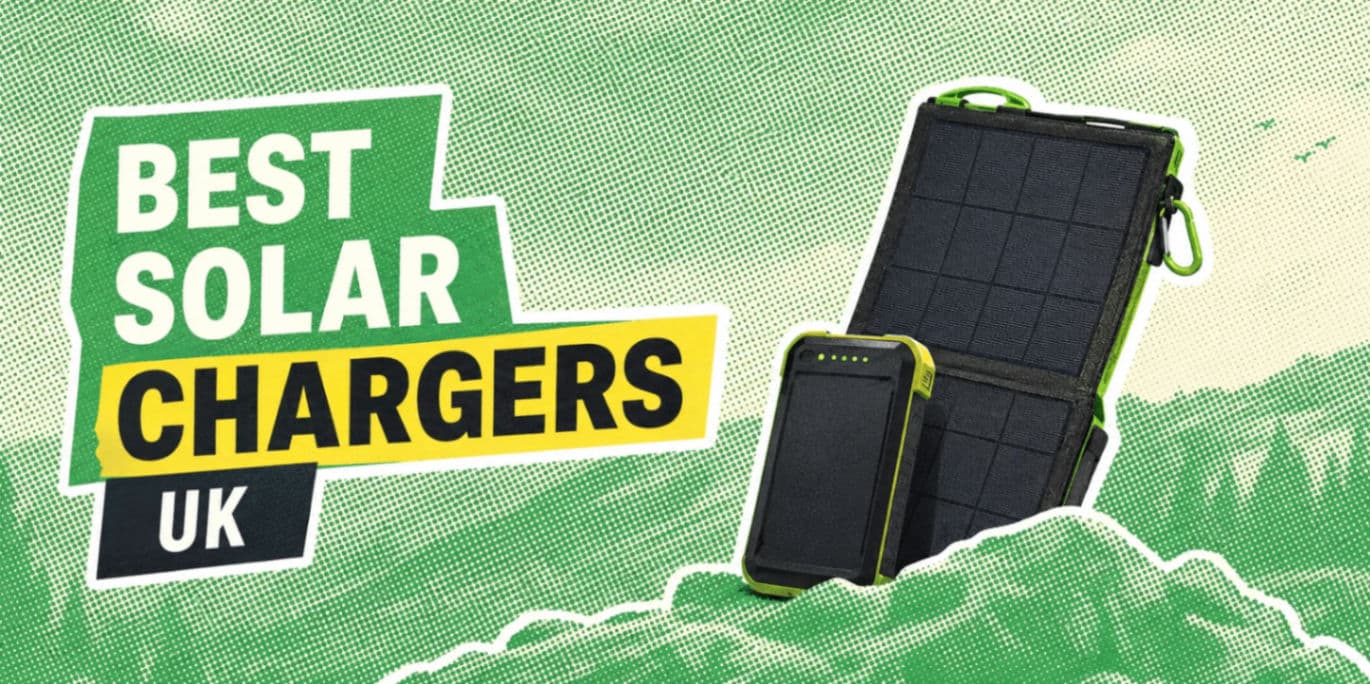

Portable solar chargers can be genuinely useful for camping, hiking, festivals, campervans, or keeping a car battery topped up while it sits on the drive.
They turn daylight into electricity, giving you a way to charge phones, power banks, lights, cameras and other small devices when plug sockets are nowhere to be seen.
But let’s be honest - they are not magic, and they are definitely not the same thing as a proper home solar system.
British weather is, politely, inconsistent. A foldable solar panel can be a brilliant bit of kit on a bright summer camping trip. A tiny panel glued to the back of a power bank? Handy in an emergency, but not something you should rely on as your main charging source.
For topping up a phone at a festival, charging a power bank on a hike, or feeding a portable power station at camp, solar chargers make sense. For powering a kettle, running household appliances, or making a serious dent in your energy bills, you’ll need to lower your expectations - or look at a proper rooftop solar setup instead.
That’s where Heatable comes in. Portable solar chargers are for convenience when you’re out and about. A professionally designed solar panel and battery system is what actually helps power your home, reduce grid reliance and cut energy costs in a meaningful way.
Best Solar Chargers UK: Quick Picks 🥇
Solar charger models, prices and availability change quickly, so always check the latest specs, seller, warranty, ports and compatibility before buying.
The key is matching the right type of charger to the job. A solar power bank for a festival, a 30W foldable USB panel for camping, a 100W panel for a power station and a 12V battery maintainer for a car are all very different products.
Category | Model | Product Type | Best For | Typical Power |
Best overall portable solar charger | Foldable USB solar panel | Camping, phones, tablets, power banks | 28W | |
Best compact solar panel | Foldable USB solar panel | Hiking, camping, small devices | 30W | |
Best budget solar charger | Small foldable USB panel | Festivals, emergency phone top-ups | 14W | |
Best solar power bank | Hiluckey Solar Charger Power Bank 20,000mAh / 27,000mAh models | Battery pack with solar panel | Emergency phone backup | Battery-based |
Best lightweight premium panel | Compact foldable solar panel | Hiking, camping, phones | 40W | |
Best for power stations | Portable panel for Jackery power stations | Camping, off-grid, power stations | 100W | |
Best 100W alternative | Foldable portable solar panel | Power stations, camping | 100W |
Prices are approximate RRPs as of July 2026; check retailers for current prices and deals (table includes affiliate links, which may earn us a small commission - at no extra cost to you.)
Important reminder:
A portable solar panel’s wattage is a best-case figure, not a promise. You only get close to that rating when the panel is correctly angled, in strong direct sunlight, with no shade and with a device that can actually accept the available power.
In the UK, you should expect noticeably less than the headline number for much of the day.
That is the key point. A solar charger can be useful, but only if your expectations are grounded.
A small panel is not a mini power station. A solar power bank is not a home solar system. And a 100W camping panel is still tiny compared with a proper rooftop solar installation, which is measured in kilowatts rather than watts.
What Is a Solar Charger?
A solar charger uses photovoltaic cells to convert daylight into electricity.
Put simply, it takes energy from the sun and turns it into usable power for devices, batteries or portable power stations.
Portable solar chargers are much smaller and less powerful than the solar panels you’d install on a roof.
They’re usually designed for charging things like phones, tablets, cameras, power banks, camping lights, portable power stations or 12V vehicle batteries. They are not designed to run a home.
The confusing bit is that the term “solar charger” covers a very wide range of products.
It might refer to a cheap power bank with a tiny solar panel on the back, a lightweight USB panel for hiking, a 12V battery maintainer for a car, or a much larger folding panel for a campervan or power-station setup.
Those products all work on the same basic principle, but they are not interchangeable. A pocket-sized solar power bank will not perform like a 100W folding panel, and a car battery maintainer is not the same thing as a charger for phones or laptops.
So before buying one, it’s worth being clear about what you actually need to charge, how quickly you need to charge it, and where you’ll be using it.
Best Solar Chargers UK🥇
[1] BigBlue 28W Foldable Solar Charger - Best Overall Portable Solar Charger
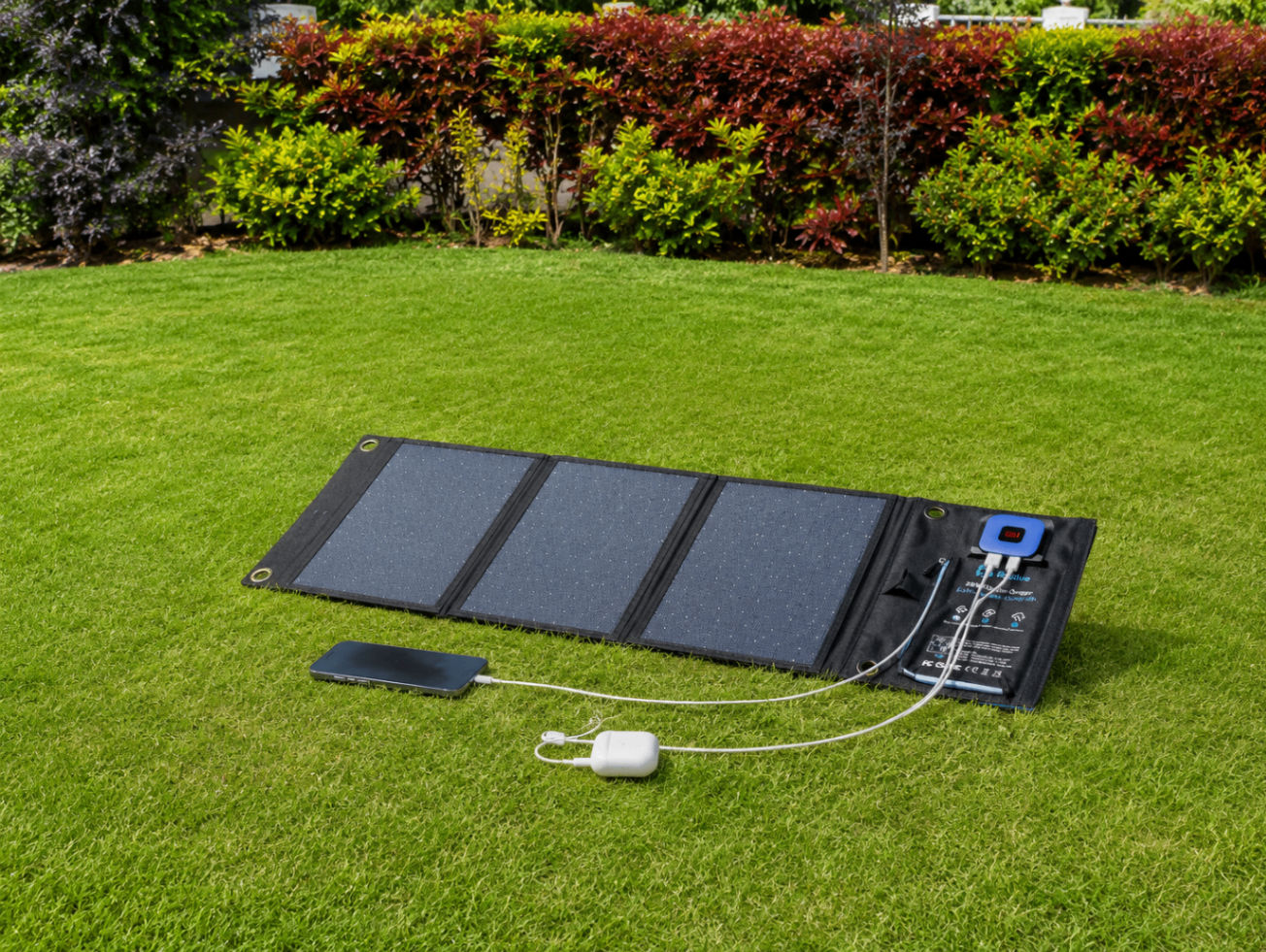
The BigBlue 28W Foldable Solar Charger is one of the better-known portable solar chargers and it occupies a useful middle ground.
It is more capable than the tiny solar panels built into many solar power banks, but still compact enough for camping, festivals, hiking, day trips and emergency backup charging.
It is listed with a 28W rated output, USB-A and USB-C ports, IP44-rated panels and a digital ammeter that shows the real-time charging current.
That last feature is more useful than it sounds, because portable solar chargers rarely deliver their headline wattage in real UK conditions.
Cloud cover, panel angle, shade and time of day all make a noticeable difference, so being able to see the actual charging current helps you position the panel properly.
This is best thought of as a charger for phones, tablets, power banks and small USB devices.
It does not have a built-in battery, so for the most reliable setup, pair it with a separate power bank and charge that during the day, rather than leaving your phone connected to the panel for hours.
Best for: camping, phones, tablets, power banks and general outdoor use.
Pros:
Good balance of portability and output.
Supports both USB-A and USB-C devices.
Digital ammeter helps show real-world charging performance.
More practical than most small solar power banks.
Foldable design makes it easier to pack and carry.
Cons:
No built-in battery.
IP44 means weather-resistant, not fully waterproof.
Real-world output will often be well below 28W.
Works best when paired with a power bank.
Heatable verdict:
The BigBlue 28W is probably the best starting point for most people who want a proper portable solar charger without moving up to a larger 100W camping panel.
It is not powerful enough for serious power-station use, but for phones, tablets and power banks, it offers a sensible mix of size, output and usability.
[2] Anker Solix PS30 - Best Compact Premium Solar Charger
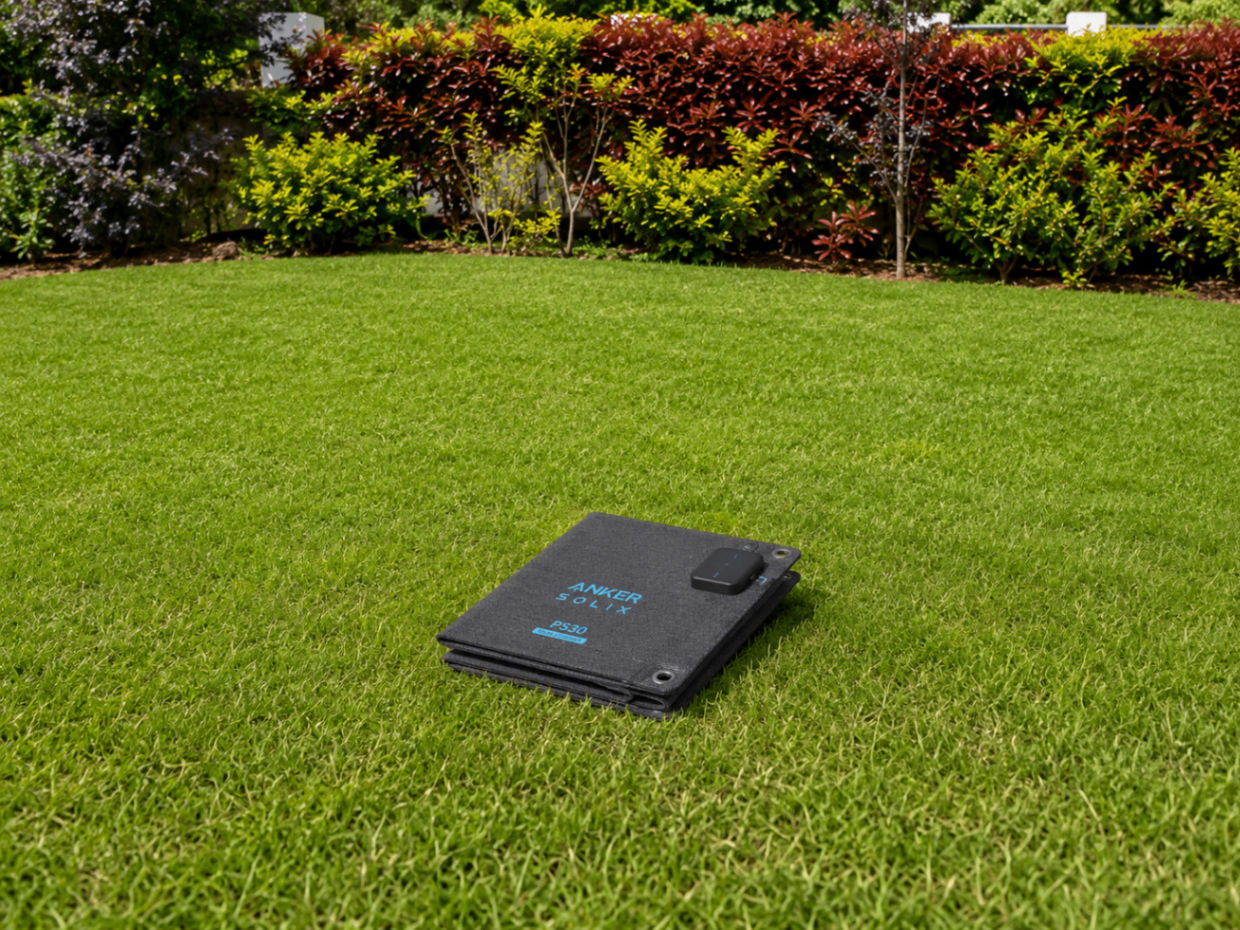
The Anker Solix PS30 is a 30W foldable portable solar panel designed for smaller devices such as phones, tablets, cameras and power banks.
It comes with USB-A and USB-C ports, IP65 water and dust resistance, and a compact folding design.
This is the type of panel that makes sense if you want a neater, more polished option from a recognised brand.
It is still very much a small-device charger, though. It is not a serious laptop charger, and it is not going to refill a portable power station from empty in one gloomy afternoon. For topping up USB devices outdoors, however, it is the right kind of product.
The main appeal is portability. At 30W, it gives you more useful charging potential than the token solar panels built into many cheap power banks, while still being small enough to pack for camping, hiking, festivals or travel.
Best for: hiking, camping, travel, phones, tablets and power banks.
Pros:
Compact, foldable design.
USB-A and USB-C outputs.
Better weather resistance than many budget solar panels.
Reputable brand.
Sensible choice for small-device charging.
Cons:
30W is still a modest output.
Real-world charging speeds will drop sharply in cloud or shade.
Not suitable for heavy power-station use.
Likely pricier than some similar-output budget panels.
Heatable verdict:
The Anker Solix PS30 is a smart option if you want a compact solar charger from a recognised brand and you understand what 30W actually means.
It is built for keeping smaller devices topped up outdoors, not for powering a campsite like a branch of Currys.
[3] BigBlue 14W Solar Panel - Best Budget Solar Charger
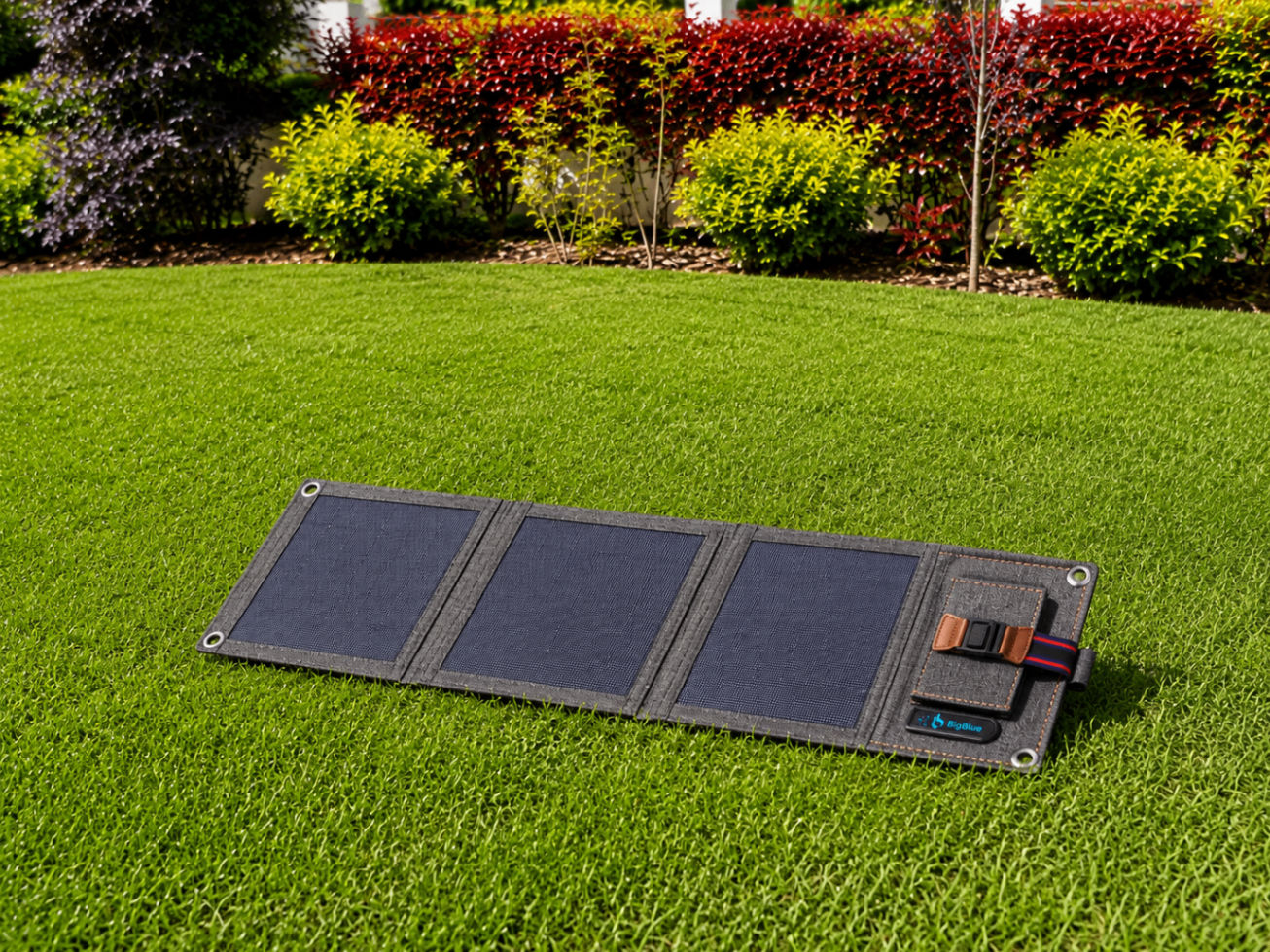
The BigBlue 14W Solar Panel is a smaller, cheaper foldable charger listed that comes with a 14W rating, USB output and IPX4 waterproofing.
This is the sort of charger to consider for festivals, emergency phone top-ups or very light camping.
It is not powerful enough to be your main off-grid charging solution for multiple devices, and it will need decent sunlight to be useful.
Best for: budget buyers, festivals, basic phone charging, emergency use.
Pros:
More affordable than bigger panels.
Lightweight and compact.
Better than relying on a tiny panel built into a power bank.
Cons:
Low output.
Slower in UK cloud.
Not ideal for tablets, laptops or power stations.
Heatable verdict:
Fine if your expectations are modest. Useless if your expectations are ridiculous.
[4] Hiluckey Solar Charger Power Bank - Best Solar Power Bank
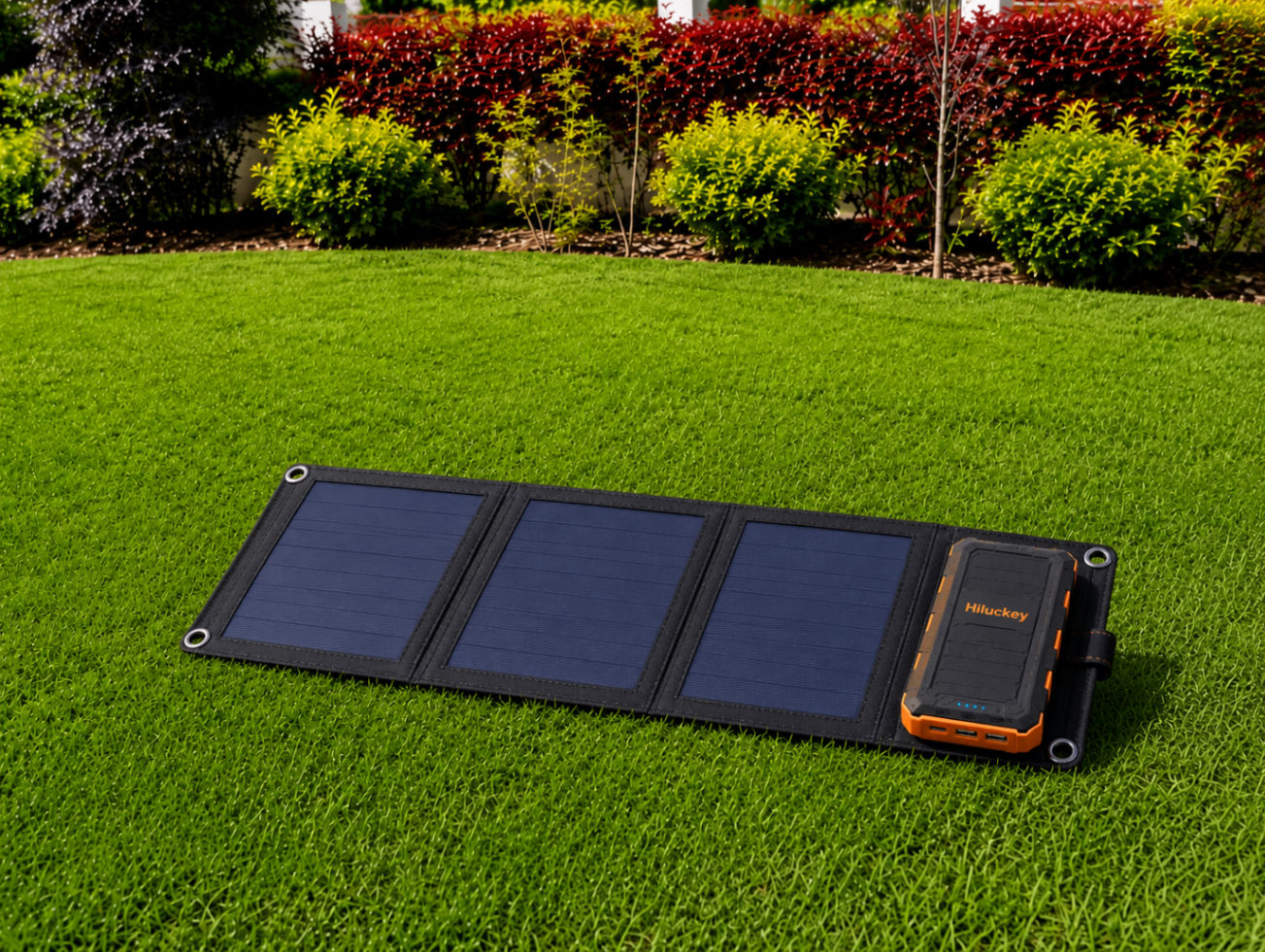
Hiluckey sells several solar power bank models in the UK, including 20,000mAh and 27,000mAh variants.
Current listings include models with USB-C, fast charging claims, built-in cables on some versions and LED lights.
The important bit: buy these primarily as power banks, not as solar panels. The built-in solar panel is usually a backup feature.
It can help in an emergency, but it will not rapidly recharge a large battery from flat unless you have a lot of time, a lot of sun and a lot of patience.
Best for: festivals, emergency backup, occasional camping, phone charging.
Pros:
Built-in battery.
Good emergency backup.
Some models include USB-C, fast charging and torches.
Easy to carry.
Cons:
Solar charging is slow.
Often bulky compared with normal power banks.
Solar panel is a backup, not the main charging method.
Heatable verdict:
Useful as a rugged power bank. Misleading if you expect the little solar panel to perform miracles.
[5] Jackery SolarSaga 40 Mini - Best Lightweight Solar Panel for Hiking
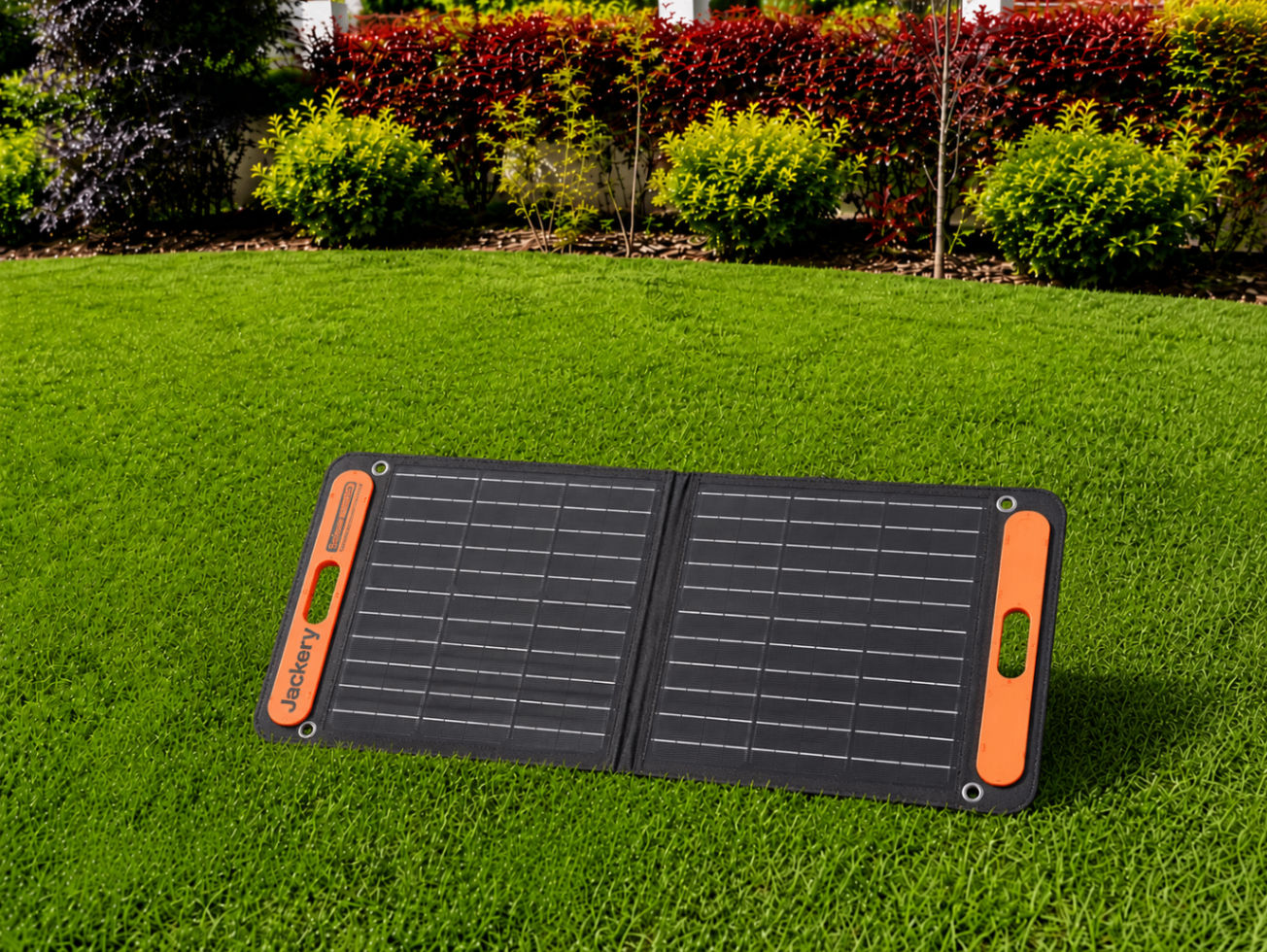
The Jackery SolarSaga 40 Mini is a compact foldable panel with USB-C and USB-A ports, an IP68 waterproof rating and a book-sized folding design.
This is a better fit for hikers and campers who want something smaller than a 100W power-station panel but more serious than a cheap solar power bank.
It is still best paired with a power bank, because direct phone charging from solar can pause or slow when clouds roll over.
Best for: hiking, camping, small-device charging, compact travel setups.
Pros:
Compact folding design.
USB-C and USB-A.
IP68 rating listed.
More portable than 100W panels.
Cons:
Pricier than budget panels.
Still limited by UK sunlight.
Not a serious laptop or appliance solution.
Heatable verdict:
A good “proper but portable” option for people who want lightweight solar without going full campervan mode.
[6] Jackery SolarSaga 100W - Best for Jackery Power Stations
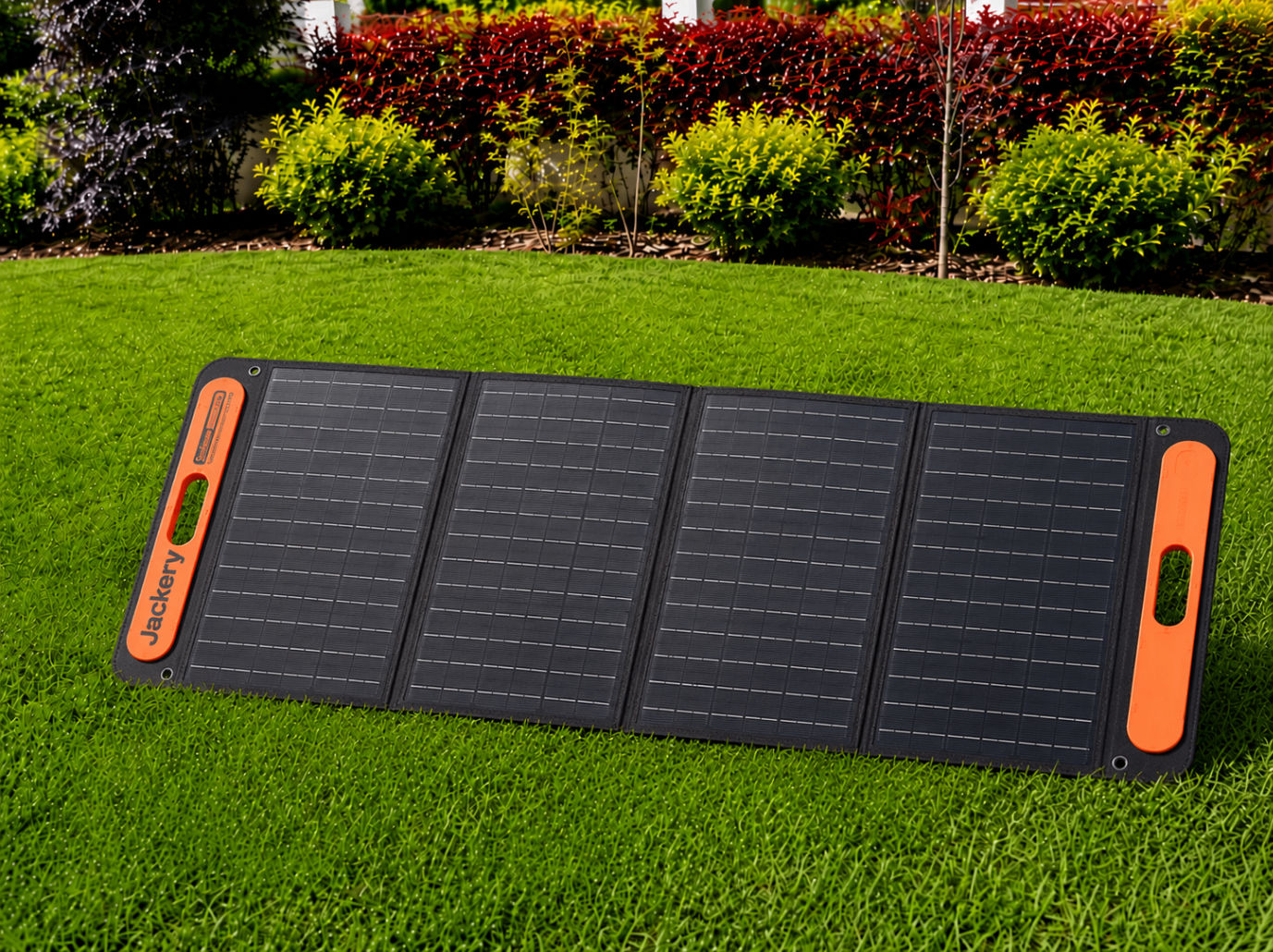
The Jackery SolarSaga 100W is listed as a foldable 100W monocrystalline solar panel for Jackery Explorer power stations, with USB outputs for phones and off-grid use.
This is a different class from a phone solar charger. A 100W panel is far more useful for camping, motorhome trips and portable power stations.
It is also larger, more expensive and less backpack-friendly.
Best for: Jackery power stations, camping, campervans, off-grid weekends.
Pros:
Proper 100W panel.
Designed for Jackery power stations.
More capable than small USB panels.
Can support a useful camping power setup.
Cons:
Best suited to Jackery ecosystems.
Bigger and less convenient for hiking.
Still weather and sunlight dependent.
Heatable verdict:
Good if you already have, or plan to buy, a Jackery power station. Overkill if all you need is one phone charge at Leeds Festival.
[7] Anker Solix PS100 - Best 100W Alternative
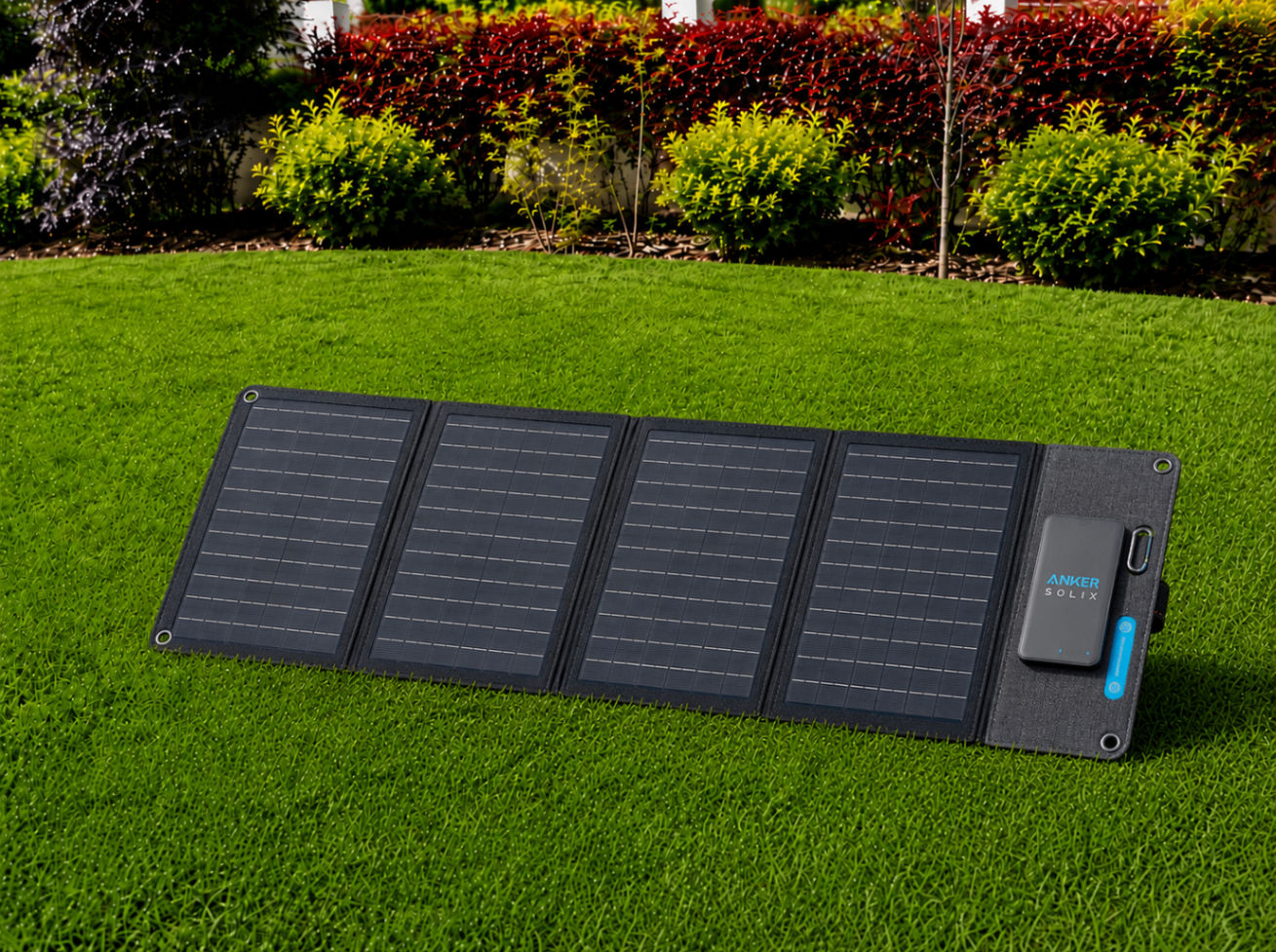
The Anker Solix PS100 is a 100W foldable portable solar charger with an adjustable kickstand and IP67 waterproofing.
This is worth considering if you are building a small camping or emergency power setup around an Anker Solix power station.
As with all power-station panels, check connector compatibility before buying. “100W solar panel” does not automatically mean it will plug neatly into every battery box on the market.
Best for: Anker Solix users, camping, power stations, emergency charging.
Pros:
100W class output.
Foldable design.
Kickstand useful for sun alignment.
Good brand ecosystem.
Cons:
Check live availability carefully.
Compatibility matters.
Not suitable for pocket-sized charging needs.
Heatable verdict:
A strong alternative to Jackery if you are already in the Anker Solix ecosystem.
Best Types of Solar Chargers in the UK
1. Solar Power Banks
Solar power banks combine a battery pack with a small built-in solar panel. Some also have fold-out mini panels, torches, wireless charging or built-in cables.
They are useful because they store power. The catch is that the solar panel is usually small, meaning solar recharging is slow.
For best results, charge the power bank fully from the mains before you leave home and treat the solar feature as a backup.
Best for: festivals, light camping, emergency phone backup.
2. Foldable USB Solar Chargers
These are compact panels, usually around 10W–40W, with USB-A and/or USB-C ports. They often fold up neatly and include eyelets, hooks or carabiners so you can hang them from tents, bags or fences.
They are much better than the tiny panels found on most solar power banks, but they usually do not store energy. Pair them with a power bank for smoother charging.
Best for: camping, hiking, charging phones, tablets and power banks.
3. Portable Solar Panels for Power Stations
These are larger foldable panels, commonly 60W–220W+, designed to charge portable power stations from brands like Jackery, EcoFlow, Bluetti and Anker.
They can help run camping lights, laptops, cameras, portable fridges and small devices when paired with the right battery. They are bulkier and pricier, but far more capable.
Best for: camping, campervans, off-grid weekends, emergency power.
4. Solar Battery Maintainers
Solar battery maintainers are small panels designed for 12V batteries in cars, caravans, boats, motorhomes and motorcycles. They trickle-charge batteries to help stop them going flat when vehicles sit unused.
Good ones include a charge controller to reduce the risk of overcharging.
Best for: vehicles left sitting for weeks or months.
5. Proper Home Solar Panels
These are not really “solar chargers”. They are fixed rooftop systems, usually measured in kilowatts rather than watts, paired with an inverter and often a home battery.
This is what actually reduces electricity bills meaningfully.
Portable solar chargers are for convenience. Home solar panels are for generating electricity at scale.
Heatable’s battery storage guidance explains the bigger-home-system logic clearly: solar generates during the day, excess energy can be stored, and that stored energy can then be used later instead of buying from the grid.
Best for: long-term home energy savings, battery storage, reducing grid reliance.
What to Look for When Buying a Solar Charger
Power Output
Solar charger output is measured in watts. The higher the wattage, the more power the panel can produce - in theory.
As a rough guide:
Output | Best suited to |
5W | Emergency trickle charging only |
10W–20W | Phones and small power banks |
28W–40W | Phones, tablets and multiple small devices |
60W–100W | Larger power banks, portable power stations and some laptop setups |
100W–220W+ | Camping, campervans and bigger portable power stations |
The important bit: manufacturer ratings are based on ideal test conditions. The UK is not ideal test conditions with a postcode.
A 100W panel will not produce 100W all day. A 30W panel will not behave like a wall socket just because you are standing in a field willing it to. Cloud, shade, panel angle, season and time of day all affect output, often quite brutally.
Battery Capacity
For solar power banks, battery capacity is usually listed in mAh. For portable power stations, look for Wh, or watt-hours.
A 10,000mAh power bank might charge a typical phone around two or three times after conversion losses.
A 20,000mAh or 27,000mAh model gives you more backup, but it will also be bigger and heavier.
For power stations, Wh is the more useful number because it tells you how much energy the battery can actually store.
This matters if you want to run lights, charge laptops, power a cool box or keep camping gear going for more than a quick top-up.
Ports and Compatibility
Check the ports before buying. Do not assume that “solar charger” means it will charge everything you own. It usually will not.
Look for:
USB-A for older charging cables.
USB-C for modern phones, tablets and accessories.
USB-C PD for faster charging and some laptops.
DC outputs for certain power stations.
MC4 connectors for larger solar panels and power-station setups.
12V clips or OBD connectors for vehicle battery maintainers.
Also check whether the panel can charge your device directly, or whether it is better used to charge a power bank first.
Many small solar panels work more reliably when paired with a separate battery, rather than trying to feed a phone directly through patchy sunlight all day.
And no, you should not assume any solar panel will charge your laptop. Plenty will not.
Weight and Portability
The best solar charger is not always the biggest one. It is the one you will actually carry and use.
For hiking, keep it realistic. A 14W–40W foldable panel makes sense. Anything much larger starts becoming a chore unless you are happy to sacrifice bag space and patience.
For camping, you can go bigger. A 100W panel with a kickstand is a sensible choice if you have a portable power station and you are not carrying everything up a mountain.
For campervans and longer off-grid trips, panels in the 100W–220W range become more useful, especially if you are charging a larger power station.
At that point, you are no longer buying a phone charger. You are buying part of a small power setup.
Weather Resistance
Check the IP rating carefully.
Water-resistant does not always mean waterproof. Some panels can handle light rain, but the weak points are often the USB ports, connectors, control boxes and attached batteries.
British weather does not care what the product description promised. If the forecast looks grim, protect the electronics.
Do not leave cheap gear outside overnight and act surprised when it starts behaving like it was stored in a pond.
Kickstands and Sun Alignment
Kickstands matter more than people think.
Solar panels work best when they are angled towards the sun. A panel lying flat on wet grass is usually doing a mediocre job.
Adjustable kickstands, eyelets, hanging loops and a sensible folding design all make a difference in real use.
This is especially true in the UK, where strong direct sun is not guaranteed. If the panel is small, badly angled and half-shaded by your tent, do not expect miracles.
Charge Controllers
If you are charging a 12V car, caravan, campervan or boat battery, look for a solar maintainer with a charge controller.
A charge controller helps regulate the flow of electricity into the battery. That can reduce the risk of overcharging, reverse discharge and general battery abuse.
For basic USB solar chargers, this is less important. For vehicle batteries, it matters. A £20 panel clipped to a car battery without proper regulation is not the same thing as a well-designed battery maintainer, no matter how confident the Amazon listing sounds.
Are Cheap Solar Chargers Worth It?
Sometimes - but keep your expectations on a short lead.
A cheap solar power bank can be useful as an emergency backup. A small budget foldable solar panel can also be fine for festivals, occasional camping or topping up a phone when you are not in a rush.
The problem is that very cheap “high-output” solar chargers often overpromise. If a listing claims a suspiciously powerful panel for a suspiciously low price, be sceptical.
Solar chargers are not immune to nonsense marketing, and the cheaper end of the market is full of optimistic wattage claims, vague waterproofing promises and product photos that look more capable than the kit usually is.
For casual use, cheap can be fine. For anything important - hiking, longer camping trips, laptop charging, campervan use or keeping a power station topped up - it is usually worth spending more on a recognised foldable panel with proper ports, clear specs and strong real-world reviews.
Final Verdict: Which Solar Charger Should You Buy?
Match the charger to the job.
For festivals and emergency phone backup, choose a solar power bank such as a Hiluckey model - but charge it from the mains first. The solar panel is backup, not magic.
For hiking, go light with something like the BigBlue 14W, Anker Solix PS30 or Jackery SolarSaga 40 Mini.
For general camping, the BigBlue 28W is the best all-rounder.
For portable power stations, look at 100W panels such as the Jackery SolarSaga 100W or Anker Solix PS100.
For campervans, bigger panels such as the ZOUPW 180W make more sense.
For car batteries, use a dedicated 12V solar maintainer, such as the POWOXI 20W or AA solar car battery charger.
For home energy bills, stop looking at portable chargers. You need proper rooftop solar, ideally with battery storage.
Portable solar chargers are useful for phones, camping and off-grid top-ups. They are not a replacement for a real home solar system.
For that, you need the right panels, inverter, battery and installation - which is where Heatable comes in.