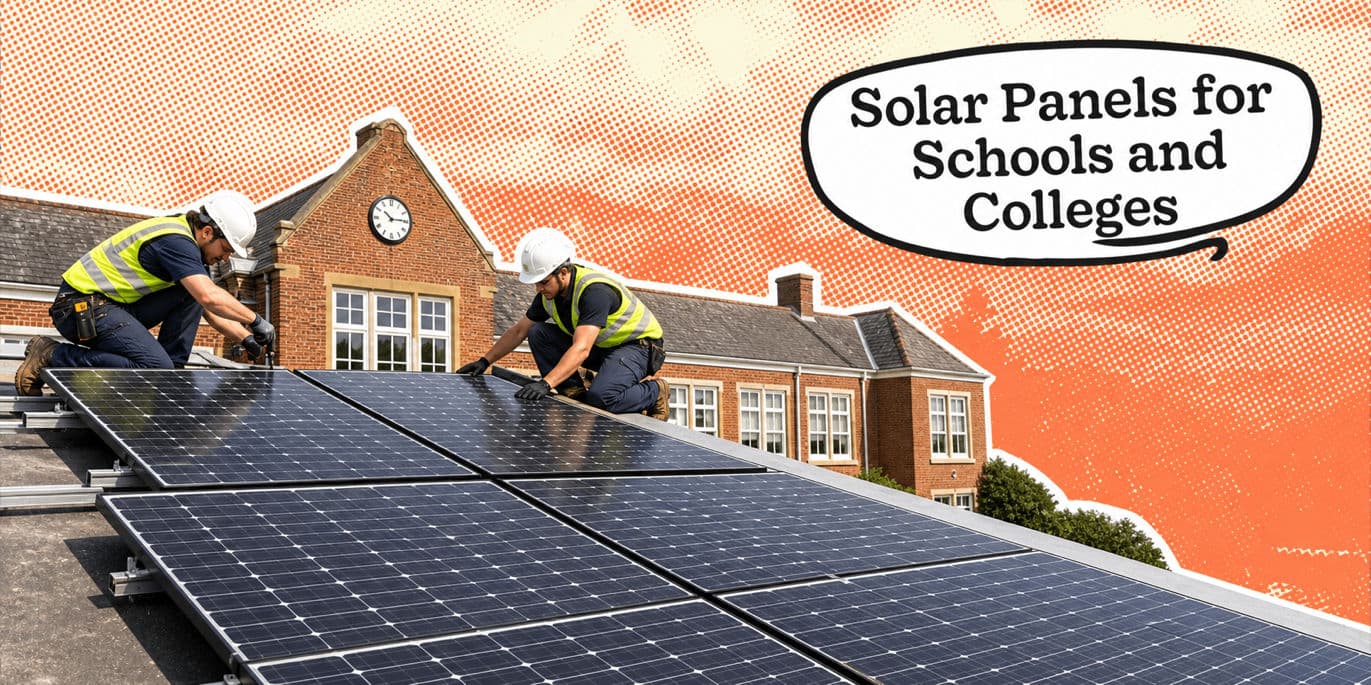

Schools use plenty of electricity during the day. Conveniently, that is exactly when solar panels are busy producing it.
- Are schools and colleges suitable for solar panels?
- Benefits of solar panels for schools and colleges
- How much do solar panels for schools cost?
- How much could a school save with solar panels?
- How many solar panels does a school need?
- Does a school need solar battery storage?
- Grants and funding for school solar panels
- What should be checked before installation?
- Choosing a solar installer for a school or college
From classroom lighting and computer suites to kitchens, workshops and sports facilities, education buildings can have substantial daytime electricity demand.
Many also have something solar panels rather like - a large, otherwise unproductive roof.
A well-designed solar PV system can bring those two things together, helping a school or college reduce grid electricity use, lower its carbon emissions and make energy costs more predictable.
But this is not simply a case of covering every available roof with panels and hoping for the best.
The strongest projects are designed around the building’s actual electricity use, roof condition, operating hours, grid connection and long-term estates plan.
In this guide, we explain how solar panels for schools and colleges work, what they could cost, how much they may save and the funding routes available in 2026.
🔑 Key Takeaways:
Schools and colleges can be excellent candidates for solar because much of their electricity is used during daylight hours.
Indicative commercial solar costs range from around £16,000–£30,000 for 20kWp, £33,000–£60,000 for 50kWp and £70,000–£110,000+ for systems of 100kWp or more.
The financial case is usually strongest when most of the solar electricity is consumed on site rather than exported.
Batteries can help where there is evening demand or surplus generation, but they are not automatically necessary for every school.
Funding routes may include outright purchase, finance, grants and Power Purchase Agreements.
A structural survey, electricity-data analysis and grid assessment should take place before a final system is proposed.
Are schools and colleges suitable for solar panels?
Often, yes.
Schools tend to be busiest between the morning and late afternoon, while colleges may operate into the evening. This creates a useful overlap between electricity demand and solar generation.
Suitable education sites commonly have:
Large pitched or flat roofs
Regular daytime electricity consumption
Sports halls, kitchens, IT suites or workshops with higher electrical loads
Several buildings sharing one site
Staff or visitor car parks that could support solar canopies
Long-term ownership or occupation of the premises
Solar will not necessarily power the entire site, particularly during winter or periods of high demand. It can, however, reduce how much electricity needs to be purchased from the grid.
The word to remember is self-consumption.
This means using solar electricity inside the school or college at the time it is generated.
As imported electricity normally costs more than exported electricity earns, higher self-consumption generally creates a stronger return.
Summer holidays complicate the picture slightly. Solar generation is at its highest when many schools are quieter, so holiday demand, export arrangements and battery storage should all be considered during system design.
Colleges, universities, leisure facilities and sites used throughout the year may naturally consume a greater proportion of their summer generation.
How do solar panels work in a school?
Solar photovoltaic panels convert daylight into direct-current electricity.
An inverter then converts that electricity into alternating current that can be used by the building.
The electricity can be:
Used immediately on site
Stored in a battery for later
Exported to the grid
A commercial school solar system will normally include:
Solar PV panels
One or more inverters
Roof mounting equipment
Cabling and isolators
Electrical protection equipment
Generation and export metering
Online performance monitoring
Grid connection equipment
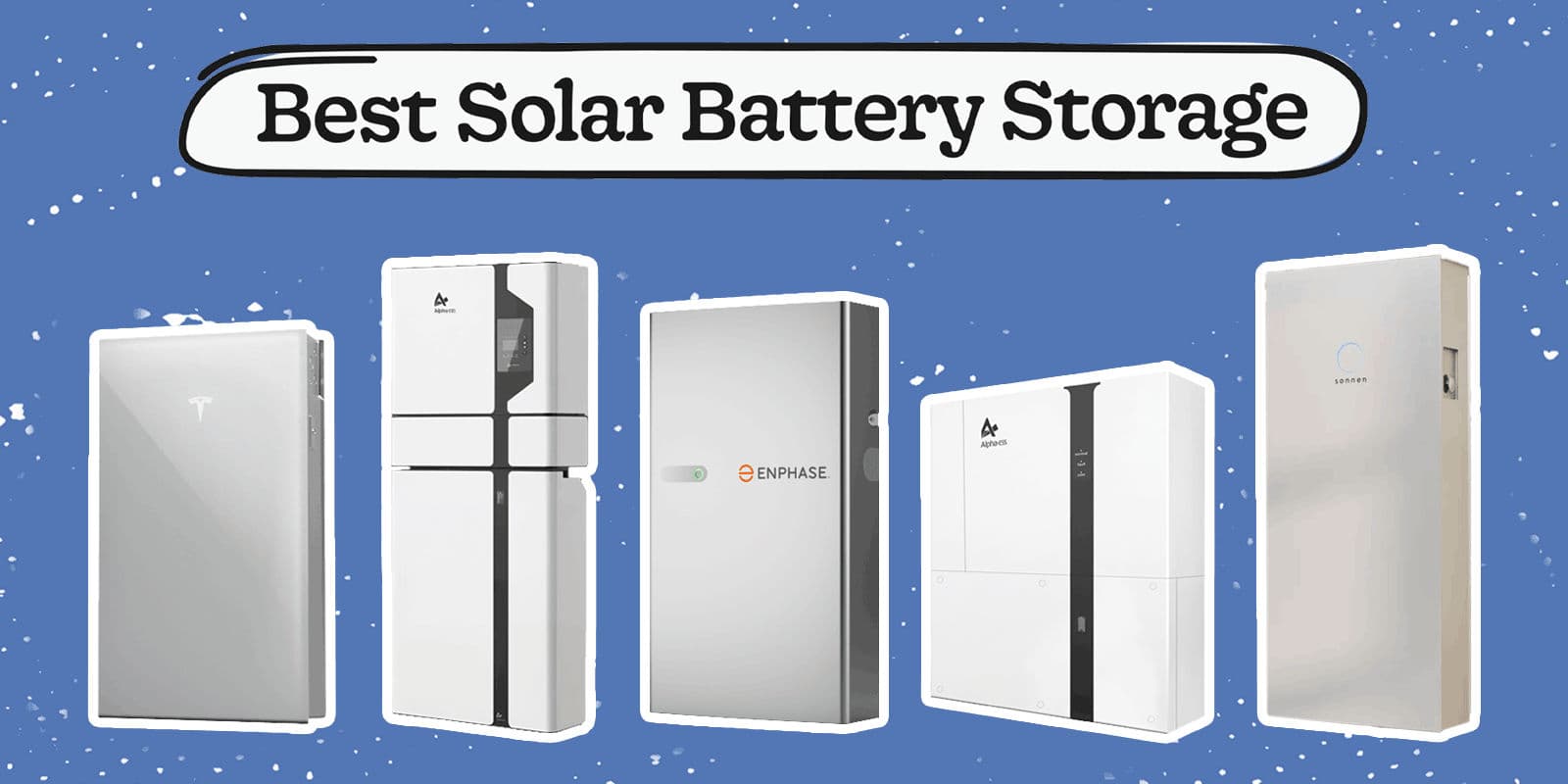
Optional battery storage
Optional EV charger integration
Although the technology is familiar, commercial solar design is more involved than a typical domestic installation.
The installer must consider structural loading, fire safety, roof access, asbestos information, electrical capacity, safeguarding, grid requirements and how installation work will be separated from pupils and staff.
Benefits of solar panels for schools and colleges
[1] Lower electricity bills
Every unit of solar electricity used on site is one less unit that needs to be purchased from an electricity supplier.
That can release money for staffing, learning resources, building improvements and other priorities.
Solar will not make the electricity bill disappear entirely. The site will still require grid power at night, during darker winter periods and whenever demand exceeds generation.
But a properly sized system can make a meaningful dent in daytime grid consumption.
[2] More predictable energy costs
School budgets generally prefer pleasant surprises. Energy markets have not always been cooperative on that front.
Generating electricity on site reduces exposure to future price changes because part of the school’s demand is supplied by an asset with no fuel cost.
The exact saving will still depend on system performance, electricity prices and consumption patterns, but solar can improve long-term budget visibility.
[3] Lower carbon emissions
Solar PV generates electricity without producing operational carbon emissions.
It can therefore support an education setting’s decarbonisation plans and wider net-zero objectives.
In England, Department for Education guidance says education settings are expected to have a sustainability lead and climate action plan.
Decarbonisation and net zero form one of the plan’s four central pillars. Read the DfE climate action plan guidance.
[4] A practical learning resource
A solar installation can be more than equipment sitting quietly on a roof.
Live monitoring data can be displayed inside the building and incorporated into subjects such as:
Science
Mathematics
Geography
Computing
Design and technology
Business studies
Environmental science
Students can analyse generation data, compare seasonal performance and see how weather and electricity consumption affect the site in real time.
It turns renewable energy from an abstract topic into something happening directly above the classroom.
[5] Better use of existing space
Solar panels allow schools to generate electricity without sacrificing classrooms, sports pitches or playgrounds.
Roof-mounted systems are the obvious option, but suitable sites may also consider ground-mounted arrays or solar carports.
Solar carports can generate power while providing sheltered parking and supporting EV charging, although they are generally more expensive than a straightforward rooftop installation.
[6] Visible climate leadership
Solar provides an obvious sign that a school or college is acting on its environmental commitments.
That can help engage pupils, parents, staff, governors and the wider community, particularly when the installation forms part of a properly documented climate action plan.
How much do solar panels for schools cost?
There is no standard price for a school solar installation.
As a broad guide, indicative UK commercial solar costs are often:
System size | Indicative installed cost | Approximate annual generation |
20kWp | £16,000–£30,000 | 17,000–22,000kWh |
50kWp | £33,000–£60,000 | 42,500–55,000kWh |
100kWp | £70,000–£110,000+ | 85,000–110,000kWh+ |
Annual generation figures assume approximately 850–1,100kWh per installed kWp. Actual output depends on location, orientation, pitch, shading, equipment and system losses.
These figures should be treated as early budgeting ranges rather than quotations.
The final price can be affected by:
System size and panel specification
Roof type, height and accessibility
Structural reinforcement
Scaffolding or lifting equipment
Electrical distribution upgrades
Asbestos management requirements
Planning or heritage constraints
Fire-safety provisions
Grid connection work
Monitoring and metering
Battery storage
Groundworks or solar carport structures
Out-of-hours or holiday working requirements
Larger systems often cost less per installed kWp, but complex roofs and electrical upgrades can quickly change the calculation.
How much could a school save with solar panels?
Savings depend on four main figures:
How much electricity the system generates
How much is used on site
The price of imported electricity
The payment received for exported electricity
Here is a simplified example:
Imagine a 50kWp school solar system that:Generates 45,000kWh per year
Supplies 80% of that electricity directly to the school
Avoids imported electricity costing 22p per kWh
Exports the remaining electricity at 5p per kWh
The calculation would look like this:
On-site saving: 36,000kWh × £0.22 = £7,920
Export income: 9,000kWh × £0.05 = £450
Indicative first-year benefit: £8,370
If the system cost £45,000, the simple payback would be approximately 5.4 years.
That is only an illustration. It excludes financing, maintenance, degradation, tariff changes and other project-specific costs.
A credible solar proposal should use the school’s actual half-hourly consumption data and clearly show every assumption.
Be cautious with any quotation that promises a precise saving before anyone has examined how the site uses electricity.
How many solar panels does a school need?
The answer should be based on demand, not simply how many panels will fit.
A 50kWp array might use approximately 100–120 modern commercial panels, depending on their individual wattage.
It may require roughly 230–300m² of usable roof area once spacing, access routes and obstructions are considered.
However, filling the roof is not always the best commercial decision.
An installer should assess:
At least 12 months of electricity consumption
Half-hourly data where available
Weekday and weekend demand
Term-time and holiday consumption
Planned heat pumps or electrification
Existing or planned EV chargers
Roof orientation and shading
Structural capacity
Available grid connection capacity
Export limitations
Future building or roof works
The aim is not the biggest possible system.
It is the system that delivers the strongest operational and financial result for the site.
Does a school need solar battery storage?
Not necessarily.
Schools already use electricity during the day, so they may be able to consume a large share of their solar generation immediately.
In that situation, adding a battery may increase the project cost without improving the return enough to justify it.
Battery storage becomes more interesting where:
Large amounts of generation would otherwise be exported
The site has substantial early-morning or evening demand
Buildings are used outside normal school hours
The network operator limits exports
EV charging creates demand later in the day
Electricity prices vary significantly by time
The site wants additional energy-management capability
A battery should be sized using real load and generation data.
“The biggest one that fits” is not a storage strategy.
It is also important to distinguish ordinary solar battery storage from backup power.
Most standard grid-connected batteries will not automatically keep an entire school operating during a power cut.
Backup capability requires specific design, controls and electrical separation.
Can schools sell excess solar electricity?
Potentially, yes.
The Smart Export Guarantee allows eligible small-scale generators in Great Britain to receive payment for electricity exported to the grid.
Solar PV systems with a total installed capacity of up to 5MW can qualify, subject to the scheme’s requirements.
Export rates and contract terms are set by individual suppliers, so they vary. Ofgem recommends comparing available SEG tariffs.
Export income can be useful, particularly during weekends and school holidays.
However, it should normally be treated as secondary to self-consumption. A unit of electricity used on site will often be worth more than the same unit exported.
Larger installations may have access to other export or power-purchase arrangements, depending on their capacity and metering setup.
Grants and funding for school solar panels
Funding changes frequently and differs across England, Scotland, Wales and Northern Ireland.
Schools should confirm current eligibility with their responsible body, local authority, trust and the relevant funding provider before building a business case around any particular scheme.
Common routes include the following.
Outright purchase
The school, college, trust or responsible body pays for the installation and owns the system.
This usually provides the greatest long-term benefit because the organisation keeps the electricity savings and any export income.
It also requires the highest upfront investment.
Commercial finance
A loan or asset-finance arrangement can spread the cost over several years.
This may allow the project to proceed without using the entire capital budget immediately, but interest and fees will affect overall payback.
Decision-makers should compare the expected annual energy benefit with repayments under realistic performance and tariff assumptions.
Power Purchase Agreements
Under a solar Power Purchase Agreement, a third party funds, owns and usually maintains the system.
The school then buys the electricity generated by the panels at an agreed rate, which is intended to be lower than the cost of grid electricity.
This can provide solar with little or no upfront capital expenditure, but the contract may run for 15–25 years.
Before signing, schools should examine:
The starting electricity rate
Inflation or index-linked price increases
Minimum purchase requirements
Maintenance responsibilities
Roof repair arrangements
Ownership at the end of the term
Early termination costs
Treatment of export income
Building sale, lease or redevelopment provisions
Performance guarantees
A PPA can be useful, but “free solar panels” is an incomplete description. The school is accepting a long-term energy and property agreement.
Great British Energy and DfE programmes
In July 2026, the government reported that 245 schools and colleges had received government-funded solar panels, with another 100 joining the Great British Energy Solar Partnership.
It estimated combined lifetime energy-bill savings of approximately £220 million. Read the government announcement.
The Department for Education is also piloting standardised PPA and land-lease arrangements with up to 150 schools and colleges in selected English regions.
The pilot is not a general open grant application. Participating settings are selected by the DfE, which hopes to make the PPA route more widely available from the 2027–28 financial year. See the current DfE PPA guidance.
Schools outside these programmes should check:
Their local authority
Multi-academy trust funding
Regional net-zero funds
Community energy organisations
Local business sponsorship
Public-sector decarbonisation opportunities
Current education-estate funding programmes
Do not assume an older grant mentioned online remains open.
Renewable funding pages have a habit of lingering around long after the money has packed its bags.
Do schools need planning permission for solar panels?
Many rooftop solar installations can be completed under permitted development rights, but this should never be assumed.
Planning permission or additional consultation may be required where:
The building is listed
The site is in a conservation area
Panels would be visually prominent
The installation is ground-mounted
A solar carport is proposed
Equipment exceeds permitted development limits
The site is subject to specific planning restrictions
Building regulations and electrical safety requirements still apply even where planning permission is not needed.
Depending on the building’s ownership and funding arrangement, consent may also be needed from a local authority, academy trust, landlord, lender or the Department for Education.
For academy and maintained-school estates, land and property rules should be checked before agreeing to a lease or long-term PPA.
What should be checked before installation?
A proper feasibility assessment should cover more than an aerial image of the roof.
Roof condition
Solar panels may remain in place for 25 years or longer, so fitting them to a roof that needs replacing in five years rarely makes sense.
The roof should be surveyed for condition, remaining life, load capacity and signs of water ingress.
Where repair or replacement is already planned, coordinating the two projects can avoid paying to remove and reinstall the array later.
The DfE’s current PPA guidance specifically states that applications will not be approved where the relevant roof is in poor condition.
Structural suitability
A structural engineer may need to assess the additional dead load, wind loading and mounting arrangement.
Flat roofs can be suitable for solar, but ballast, membrane condition, drainage and access must be considered carefully.
Asbestos
Many education buildings contain asbestos-containing materials.
The installer must receive up-to-date asbestos information and plan work so that materials are not disturbed. Any uncertainty should be resolved before drilling, cabling or roof access begins.
Electrical capacity
The existing electrical system must be checked to establish where the solar system can connect and whether switchgear, protection or cabling requires upgrading.
Grid connection
The local Distribution Network Operator may need to approve the connection.
Export capacity can be limited in some locations. This does not always prevent a project, but it may require export-limitation equipment, battery storage or changes to system size.
Fire safety and access
The design should preserve safe access routes and consider roof compartmentation, emergency isolation, signage and the location of inverters and batteries.
Any proposal should align with the site’s fire strategy rather than treating fire safety as paperwork to complete afterwards.
What happens during installation?
A commercial school installation normally follows these stages:
Initial consultation and electricity-data review
Site, roof and electrical surveys
Outline system design and financial modelling
Structural and asbestos checks
Planning and third-party approvals where required
Grid connection application
Final design and installation plan
Scaffolding, roof preparation and installation
Electrical connection and commissioning
Handover, certification and monitoring setup
The timescale can range from several weeks to several months, depending on the system size, surveys, approvals and grid requirements.
Physical installation may be scheduled during school holidays or phased to minimise disruption.
Safeguarding, deliveries, contractor access, noise and separation from pupils should all be included in the project plan.
Maintenance and monitoring
Solar PV is relatively low maintenance, but it is not maintenance-free.
The school should have a clear plan covering:
Remote performance monitoring
Periodic electrical inspection
Visual checks for damage or loose components
Inverter servicing or replacement planning
Vegetation management for ground-mounted systems
Cleaning where dirt or bird fouling is materially affecting output
Roof and drainage access
Battery inspections where applicable
Fault response times
Warranty claims
Panels do not automatically need an annual scrub. In much of the UK, rainfall deals with ordinary dust.
Cleaning should be based on inspection and performance data, using a competent contractor where roof access is required.
Monitoring is particularly important. A failed inverter can quietly turn a useful solar installation into an expensive piece of roof decoration if nobody notices.
Choosing a solar installer for a school or college
Education sites require commercial design, compliance and project-management experience.
When comparing installers, look for:
Experience with schools, colleges or public-sector estates
Site-specific consumption modelling
Commercial solar design expertise
Appropriate MCS certification where relevant
NAPIT, NICEIC or equivalent electrical credentials
Structural and grid connection capability
Clear safeguarding arrangements
Battery and EV charging expertise if required
Strong equipment and workmanship warranties
Monitoring and aftercare
Insurance and relevant case studies
Transparent costs and assumptions
A good proposal should explain:
Why the recommended system size was chosen
Expected annual generation
Expected self-consumption and export
Assumed electricity and export rates
Likely annual savings
Maintenance and replacement allowances
Simple payback and longer-term cash flow
Roof, planning and grid constraints
What is included and excluded from the price
If the proposal contains an enormous savings figure but no explanation of the assumptions behind it, ask for the workings.
Are solar panels worth it for schools and colleges?
For many education sites, yes.
Schools and colleges often combine large roofs with predictable daytime electricity demand, which is precisely the sort of profile commercial solar likes.
The strongest projects can:
Reduce electricity costs
Improve long-term budget certainty
Cut operational carbon emissions
Support climate action plans
Create practical learning opportunities
Prepare sites for EV charging and wider electrification
Solar is not right for every building.
A shaded roof nearing the end of its life, a highly constrained grid connection or very low daytime demand can weaken the case considerably.
That is why design should begin with the building and its energy data, not a predetermined number of panels.
Speak to a Commercial Solar Expert Today ☀️
Every education estate is different.
Heatable can assess your electricity consumption, roof space, grid position and long-term objectives before recommending a suitable commercial solar system.
Here’s what schools and colleges can expect:
Site-Specific Design - A system based on your buildings, operating hours and electricity demand.
Clear Financial Forecasting - See the estimated cost, generation, annual savings and payback before committing.
Multiple Funding Routes - Explore outright purchase, finance and Power Purchase Agreement options.
Experienced Installation - Commercial solar professionals working to the relevant technical and safety standards.
End-to-End Support - From initial assessment and grid applications to commissioning and ongoing monitoring.
Straightforward Advice - No mystery maths, oversized systems or suspiciously sunny assumptions.
Book a free commercial solar consultation with Heatable today.