
Most UK homes only need G98 - that’s the “connect it, then tell the DNO” route.
- What is a G99 application?
- G99 vs G98
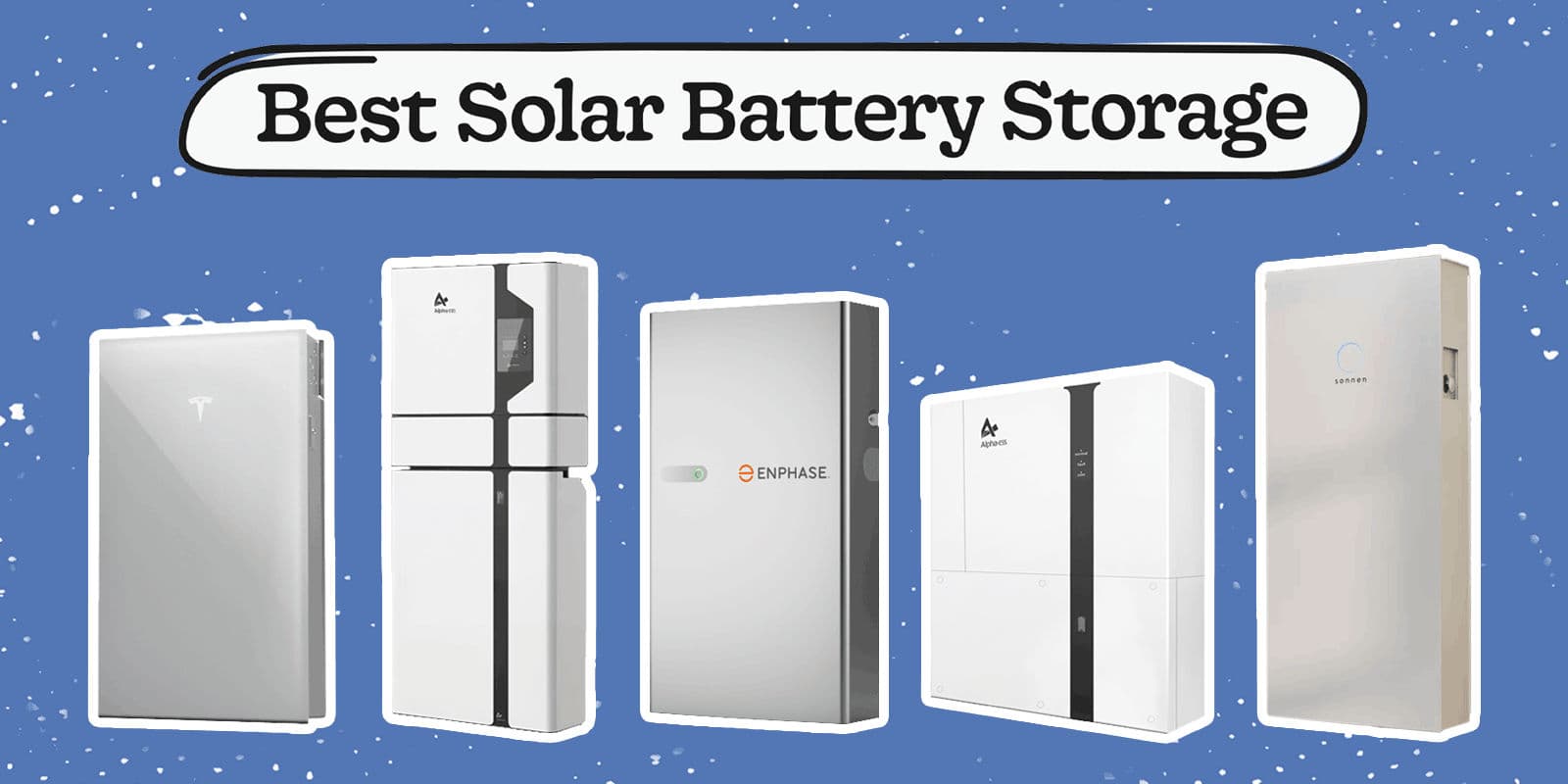
- Batteries: do they trigger G99?
- Why G99 matters (money + permissions)
- The G99 application process (step-by-step)
- What documents are usually required?
- Fast-track / SGI: can G99 be quicker?
- How much does a G99 application cost?
- What happens if your G99 is approved?
- What if your G99 is rejected (or approved with conditions)?
You’re in G99 territory when your system can export more than 3.68kW per phase on a typical single-phase supply.
That’s when the grid wants permission first, because bigger export can mess with the local network if it’s not managed properly.
PS We offer MCS-certified solar panel installation nationwide and will handle your G99/G98 application as part of the standard process. Simply answer these questions, get your fixed price and arrange your free design.
Quick sense-check:
Most standard home solar installs → usually G98
Bigger inverters, higher export limits, or battery systems that can export hard → often G99
Three-phase homes get a bigger allowance (up to 11.04kW before G99 is needed - basically 3× the single-phase limit, but you don’t need to do the maths)
If you’re thinking “do I have to fill in forms?” - no. Your installer handles the G98/G99 process, but it’s still worth understanding what’s being applied for on your behalf.
Want us to take the admin pain away? We’ll design the system, manage the DNO application, and keep everything compliant, so you can focus on the savings. Get a fixed price quote here.
What is a G99 application?
A G99 application is basically you (well, your installer) asking your DNO (Distribution Network Operator) for permission to connect and run a solar/battery setup that could export above the “standard” limit.
Why you should care as a homeowner: it can affect how much you’re allowed to export, whether you need an export limit fitted, and-crucially-how long the whole job takes (because some systems can’t be commissioned until the DNO says yes).
Glossary (because jargon sucks):
DNO - Your local grid boss (e.g. UK Power Networks, SSEN, National Grid Electricity Distribution) - they own the cables and decide what your street can handle.
Inverter - The box that turns your solar’s DC into usable AC for your home. Its rating helps determine your export potential.
Export limit - A cap (set in the inverter or via a limiter) on how much power you can push back to the grid - keeps the local network from having a wobble.
MPAN (export MPAN): A 13-digit supply number used to identify your electricity connection. Some homes also need an export MPAN set up to get paid for export - think of it like the reference number that lets suppliers route export credits to the right place.
G99 vs G98
Let’s keep it simple: G98 is for smaller installs. G99 is for anything that can export more (or could, in theory).
The simple rule:
If your inverter’s rated output is over 3.68kW per phase (roughly 16A), you’re into G99 - meaning you typically need DNO approval before you can commission it properly.
If it’s 3.68kW or under, that’s usually G98 - install first, notify after.
Key point: it’s based on what the system can export (on paper), not what it normally exports on a random cloudy Tuesday.
What about three-phase?
If you’ve got three-phase (less common in homes), you get more headroom: the threshold is 11.04kW total (3 × 3.68kW) before G99 becomes the default.
More phases = more capacity = fewer paperwork headaches.
Panels vs inverter size (the bit people mix up)
Solar panels are rated in kWp (peak generation in perfect conditions).
But for G98/G99, the thing that matters most is the inverter’s kW rating (i.e., export capability).
So yes - you can absolutely have, say, 5kWp of panels on a 3.68kW inverter. That’s common and totally fine.
On bright days the inverter will clip the excess, but you can still stay in G98 as long as the inverter/export limit stays within the threshold.
Cheat sheet:
Single-phase: ≤ 3.68kW export/inverter rating → usually G98 | > 3.68kW → usually G99
Three-phase: ≤ 11.04kW total → usually G98 | > 11.04kW → usually G99
Panels don’t decide it: kWp (panels) ≠ kW (inverter/export) - the inverter rating / export limit is what normally triggers G98 vs G99.
Batteries: do they trigger G99?
They can, yes.
If your battery/hybrid inverter can export enough power to push you over 3.68kW per phase (single-phase), you’ll usually need G99.
If it’s set up with a hard export limit to stay at/under the threshold, you may be able to keep it G98 - it depends on the DNO and the exact setup.
Scenerio | Likely G98 or G99 | Why | What happens as next |
Standard 8-10 panel solar (under 3.68kW inverter) | G98 | Inverter stays small, export capped naturally | Install, notify DNO within 28 days; get export MPAN for tariffs |
12+ panels with 5kW inverter | G99 | Inverter over 3.68kW threshold | Apply pre-install; possible fast track if qualifies |
Solar + battery storage, export limited | G98 (maybe) | Controls keep total export under limit | Check with installer; no G99 if truly capped |
Three-phase home with big system | G99 if over 11.04kW | Higher threshold, but same rules | Full application; timelines stretch if network busy |
Inverter 3.68kW G99? Wait, no | G98 | Exactly at limit? Still G98 territory | Connect and notify; easy peasy |
We’ll handle the DNO paperwork for you. Get your savings estimate + system design here.
Decision tree: G98 vs G99:
Start by checking your inverter/export capability.
If your system is ≤3.68kW per phase (single-phase) or ≤11.04kW total (three-phase), it falls under G98. You can install the system, notify your Distribution Network Operator (DNO), and you’re done.
If your system is above 3.68kW per phase (single-phase) or above 11.04kW total (three-phase), it will require G99 approval.
First check whether it qualifies for the fast-track Small Generation Installation (SGI) process, such as smaller systems with export limits.
If it qualifies, you can proceed with a fast-track G99 application. If it does not, you’ll need to submit a full G99 application.
Once approved, you can install and commission the system (or unlock export capacity). If approval is not granted, you may need to redesign the system, add export limiting, or reduce the system size.
Why G99 matters (money + permissions)
G99 isn’t just admin - it can affect what you’re allowed to export, and what you can get paid for it.
If your system could export above the limit without the right approval, your installer may have to cap export to keep things compliant, which means less surplus sold back to the grid.
And if your paperwork (and export MPAN) isn’t in order, export payments can be delayed or made harder than they need to be.
We design systems to maximise your savings and keep the DNO happy.
The G99 application process (step-by-step)
Relax - it’s a checklist, not a PhD. Your installer handles the heavy lifting (and yes, we’d like that to be us).
First, we design the system: inverter size, battery setup, and whether you’ll need an export limit to keep things tidy with the grid.
Then we submit the G99 pack to your DNO with the right forms and supporting docs.
The DNO reviews it and comes back with one of three answers: approved, approved with conditions, or (rarely) no - try again with changes.
Once you’ve got the green light, the system gets installed and commissioned (some fast-track routes allow install first).
Finally, the export settings are confirmed/unlocked and you get your G99 approval paperwork to keep on file.
What documents are usually required?
Usually some mix of: a site/layout plan, manufacturer spec sheets (inverter/panels/battery), and the system’s technical settings (protection/export control details).
Nothing exciting - but it has to be right.
Fast-track / SGI: can G99 be quicker?
Sometimes, yes.
Fast-track (SGI) is basically the DNO saying, “This setup is sensible and controlled - we can process it faster.”
It’s typically for smaller systems with export caps (often up to 7.36kW in certain configurations). Not everyone qualifies, but if you do, it’s the express lane.
Realistic timelines:
Most G99 applications land around 4–8 weeks.
If your DNO is busy (or your area’s grid is a bit spicy), it can drift to 8–12 weeks.
With fast-track/SGI, you might see decisions in around 2 weeks in some cases.
How much does a G99 application cost?
The G99 application itself is usually free to submit to the DNO. The cost (when there is one) is normally just an installer admin fee for handling the paperwork and back-and-forth.
The “uh-oh” scenario is network upgrades: occasionally a DNO will say your local bit of grid needs reinforcement before they’ll allow bigger export.
It’s not common for typical homes, but if it happens it can run hundreds to thousands.
If a DNO comes back with limits, we won’t bury it in jargon. We’ll explain what’s going on, what you can change, and whether export limiting gets you the outcome you want without spending money for no reason.
What happens if your G99 is approved?
Once approved, your installer can commission the system properly - including setting the final export controls (or removing a temporary cap if one was used).
You’ll get confirmation paperwork, and depending on your setup/export tariff, an export MPAN may be part of the journey.
What should homeowners keep?
Keep these somewhere safe (future you will thank you - especially if you switch suppliers or sell the house):
DNO approval / G99 confirmation
MCS certificate + commissioning sheets
Inverter/battery datasheets
Any export limitation documentation/settings confirmation
What if your G99 is rejected (or approved with conditions)?
Don’t panic - it’s usually a “local network can’t take that much export right now” situation, not a hard no forever.
Most common fixes are:
Limit export (via inverter settings or an export limiter)
Tweak the design (different inverter size/config)
Resubmit (sometimes after a small change)
Pay for upgrades (rare, and usually the “last resort” option)
We’ll almost always try to redesign smart before we let you bankroll unnecessary grid works.
Common mistakes (and how to avoid them)
People get tripped up by the same stuff every time:
Mixing up panel kWp with inverter kW (G98/G99 is usually about inverter/export capability)
Assuming “battery = always G99” (it depends on export controls)
Going DIY and missing key documents (the DNO loves paperwork more than sunlight)
Not keeping approvals - which can bite later when you want export payments or you’re selling
What to ask your installer
Ask these and you’ll sound like you’ve done this before:
What inverter size are you proposing - and why?
Will export be limited? If yes, to what kW?
Are you applying G98 or G99 - and when?
What’s the typical DNO turnaround in my area?
Next Steps For Your Solar Journey:
When planning to install solar panels for your home, there are several important factors to consider. Make sure to refer to the following guides to help you make informed decisions:
To dive deeper into these topics, head over to our advice section, check out our YouTube channel for informative videos, or read a customer case study to see how others have benefited from their solar installation.
Get a Quote for Solar Today
Without boasting you should get your solar installed with us, here's why:
Thousands of Happy Customers: We boast an average score of 4.9 on Trustpilot, outperforming the market leader.
Which? Trusted Trader: Heatable is proudly recognised as a Which? Trusted Trader.
MCS Accredited: Our accreditation by the Microgeneration Certification Scheme (MCS) ensures high-quality standards.
Exclusive Panels: We offer REA Fusion solar panels, available only through Heatable.
Consumer Protection: As members of the HIES consumer code, we provide 2-year deposit protection.
Flexible Payment Options: Choose from multiple payment methods, including finance options.
Fixed Price Guarantee: Enjoy transparency with no hidden costs.
Save Your Quote: You can save your quote and decide later.
Bespoke Design Tool: Draw your own conclusion (literally) on whether solar is worth it for you, here.