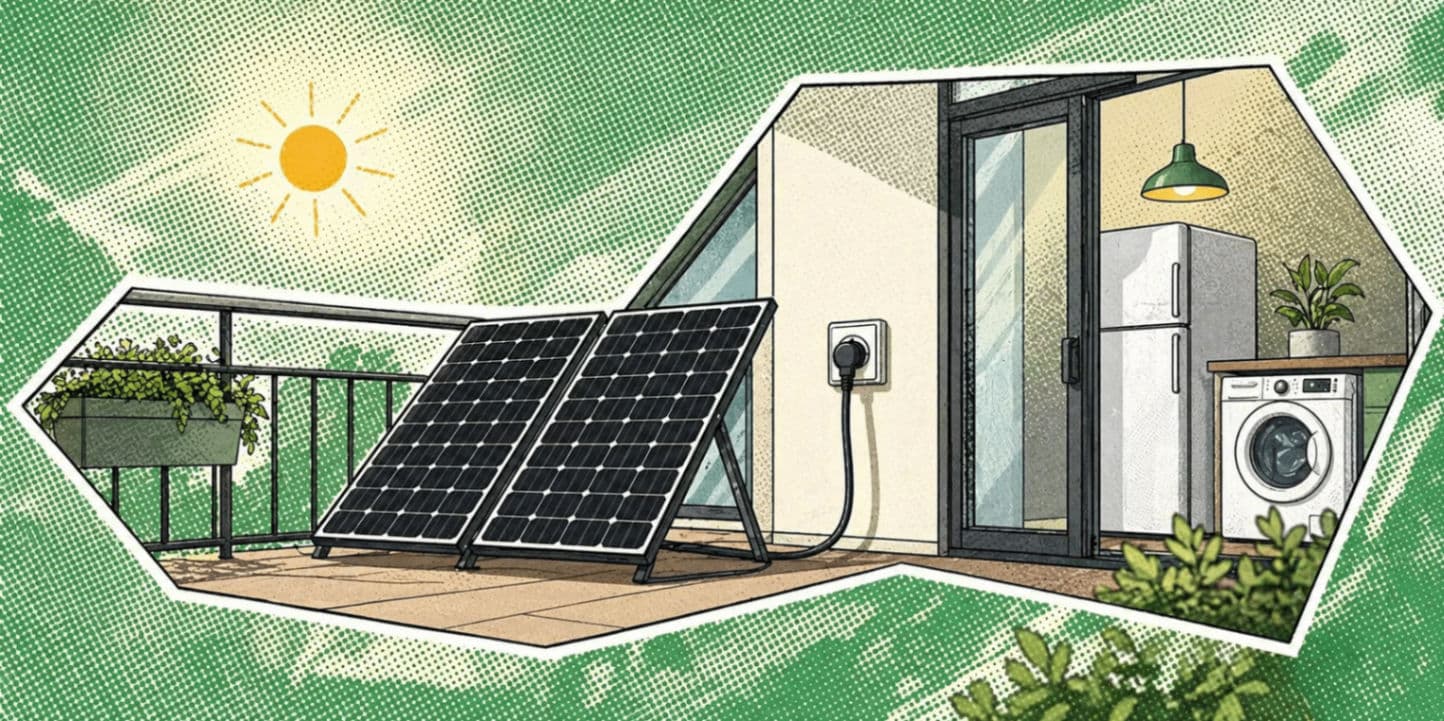

Plug in solar panels are getting plenty of attention in the UK, especially from homeowners and renters looking for a simpler, cheaper way to generate a bit of their own electricity.
The appeal is pretty obvious. Instead of committing to a full rooftop solar panel system, plug in solar panels offer a smaller, more flexible way to generate a bit of your own electricity from a balcony, patio, garden, shed, or any other sunny spot that isn’t currently being hogged by a wheelie bin.
In the right home, they can help chip away at your electricity bills by covering some of the power you use during the day. Not life-changing, yacht-buying savings, admittedly, but useful savings all the same.
That said, and this is the bit the internet sometimes forgets, plug in solar panels are not a like-for-like replacement for a professionally installed solar PV system. They are smaller, usually less powerful, and their savings are likely to be more modest.
There are also safety and compliance points to think about. Not every “plug and play” solar kit is automatically suitable for a UK home, and anything that connects to your electrics needs to be treated with a bit more respect than a USB desk fan.
So, how do plug in solar panels work? In simple terms, they convert sunlight into electricity, send it through a microinverter, and then supply that power to your home through either a plug-style connection or a dedicated electrical setup, depending on the system and the relevant safety requirements.
PS We offer MCS-certified solar panel installation nationwide. Simply answer these questions, get your fixed price and arrange your free design.
What are plug in solar panels?
Plug in solar panels are small solar PV systems designed to help you generate electricity at home, without having to commit to a full rooftop solar panel system, scaffolding, surveys, and the mild panic of wondering whether your roof is “south-facing enough”.
You may also see them called:
Plug and play solar panels
Portable solar panels
DIY solar panels
Micro solar systems
Microinverter solar panels
They usually include one or more solar panels, a mounting frame or stand, connecting cables, and a microinverter.
The panels do the sun-catching bit, turning daylight into electricity. The microinverter then does the technical wizardry, converting that electricity into a form your home can actually use. Very useful, because your toaster is unlikely to appreciate raw DC electricity being flung at it.
The main appeal is flexibility.
Plug in solar panels are often aimed at renters, flat owners, and homeowners who want to try solar without going straight into a larger installation.
They can also make sense for properties where rooftop solar is not practical because of roof space, shading, access, ownership, or building restrictions.
You’ll usually see them used on balconies, patios, gardens, sheds, outbuildings, rental homes, and other spots where a full rooftop system is not really on the cards.
That said, they are still electrical systems, not a solar-powered novelty gadget from the middle aisle.
So while they may be easier to install than a full solar array, anything that connects to your home’s electrics needs to be safe, suitable for UK use, and properly compliant.
🎥 Prefer video? Check out our video all about plug-in solar below:
How do plug in solar panels work?
Plug in solar panels work in much the same basic way as standard home solar panels, just on a smaller scale.
They capture sunlight, turn it into electricity, convert that electricity into a usable form, and then supply it to your home while the panels are generating.
You need AC electricity to run your household appliances. That is why an inverter, or microinverter, is such an important part of the system.
Solar panels generate direct current electricity, but your home needs alternating current electricity.
[1] Solar panels capture sunlight
Each solar panel contains photovoltaic cells, often shortened to PV cells. These cells convert sunlight into direct current electricity, known as DC electricity.
The brighter and more direct the sunlight, the more electricity the panels can usually produce.
Output can fall sharply if the panel is shaded, poorly angled, or facing away from the strongest sunlight.
This is especially important for balcony solar panels and portable solar panels, as nearby walls, railings, trees, or neighbouring buildings can all reduce performance.
[2] A microinverter converts the electricity
Most UK homes and appliances use alternating current electricity, known as AC electricity.
Because solar panels generate DC electricity, the system needs an inverter to convert it into AC.
Solar PV creates a DC electrical current, which is then converted into AC by an inverter so it can be used by normal household appliances.
In many plug in solar panel systems, this job is handled by a microinverter. This is a smaller type of inverter that usually works with one panel or a small number of panels.
Put simply, the microinverter acts like a translator. It takes electricity in the form the panel produces and converts it into the form your home can actually use.
[3] The electricity is used in the home
Once converted into AC electricity, the solar power can help supply appliances and devices that are running at the same time.
For example, a small plug in solar setup may help offset daytime electricity use from things like:
A fridge cycling on and off
A broadband router
Laptop charging
Lighting
Small appliance use
General background electricity demand
The key phrase here is help offset. Plug in solar panels are not usually designed to power everything in the home.
They are better suited to reducing some of the electricity you draw from the grid during daylight hours.
[4] Any shortfall comes from the grid
If your plug in solar panels are not producing enough electricity to meet your home’s demand, your property simply continues drawing electricity from the grid as normal.
So, if a cloud passes over, the sun drops, or you switch on an appliance that needs more power than the panels are producing, the grid makes up the difference.
This is one of the reasons plug in solar panels can be appealing: they do not need to cover all of your electricity use to be useful.
Even a small amount of solar generation can reduce how much grid electricity you use at the right time of day.
[5] Excess electricity may be wasted, stored, or exported
If your panels generate more electricity than your home is using at that moment, the extra electricity needs somewhere to go.
Depending on the system, it may be:
Exported to the grid
Stored in a compatible battery
Limited by the inverter
Sent to the grid without earning you much, or anything, if you do not have a suitable export arrangement
The National Energy System Operator explains that solar electricity can be used by homes and businesses with panels installed, or fed into the grid once converted by an inverter.
This is one of the main limitations of plug in solar panels. Without a battery or export tariff, unused electricity may not deliver much financial benefit.
In practice, they work best when you can use the electricity as it is being generated, rather than expecting them to produce large amounts of power for later.
Can you really plug solar panels into a wall socket?
Technically, yes - some systems are sold as “plug in solar panels” because they use a plug-style connection.
But before you start eyeing up the nearest socket like you’ve just discovered free electricity, this is the part where things need a bit of common sense.
A solar panel system that sends electricity into your home is not the same as plugging in a phone charger, lamp, or kettle. It is a small electricity-generating system, which means safety, compliance, and grid connection rules still matter.
So, while “plug in” sounds wonderfully simple, it should not be taken to mean “buy a suspiciously cheap kit online, plug it into the wall, and hope the house doesn’t develop a personality.”
Before installing plug in solar panels in the UK, you should check:
Whether the system is suitable for UK homes
Whether it complies with relevant UK electrical standards
Whether it needs a dedicated circuit rather than a normal socket
Whether it should be installed or checked by a qualified electrician
Whether your local Distribution Network Operator, or DNO, needs to be notified
Whether the inverter includes proper anti-islanding protection
Whether your home insurance, landlord, freeholder, or building management company allows it
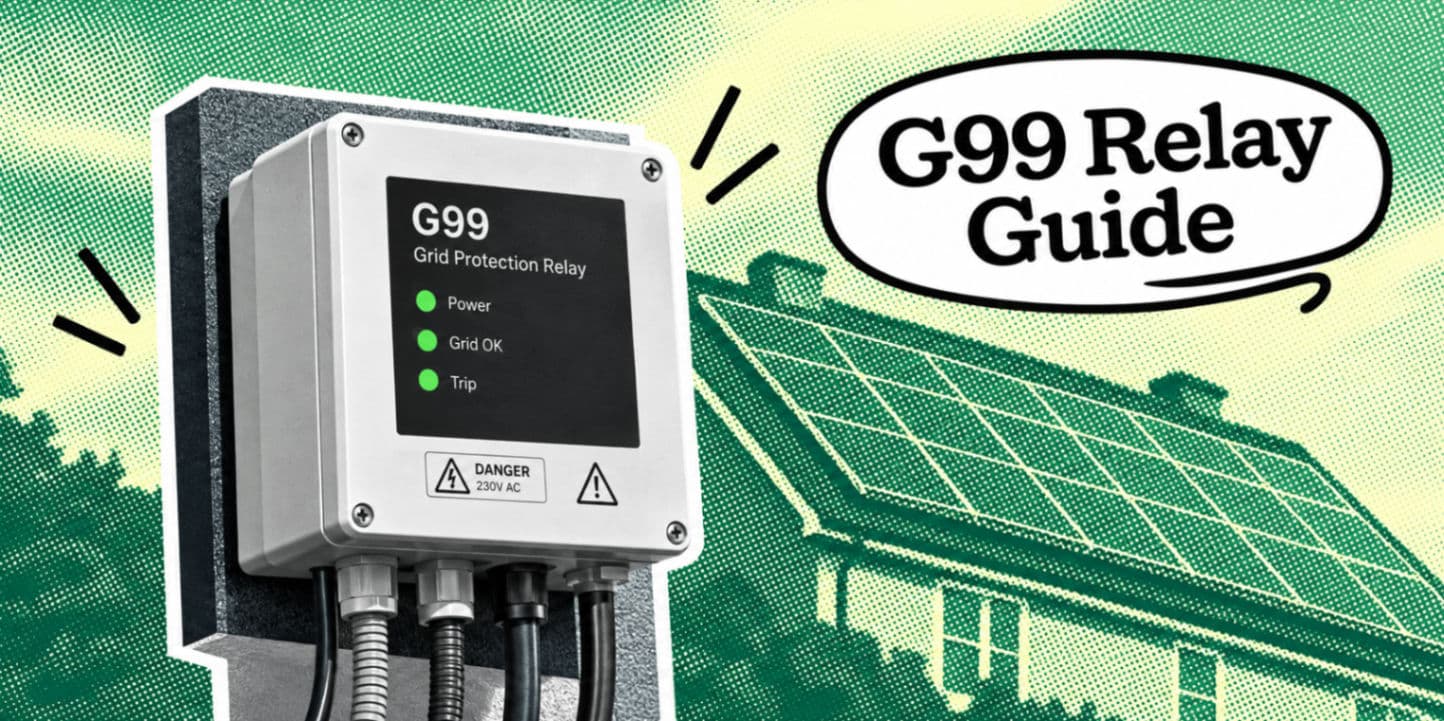
In the UK, small-scale generation systems are usually dealt with under G98 or G99 connection rules.
National Grid describes G98 as the process used for fully type-tested microgeneration equipment under 16A per phase, often handled on a “fit and notify” basis. Larger or more complex systems may need a G99 application before connection.
The main takeaway? Be wary of any plug and play solar panel kit that makes the whole thing sound completely rule-free.
Plug in solar panels can be useful, but only when they are properly designed, safely connected, and suitable for the property they are being used in.
A bargain solar kit is not much of a bargain if it leaves you with an electrical fault, an insurance headache, or a very awkward conversation with your landlord.
Related:
Are solar panels impacted by chimneys?
What is a microinverter?
A microinverter is the small but important bit of kit that makes plug in solar panels usable in your home.
Solar panels produce DC electricity, but UK homes run on AC electricity.
The microinverter converts the electricity from DC to AC, so the power generated by the panel can be used by your home’s electrical system.
Think of it as a translator. The solar panel produces electricity in one “language”, your home uses another, and the microinverter helps them understand each other.
In a plug in solar panel setup, the microinverter is usually attached to one panel or a small number of panels.
This is different from many traditional rooftop systems, where multiple panels may feed into a larger central inverter.
A good microinverter does more than just convert electricity, too. It helps synchronise the solar power with your home and the grid, and should include safety shut-off features.
That last point really matters. If there is a power cut, grid-connected solar equipment needs to stop sending electricity back into the network. This helps protect engineers working on the lines.
This safety function is called anti-islanding protection, and it is one of the key things to look for before buying any plug in solar panel system.
How much electricity can plug in solar panels generate?
Plug in solar panels are much smaller than a typical rooftop solar panel system, so it is worth keeping expectations realistic.
A small plug in setup may help cover some of your low-level daytime electricity use. Think along the lines of background appliances and smaller devices, rather than running the whole house.
For example, depending on the size of the system and the conditions, plug in solar panels may help offset electricity used by:
A broadband router
A fridge cycling on and off
Laptop or phone charging
Lighting
A TV
Small kitchen appliances used during the day
General standby or background electricity use
But they are unlikely to power high-demand appliances for long, and they are not designed to replace your grid supply.
Generation also changes a lot throughout the year. In the UK, solar panels usually produce much more electricity in spring and summer, when days are longer and the sun is higher.
In winter, output drops because there are fewer daylight hours and the sun is lower in the sky.
Where you place the panels matters too. Balcony walls, railings, trees, neighbouring buildings, chimneys, rooflines, and even partial shading can all reduce performance.
A panel in a sunny, south-facing spot will usually perform far better than one tucked behind a shaded balcony wall.
So, while plug in solar panels can generate useful electricity, they are best seen as a way to trim some daytime grid usage, not as a way to run an entire home.
Should you choose plug in solar panels or a full solar panel system?
Plug in solar panels can be a useful option if you rent, live in a flat, or want to test the solar waters without turning your roof into a mini power station.
But they do have limits.
Many plug in or balcony-style solar systems are around 600W to 800W. A typical home solar panel system is usually closer to 3kW to 4.5kW+, depending on the property. So, an 800W plug in system is only around 18% of the size of a 4.5kW rooftop system.
That means the output is on a completely different scale. Plug in solar panels may generate enough to offset some daytime background usage, such as a router, laptop, lighting, or a fridge cycling on and off. Useful, yes. Running the whole home? Not unless your home is a very optimistic shoebox.
So, if you have a sunny balcony or patio and realistic expectations, plug in solar panels can make sense. But if you own your home, have a suitable roof, and want meaningful bill savings, a professionally installed solar PV system is usually the stronger long-term choice.
Thinking about solar panels for your home? Heatable makes it easy to compare options, understand costs, and get a professionally installed system designed around your property, roof, and energy usage.
Next Steps For Your Solar Journey:
When planning to install solar panels for your home, there are several important factors to consider. Make sure to refer to the following guides to help you make informed decisions:
To dive deeper into these topics, head over to our advice section, check out our YouTube channel for informative videos, or read a customer case study to see how others have benefited from their solar installation.
Get a Quote for Solar Today
Without boasting you should get your solar installed with us, here's why:
Thousands of Happy Customers: We boast an average score of 4.9 on Trustpilot, outperforming the market leader.
Which? Trusted Trader: Heatable is proudly recognised as a Which? Trusted Trader.
MCS Accredited: Our accreditation by the Microgeneration Certification Scheme (MCS) ensures high-quality standards.
Exclusive Panels: We offer REA Fusion solar panels, available only through Heatable.
Consumer Protection: As members of the HIES consumer code, we provide 2-year deposit protection.
Flexible Payment Options: Choose from multiple payment methods, including finance options.
Fixed Price Guarantee: Enjoy transparency with no hidden costs.
Save Your Quote: You can save your quote and decide later.
Bespoke Design Tool: Draw your own conclusion (literally) on whether solar is worth it for you, here.