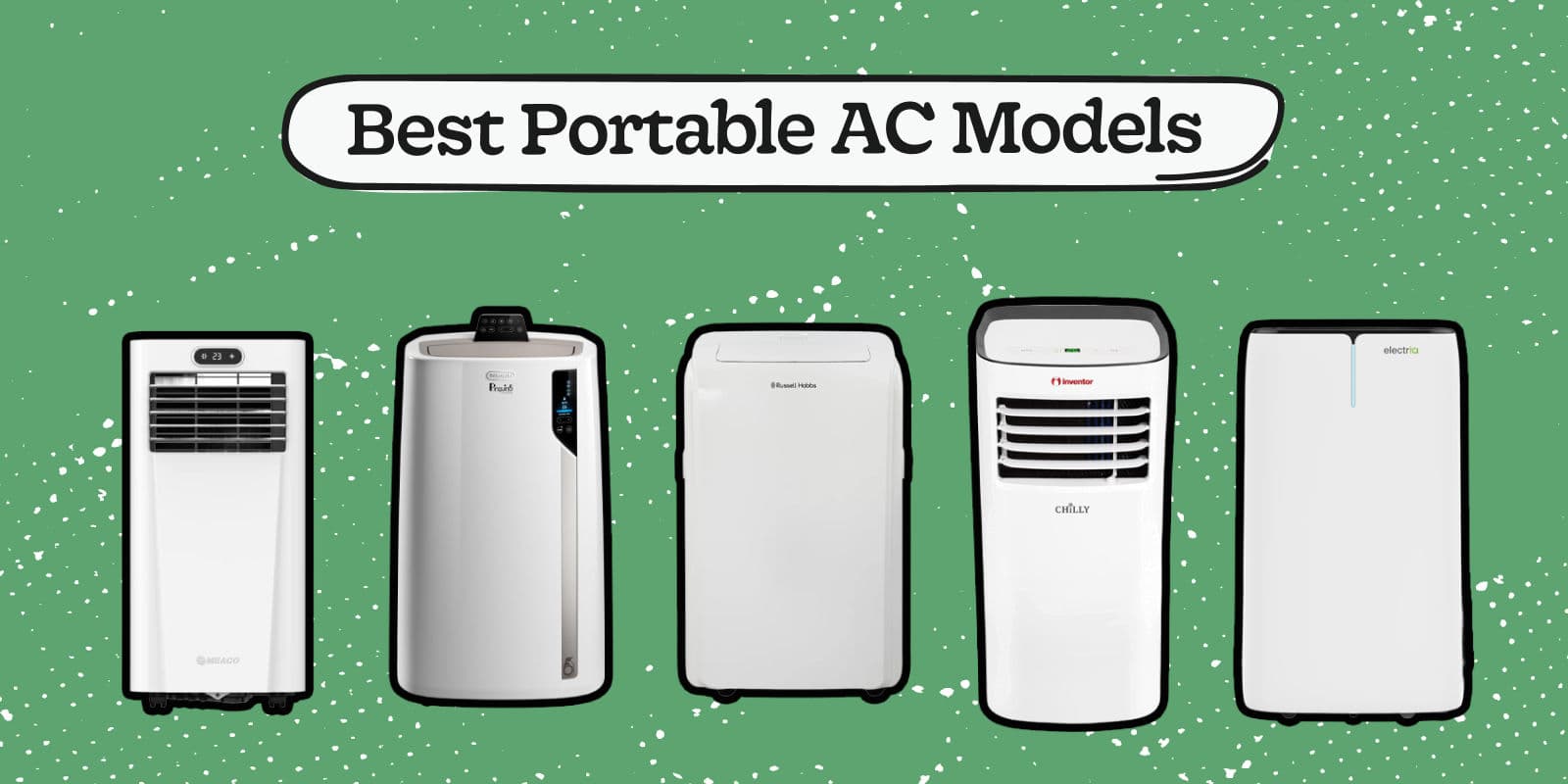

Sweating through another UK summer - or ready to chill? With heatwaves becoming the new norm (2022’s 40°C scorcher wasn’t a one-off), portable air conditioners are a game-changer for renters, flat dwellers, or anyone dodging the hassle of full installations.
No drilling, no permanent installation, no awkward landlord conversations - just plug it in, vent it properly and cool the room down.
Choose badly, though, and you could end up with a noisy, energy-hungry box that barely takes the edge off the heat. In the worst case, it becomes an expensive fan you regret buying the moment the temperature rises.
That is where this 2026 guide comes in. We’ve rounded up the best portable air conditioners for UK homes, from budget-friendly options for smaller rooms to smart-enabled models with enough power to handle more demanding spaces.
We’ll compare cooling capacity in both BTU/h and kW, explain what that means in real-world terms, look at likely running costs, and weigh up whether a portable air conditioner is actually worth buying in the UK’s unpredictable climate. We’ll also point out when it makes more sense to skip the portable route and invest in a fixed split system instead.
Let’s find the right setup for your space before the next heatwave turns your home into a greenhouse.
🔑 Key Takeaways:
Short on time? Here’s the quick scoop:
Our top 5 picks cover rooms from 16 to 30 m², with prices ranging from £200 to £650.
Portable units are flexible and affordable, but don’t expect the power or efficiency of fixed systems.
Cooling capacity is shown in both BTUs and kW. BTUs are still commonly used in the UK market, but kW is the standard unit for power under the metric system and offers a clearer picture of energy usage.
Portable units can work well for renters, bedrooms, home offices and occasional summer use
For larger homes, regular use or multiple rooms, a fixed split system is often the better long-term option
That is also why the Energy Saving Trust says portable air conditioners use much more energy than fans. Its current guidance says running a portable air conditioning unit all day can cost almost 20 times as much as running a typical freestanding fan.
If you want a cheaper way to stay cool, see our guide to the best fans.
How we chose these models 📝
This shortlist is based on published manufacturer specifications, major retailer listings and independent buyer-guide coverage. The focus was on models with clear UK availability, transparent specs and sensible room-size coverage, rather than gimmicks. Cooling output, energy rating, sound levels, venting practicality, controls and value all mattered. Where exact pricing varies by retailer, treat figures as rough guide prices rather than permanent RRPs.
Our Top Picks at a Glance
We’ve combed through specs, reviews, and real-world feedback to find five portable air conditioners that actually perform.
Below, you’ll find our top picks - complete with prices, cooling power, and noise levels - so you can choose the right one without the guesswork:
Brand & model | Price (Approx.) | Amazon Price | Rated Capacity (kW) | BTU/h (legacy) | Room Size | Noise (dB) | Energy Rating |
MeacoCool MC Series Pro 9000 | £400 | 2.6 kW | 9,000 | 16–26 | 52–55 | A | |
De’Longhi Pinguino PAC EL112 | £650 | 3.2 kW | 11,000 | 26–30 | 52–63 | A+ | |
Russell Hobbs 2-in-1 RHPAC11001 | £320 | 3.2 kW | 11,000 | 20–30 | 65 | A | |
Inventor Chilly 9000BTU | £200 | 2.6 kW | 9,000 | 16–24 | 65 | A | |
ElectriQ Eco Silent 12000 | £350 | 3.5 kW | 12,000 | 20-30 | 53-65 | A |
Prices are approximate RRPs as of June 2026; check retailers for current prices and deals (table includes affiliate links, which may earn us a small commission - at no extra cost to you.)
Why BTU and kW?
Both BTU (British Thermal Units per hour) and kilowatts (kW) measure cooling capacity:
BTU/h: Still widely used on UK packaging and product listings.
kW: The SI (metric) standard unit. Easier to compare with energy use and running costs.
To convert:
1 kW = 3,412 BTU/h
So, while BTU is often front and centre, it’s kW that gives you a clearer picture of the energy demands and operating costs.
If you’re comparing models or calculating running costs, use kW as your base unit.
Best Portable Air Conditioners for UK Homes in 2026
Ready to stop your flat from turning into a sauna?
These units were handpicked for their performance, value, and ability to handle those sticky UK heatwaves without breaking the bank.
[1] MeacoCool MC Series Pro 9000
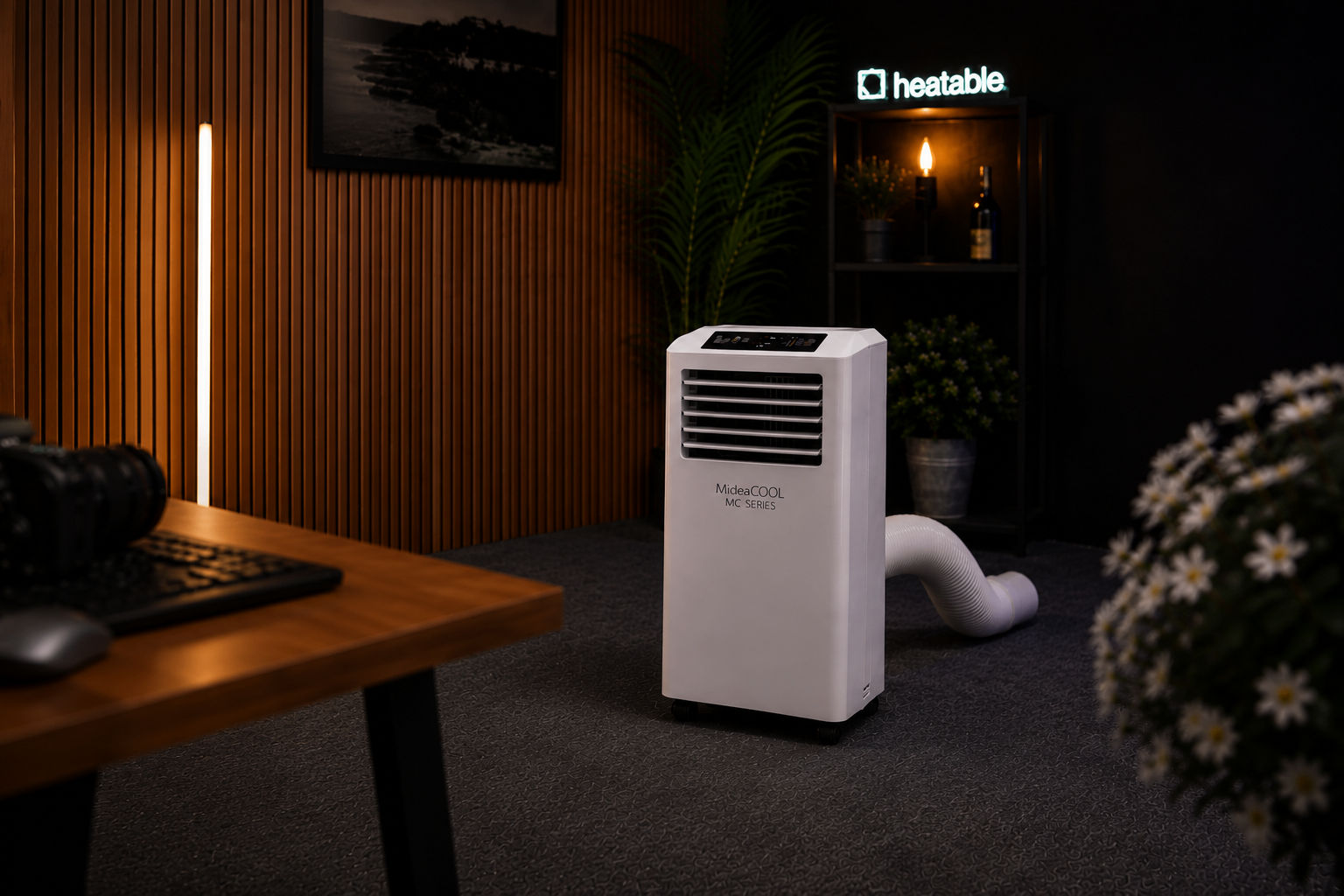
Want to pre-cool your bedroom from the train home? The MeacoCool MC Series Pro 9000 has built-in Wi-Fi, so you can control it remotely via the Meaco app.
With 9,000 BTUs (2.6 kW), it easily cools small to medium-sized rooms (16–26 m²) - perfect for bedrooms, home offices, or stuffy lounges.
It runs at 52–55 dB on low fan speed, quiet enough for a Netflix binge or light sleep, and its A energy rating keeps running costs low.
Sleep mode dims the lights and lowers the fan for overnight use. At 31 kg, it’s on the heavier side, and the app could be slicker - but for tech-savvy renters, this is a smart, dependable all-rounder.
“Portable air conditioners are great for short-term use, but they’re rarely a long-term solution if you’re cooling multiple rooms or struggling with humidity.” - Ben Price, Heatable co-founder
[2] De’Longhi Pinguino PAC EL112

Need to cool a larger space? The De’Longhi Pinguino PAC EL112 delivers serious performance, pushing out 11,000 BTUs (3.2 kW) - ideal for bigger rooms (26–30 m²) like open-plan living areas.
It’s both Wi-Fi and Alexa-enabled, so you can control it remotely or with your voice.
De’Longhi’s Real Feel tech adjusts humidity as well as temperature, making the air feel noticeably fresher, not just colder. Users report it can bring a stuffy 25°C room down to 20°C in just 30 minutes.
Downsides? It’s on the louder side at 63 dB on full blast, and the £650 price tag stings. But if you want premium cooling power with smart features, this one’s built to impress.
[3] Russell Hobbs 2-in-1 RHPAC11001
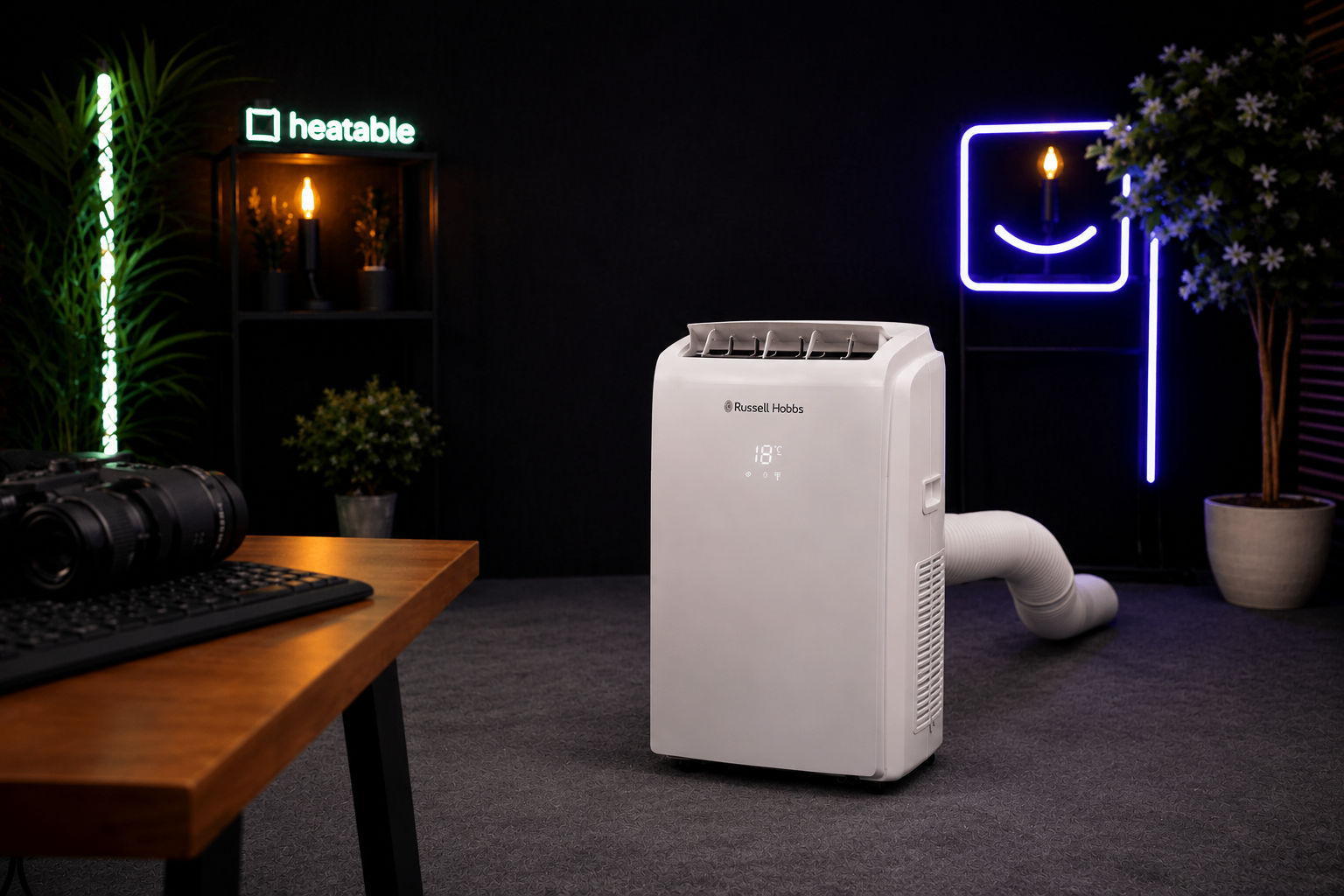
Looking for versatility on a budget? This 4-in-1 unit from Russell Hobbs cools, heats, dehumidifies, and fans - all for just £320.
With 11,000 BTU (3.2 kW), it’s powerful enough for rooms up to 30 m² and cools smaller spaces fast (by 2°C in just 10 minutes in a 4.5 m² room).
It’s ideal if you want one unit to tackle both sweltering summers and chilly winters. The trade-offs? It’s loud at 65 dB (think dishwasher hum) and weighs 29 kg, so not the best pick for light sleepers or frequent movers.
Still, if you’re after budget-friendly, all-season performance, it punches well above its weight.
[4] Inventor Chilly 9000BTU
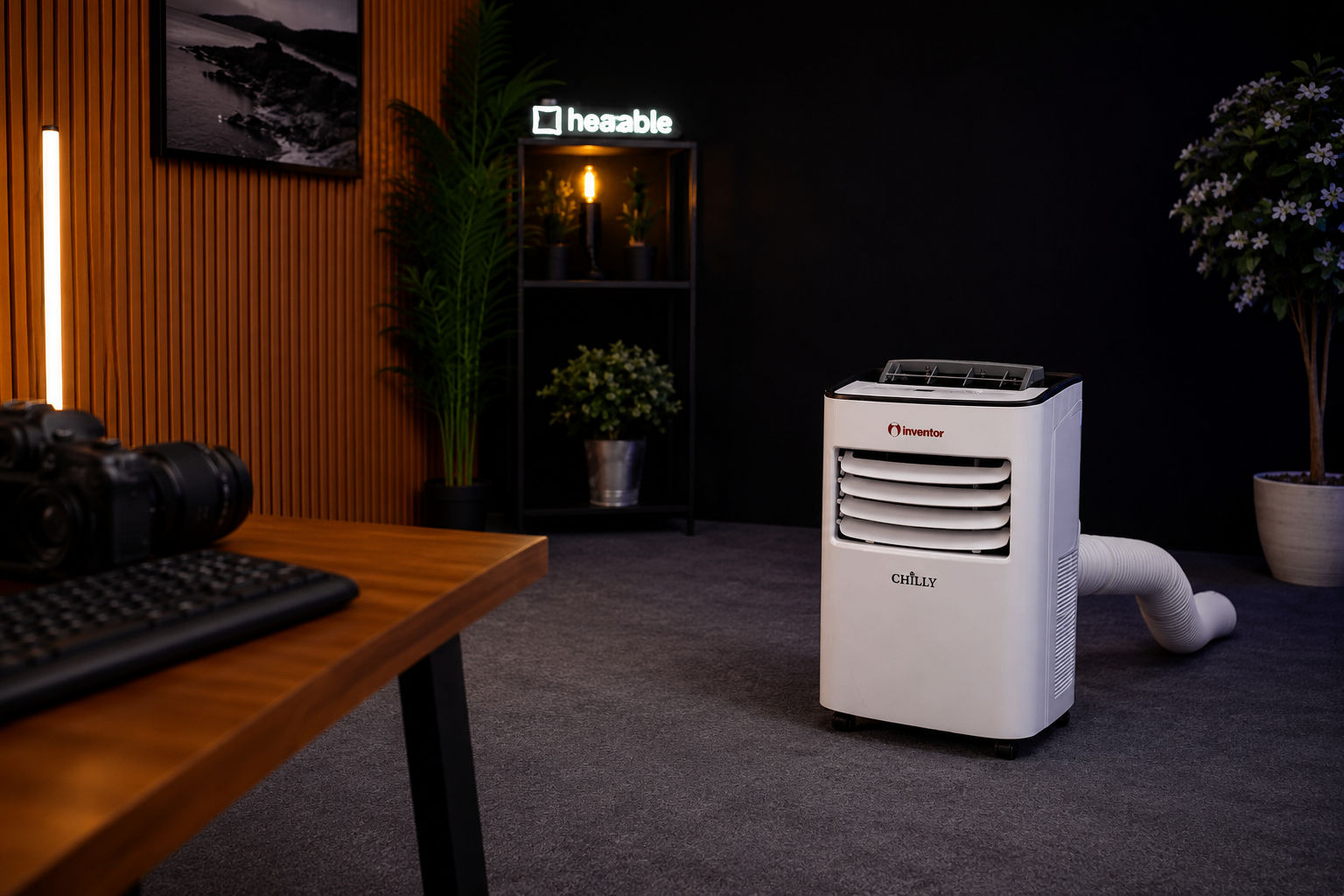
The Inventor Chilly is the most affordable option on our list - just £200 - but it still covers the essentials.
With 9,000 BTUs (2.6 kW), it’s suitable for small to medium rooms (16–24 m²), and its compact design makes it ideal for flats or tighter spaces.
You get 3-in-1 functionality (cool, fan, dehumidify), plus a sleep mode for gentler overnight use. That said, at 65 dB, it’s not exactly whisper-quiet, and there are no smart controls or app integrations.
Still, if you need reliable cooling without fancy extras - and you’re not too fussed about noise - it’s a solid budget pick.
[5] ElectriQ Eco Silent 12000
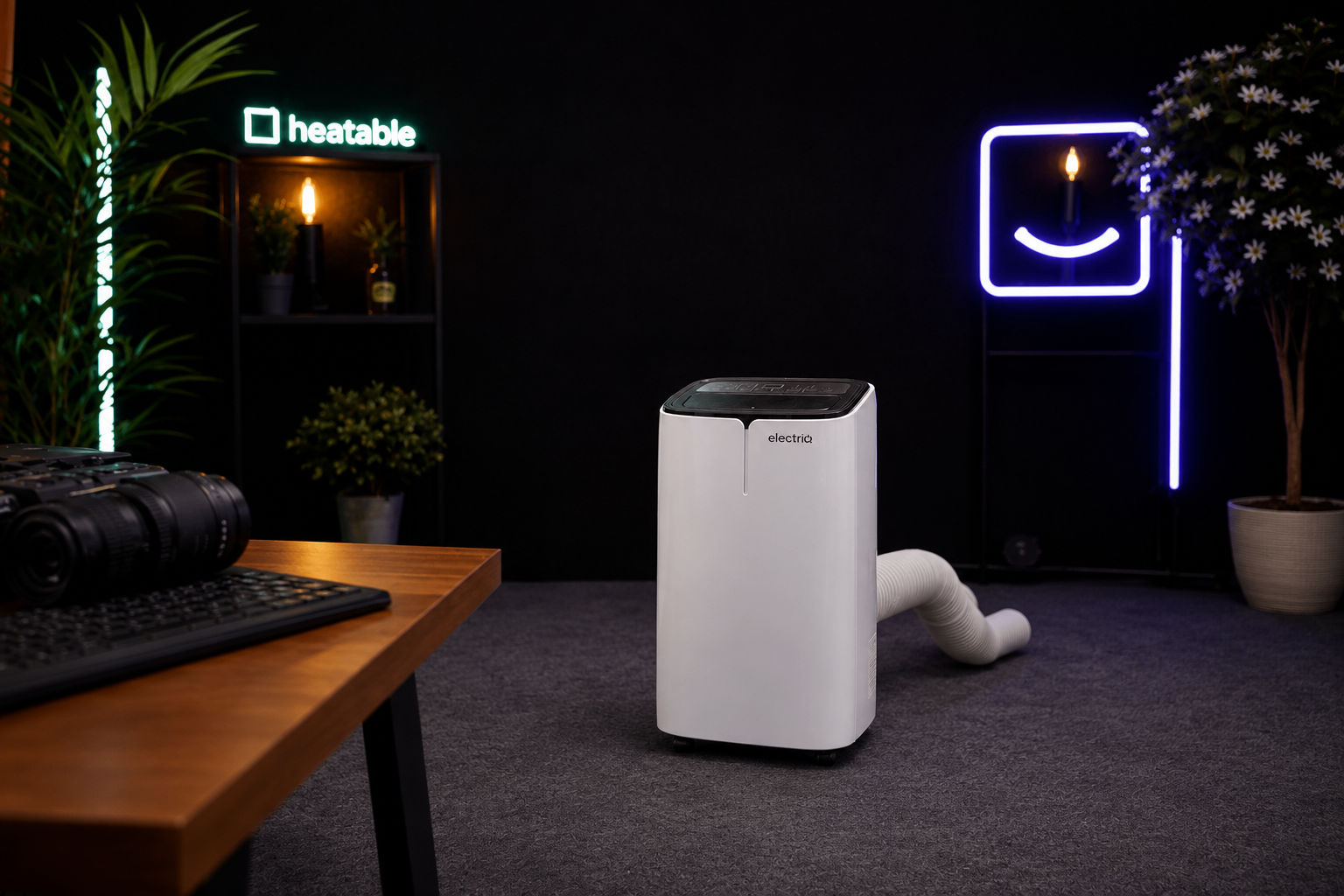
Got a larger room to cool? The ElectriQ Eco Silent 12000 packs 12,000 BTUs (3.5 kW), ideal for medium to large spaces (20–30 m²).
It comes with a generous 1.8 m hose for flexible placement and runs quieter than most at just 53 dB on low, making it a rare bedroom-friendly option in this size range.
It’s A-rated for efficiency and includes a built-in heat pump for year-round use. The flipside? It draws a hefty 3.5 kW and weighs 35 kg, so it’s not the lightest or cheapest to run.
Still, if you want quiet, all-season performance for a bigger room, this one’s hard to beat at the price.
How to Pick the Right Portable Air Conditioner
Choosing a portable air conditioner isn’t just about grabbing the flashiest box.
Get the size or features wrong, and you’ll either be sweating through the heat or overpaying for underused tech. Here’s how to get it right the first time.
Start with the Right Size (BTUs)
The key number to look for is BTU – short for British Thermal Units, which tells you how much cooling power the unit has.
Too few, and your AC will struggle. Too many, and you’ll waste money on extra power you don’t need.
Here’s a quick BTU guide by room size:
Small rooms (16–18 m²): 7,000–9,000 BTU
Medium rooms (18–30 m²): 9,000–12,000 BTU
Large rooms (30–40 m²): 12,000–14,000 BTU
To calculate your room size, multiply the length by the width (in metres).
For example, a 4 m x 5 m bedroom = 20 m², so a 9,000–10,000 BTU unit is ideal.
“Portable air conditioners are great for short-term use, but they’re rarely a long-term solution if you’re cooling multiple rooms or struggling with humidity.” - Patrick Garner, Head of AC Installations at Heatable
If you’re a homeowner, check out our best fixed air conditioning units for UK homes for a future-proof option.
Look for Dehumidifying Power
Most portable ACs also work as dehumidifiers - crucial for those muggy UK summers.
Opt for self-evaporating models, which recycle condensation and reduce the need for manual emptying. Less faff, more comfort.
Check the Venting Setup
All portable ACs need to vent hot air out of the room, usually through a window.
Most come with a hose - longer ones (1.5–1.8 m) give you more flexibility for placement. Just don’t extend it too far or performance will take a hit.
Mind the Noise Levels
Noise is often the deal-breaker. Here’s a rough guide:
50–55 dB: Like a fridge hum – suitable for bedrooms and living areas
60–65 dB: Similar to a dishwasher or lively conversation – fine for daytime use, but not great for sleeping
For a quieter life, look at units like the MeacoCool or ElectriQ Eco Silent.
Energy Efficiency Matters
Portable air conditioners aren’t cheap to run, so look for an energy rating of A or higher to keep electricity costs in check.
Want to know exactly how much you’ll pay? Check out our UK running cost guide.
Smart Features vs. Simplicity
Modern models come with extras like:
Wi-Fi and smart controls – pre-cool from your phone (e.g. MeacoCool, De’Longhi)
Sleep mode – reduces fan speed and dims lights for overnight use
Timers – automatically turn off the unit to save energy
They’re great if they match your lifestyle. Just don’t pay for features you’ll never use.
Bottom line:
Pick the right BTU for your space, factor in noise and energy use, and choose features that genuinely add value.
Do that, and you’ll stay cool all summer without blowing hot air over your wallet.
Portable vs Fixed Air Conditioning: Which Wins?
Portable air conditioners are quick fixes, but are they the best for your home?
Let’s stack them up against fixed systems and see how they compare:
Portable Air Conditioners
These wheeled wonders suck in warm air, cool it with refrigerant, and vent heat out through a window hose. They’re renter-friendly, need no installation, and start at £200–£650.
You can move them from room to room, making them ace for flats or occasional heatwaves. But they’re noisier (50–65 dB), less efficient, and struggle with big spaces or high humidity.
Running costs add up if you use them daily, and that hose dangling out the window isn’t exactly chic.
Fixed (Wall-Mounted Split) Air Conditioners
Split systems have an indoor unit on your wall and an outdoor unit that whisks heat away.
They’re quieter (20–40 dB), more powerful (up to 24,000 BTU), and energy-efficient (often A++ or A+++).
Perfect for larger homes or multiple rooms, they cost £800–£2,000 with installation, not renter-friendly. They’re a long-term investment, saving on bills and boosting comfort year-round.
Comparison Table: Portable vs Fixed Air Conditioning
Here’s how portable, wall-mounted split, and multi-split systems stack up on key metrics:
Metric | Portable AC | Mounted Split | Multi Split |
Cooling Power (BTU) | 5,000–14,000 | 9,000–24,000 | 18,000–48,000 (multiple rooms) |
Upfront Cost | £200–£650 | £1,500–£2,500 (inc. install) | £3,000–£7,000+ (inc. install) |
Energy Efficiency | A or lower | A++ to A+++ | A++ to A+++ |
Noise (dB) | 50–65 | 20–40 | 20–40 |
Installation | None (plug-and-play) | Professional required | Professional required |
Best For | Renters, small spaces, occasional use | Homeowners, larger spaces, long-term | Whole-home cooling |
Running Cost (Annual) | Usually higher per room cooled than fixed systems | Usually lower per room cooled than portable AC | Usually efficient for zoned whole-home use |
Running cost examples in this guide use Ofgem’s average direct debit electricity rate of 24.67p/kWh for 1 April to 30 June 2026.
Running Costs and Maintenance: Stay Cool Without Burning Cash
Nobody wants their air con racking up the bills.
Here’s what you need to know to keep costs down and performance up:
💷 How Much Does It Cost to Run?
A typical portable air conditioner commonly uses somewhere in the region of 0.8 to 1.3 kWh per hour, depending on size and mode. Under Ofgem’s 24.67p/kWh average direct-debit rate for 1 April to 30 June 2026, that means a rough running cost of about 20p to 32p per hour.
As an example, a 9,000 BTU unit using around 0.9 kWh per hour would cost roughly 22p per hour to run.
Use it for 4 hours a day over 60 hotter days, and you land at about £53 for the season. A larger, thirstier unit will obviously cost more.
That is also why the Energy Saving Trust says portable air conditioners use much more energy than fans. Its current guidance says running a portable air conditioning unit all day can cost almost 20 times as much as running a typical freestanding fan.
💡 Tips to Cut Costs Further:
Pre-cool rooms before peak heat
Use built-in timers and sleep modes
Seal windows and doors to trap cool air
Choose A-rated models, which the Energy Saving Trust says can help lower bills
🧼 Maintenance: Keep It Running Smoothly
Portable ACs are low-maintenance, but they still need a little love:
Clean or replace the filters every 2–4 weeks (check your manual) to keep airflow efficient
Self-evaporating models (like the De’Longhi) reduce hassle; others may need occasional tank draining
Store it in a dry spot over winter to prevent mould and damage
Treat your AC like a loyal sidekick: give it a clean, keep it cool, and it’ll return the favour.
Cheeky tip: don’t let it gather dust - it’s not a modern art installation.
Next Steps For Your AC Journey:
When planning to install air conditioning for your home, there are several important factors to consider. Make sure to refer to the following guides to help you make informed decisions:
To dive deeper into these topics, head over to our advice section, check out our YouTube channel for informative videos.
Get a Quote for Air Conditioning Today ❄️
Here’s why homeowners choose us:
Thousands of Happy Customers: We have an average score of 4.9 on Trustpilot, outperforming the market leader.
Which? Trusted Trader: Heatable is proudly recognised as a Which? Trusted Trader.
FGAS Certified: Our FGAS certification ensures all air conditioning work is carried out to the required industry standards.
Flexible Payment Options: Choose from multiple payment methods, including finance options.
Fixed Price Guarantee: Enjoy transparency with no hidden costs.
Save Your Quote: Save your quote and come back to it whenever you’re ready.
🔗 Some links in this guide are affiliate links. If you use these to make a purchase, Heatable might earn a small commission - thanks for supporting independent reviews.