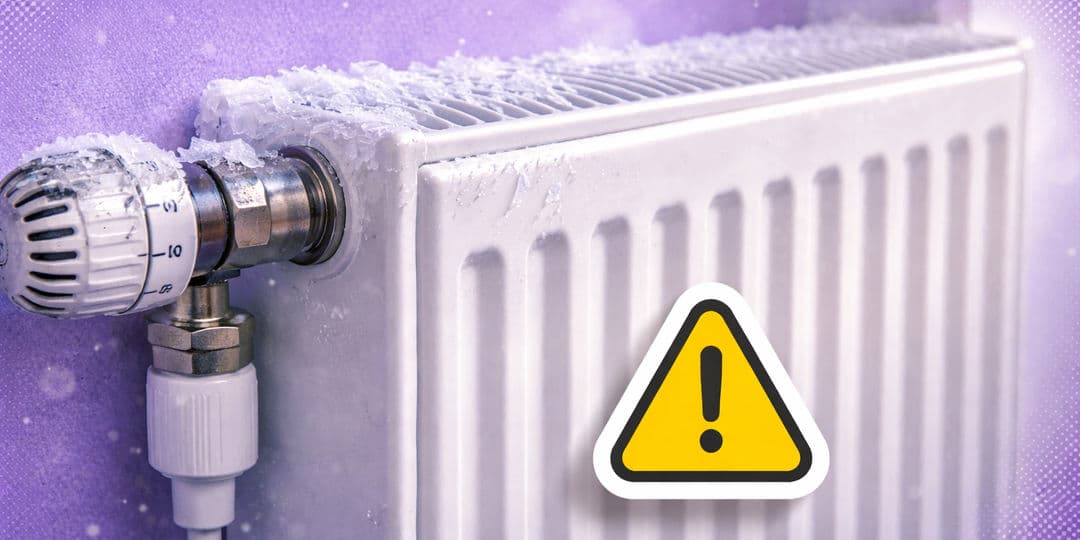

It's freezing, your radiators aren't heating up, and you're wondering why there's no central heating.
Most no-heating issues are basic control, pressure, or power problems that you can sort in minutes.
We'll start with a fast triage, then dive into some of the most common scenarios.
If your boiler's old and breaking down regularly, a fixed-price replacement can be cheaper than endless repairs. Get your free, no obligation quote here.
60-Second Fast Triage (do this first):
Before you dive into anything fancy, run these quick checks:
Power - Is the boiler actually on? Check the boiler switch, nearby socket/isolator, and your fuse box for a trip.
Thermostat - Set it to 21°C (as a test) and make sure it’s asking for heat (heat icon/on schedule/batteries ok if wireless).
Timer/Programmer - Override the schedule and set heating to ON (or “Boost”) right now.
Pressure - If you’ve got a pressure gauge, aim for 1.0–1.5 bar when the system is cold. If it’s low, you’ll usually need to repressurise.
Reset - Press the boiler reset once, then give it a minute to try again.
Still no joy? Jump to the section below that matches your setup: no heating + no hot water, hot water but no heating, or heating but no hot water.
First, identify what’s actually broken
Not all “heating not working” problems are the same - and the fix depends on what is (and isn’t) working.
Pick the one that matches your home:
No heating + no hot water
Hot water works, heating doesn’t
Heating works, hot water doesn’t
Electric heating not working (all-electric homes or portable heaters): check plugs, switches, fuses and any built-in thermostats on the unit. If it’s still dead, call an electrician.
This way you’re not wading through fixes that don’t apply - and you get to the right solution faster.
If you have no heating AND no hot water
Work through these in order - each one could be the quick win you’re looking for…
[1] Check power first.
Test a nearby socket with another appliance, make sure the boiler isolator switch/fused spur is on, and check your consumer unit for any tripped switches (reset if needed).
Why this matters: no power means nothing works, so it’s the quickest thing to rule out.
[2] Check your thermostat / room stat.
Set it to 21°C as a test (a typical comfort range is 18–21°C).
If it’s wireless, replace the batteries and move it closer to the receiver if it’s struggling to connect.
Why this matters: if the thermostat isn’t calling for heat, the boiler won’t fire.
[3] Check the programmer / timer.
Power cuts and clock changes can scramble schedules, so override the programme and set the heating to ON now (or “Boost”).
If you can’t override it, set the heating to come on in 15 minutes to test.
Why this matters: timer settings can make it look like the boiler’s broken when it’s simply not being told to run.
[4] Check boiler pressure.
Find the gauge or display - when the system is cold/off, you’re typically looking for 1.0–1.5 bar.
If it’s low (around 1 bar or below), repressurise using the filling loop by opening the valves slowly until you reach roughly 1.2 bar, then close them.
Why this matters: low pressure triggers a safety shutdown.
[5] Check boiler temperature dials.
Many boilers have separate dials for hot water and heating, so make sure the heating dial hasn’t been turned down.
A common starting point for radiators is around 60–70°C.
Why this matters: it’s easy to knock a dial without realising, and the system won’t heat properly if it’s set too low.
[6] Try a boiler reset.
Find the reset button (it varies by model, so check the boiler flap/manual), press it once, then wait a minute or two.
Don’t keep pressing if it doesn’t work. Why this matters: a reset can clear temporary faults, especially after a power cut.
[7] Frozen condensate pipe (winter).
If it’s cold outside and you’ve got a combi boiler, check for a frozen condensate pipe (often a white plastic pipe outside).
You might hear gurgling, see a fault code, or notice the boiler trying to start then stopping.
Thaw it gently with warm (not boiling) water, warm cloths, or a hot water bottle.
Why this matters: UK cold snaps freeze condensate pipes all the time, and the boiler will refuse to run.
[8] If you’re on a prepay meter.
Check your credit and top up if needed. Why this matters: no credit can mean no gas supply, so the boiler can’t fire.
[9] If you have an open-vented system (loft tank).
If you’ve got a small tank in the loft, the float valve can stick. Only check this if it’s safe to access, and only free it gently.
Why this matters: if the tank can’t refill, the system can be starved of water.
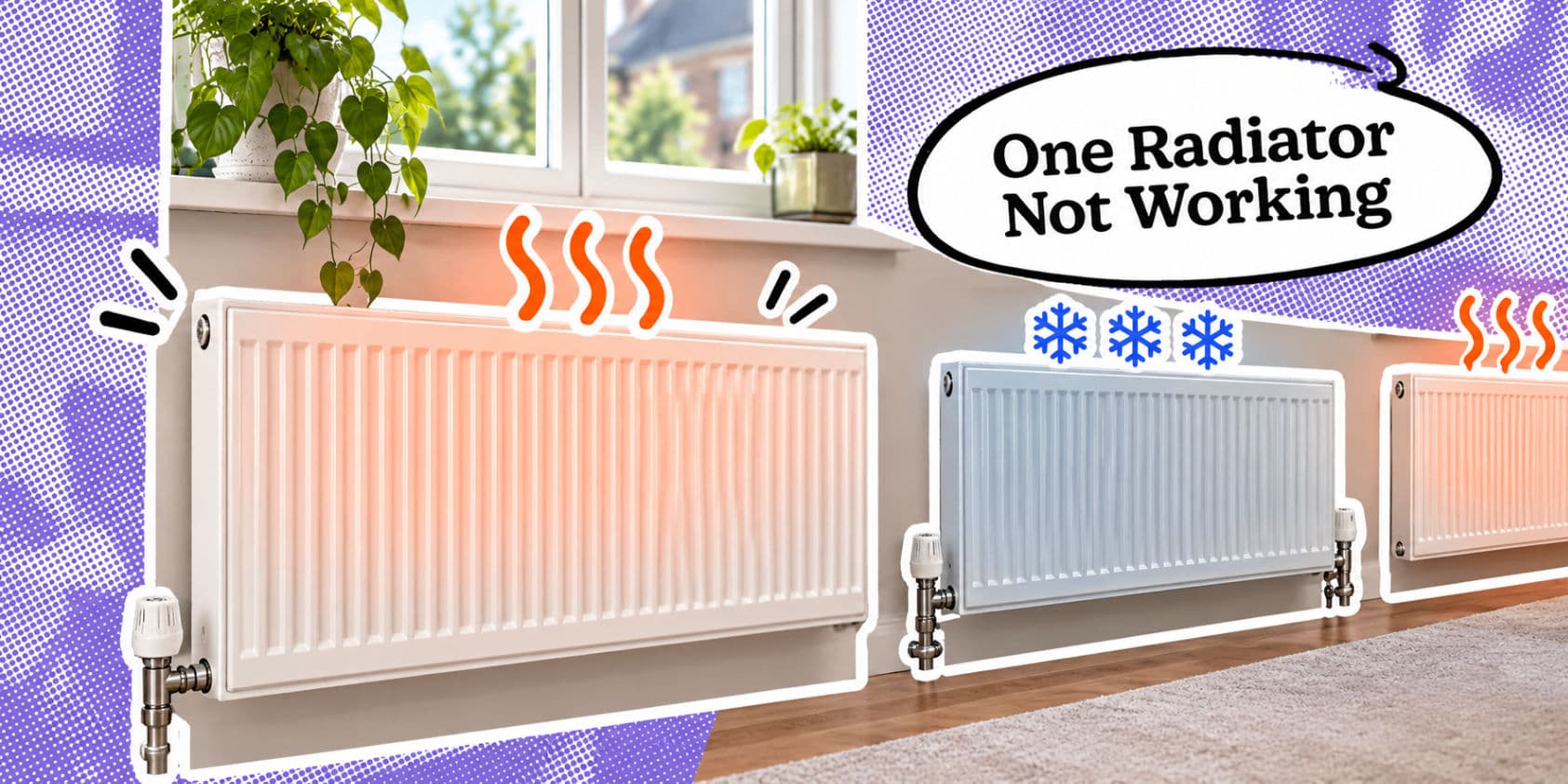
[10] Bleed radiators (if they’re cold/patchy).
If the top of a radiator is cold but the bottom is warm, it’s usually air.
Use a radiator key to bleed from the bleed valve (catch drips with a cloth), then check the boiler pressure afterwards - you may need to top it back up.
Why this matters: trapped air blocks circulation and stops heat getting around the system.
Still no heating? It may be a bigger fault (for example, the boiler isn’t igniting, or an internal component has failed). If you’re stuck, stop and contact a Gas Safe engineer.
🎥 You may also be interested in Gas Engineer Allen Hart explaining the most common boiler problems and how you can resolve them in the video below:
Symptom-to-Suspect Table:
Symptom | Likely Suspect |
Boiler on, rads cold | Controls (thermostat/programmer) or zone valve |
Pressure drops often | Leak somewhere – check pipes [Boiler pressure keeps dropping](internal link) |
Gurgling + fault code | Frozen condensate pipe (combi boilers) |
Everything patchy | Need bleeding radiators |
If you have hot water but no central heating
This usually points to controls (thermostat/programmer) or a component that’s effectively prioritising hot water over heating.
On combi boilers, a stuck diverter valve is a common culprit - it’s the bit that switches the hot water flow between your taps and your radiators.
First, check the basics - make sure heating is actually “on” at the programmer/timer (override the schedule to test), then confirm the thermostat is calling for heat by setting it to 21°C.
Next, check the boiler pressure is still in the normal range (around 1.0–1.5 bar when cold), and that the heating temperature dial on the boiler hasn’t been turned down.
If some radiators are lukewarm or patchy, bleed them too - trapped air can stop heat circulating properly.
If none of that works, it’s likely a failed part such as a diverter valve (combis) or a zone valve (system boilers).
At that point, stop and call a Gas Safe engineer - internal boiler components aren’t a DIY job.
If you have heating but no hot water
Easy mix-up - this is the opposite of “hot water but no heating.” Here, your radiators are warming up fine, but your taps aren’t.
Start with the simple stuff - check the hot water setting on the boiler hasn’t been turned down and dial it up if needed.
If you’ve got a hot water cylinder, check the cylinder thermostat is set correctly (a common target is 60°C) and make sure the programmer is actually scheduling hot water.
If you’ve got an immersion heater, switching it on can give you a temporary boost while you troubleshoot.
If you’ve got a combi boiler and the water is only lukewarm, try reducing the hot tap flow - if the flow rate is too high, the boiler can struggle to heat it properly.
If it’s still not fixed, you could be looking at a faulty valve, sensor, or internal component. At that point, call a Gas Safe engineer rather than poking around inside the boiler.
Safety: when to stop DIY and call for help
Always put safety first and stop troubleshooting if any of the following apply.
If you smell gas or suspect a leak, ventilate the area, don’t use switches or naked flames, isolate the gas if it’s safe to do so, and call the National Gas Emergency Service on 0800 111 999 immediately.
If the pilot light won’t stay lit, that’s also a Gas Safe job. And if you’ve got visible leaks, pressure that keeps dropping, or error codes that return straight after a reset, you’re past the “quick checks” stage.
For anything involving gas, only use a Gas Safe registered engineer.
What to do tonight if you can’t fix it
Keep it simple and keep it safe. Use electric heaters if you’ve got them (and they’re in good condition), layer up, and close off rooms so you’re only heating the space you’re using.
Make sure children, older relatives, and anyone vulnerable has extra blankets and warm sleepwear.
This is a short-term stopgap - if you’ve got no heat and the checks above haven’t worked, you’ll likely need an engineer.
Quick decision: repair vs replace
If your boiler’s older and unreliable, repairs can start to snowball - especially if you’re getting repeat breakdowns each winter.
A decent rule of thumb is: one breakdown a year is annoying but usually worth fixing; two or more is when it’s smart to start pricing up a replacement.
Get A New Boiler Quote Today
If you’re aiming to get the best deal on a new boiler, consider getting your boiler installation with us. Here’s why:
Gas Safe installation within 24 hours.
Thousands of satisfied customers with an average score of 4.9 on Trustpilot, surpassing the market leader.
Which? Trusted Trader: Heatable is proudly recognised as a Which? Trusted Trader.
Price match guarantee: We will match any like-for-like cheaper quote.
Flexible payment options, including interest-free finance*.
Up to a 12-year guarantee on selected boilers.
Fixed price guarantee: No hidden costs.
Save your quote and decide later.
Get an instant fixed price on a new boiler here.
To learn more about boilers, visit our advice section, check out our YouTube channel, or read customer testimonials here.