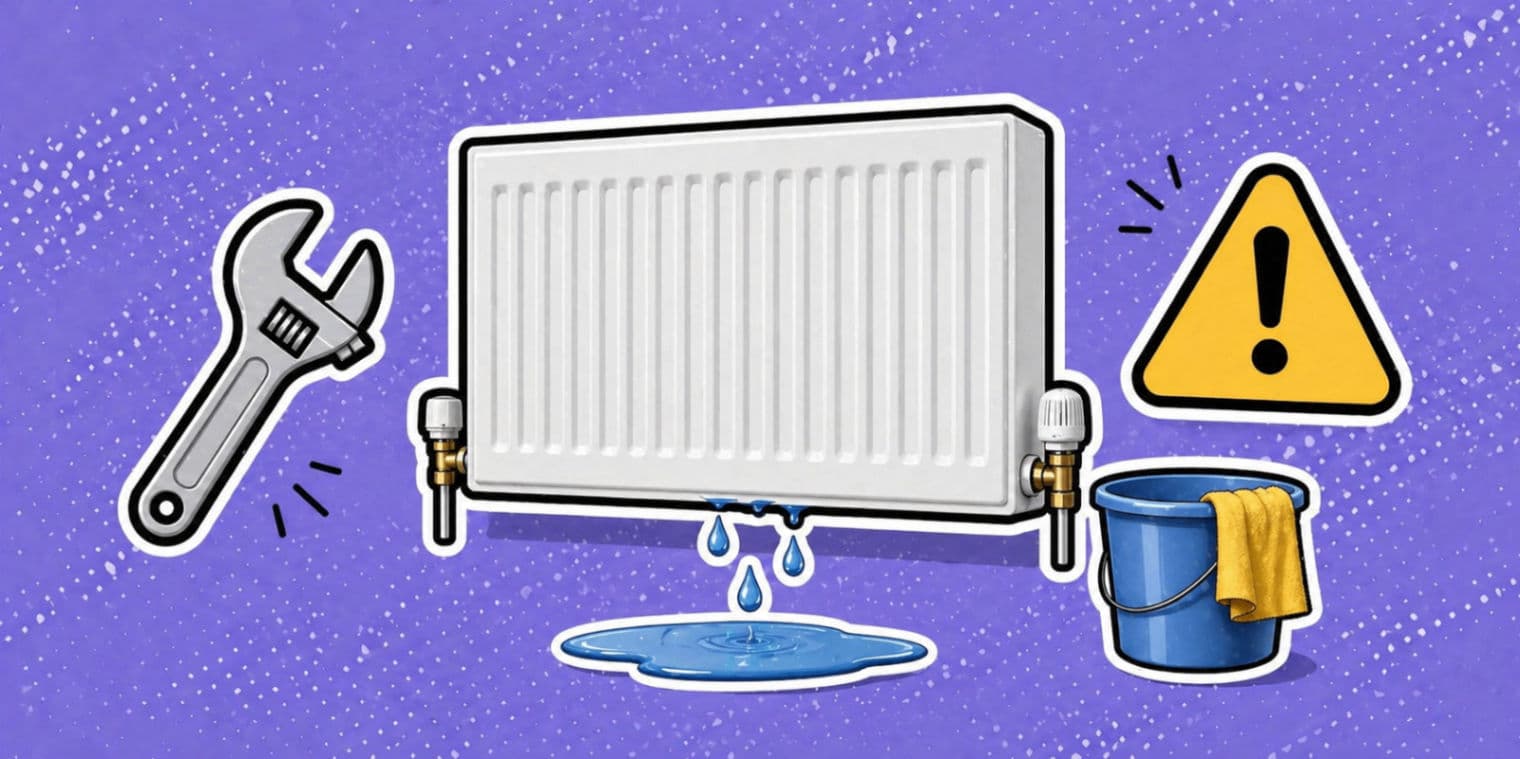

Spotted water around your radiator? Not ideal, especially when it’s heading straight for the carpet, flooring, or skirting board.
The reassuring bit is that a leaking radiator does not always mean disaster.
In many cases, a few quick checks can help you limit the damage, work out where the leak is coming from, and decide whether it is something simple or a job for a professional.
Radiator leaks can come from several places, including the valve, pipe connection, bleed valve, or the radiator body itself. Sometimes it is just a loose fitting. Other times, corrosion or worn parts may mean the radiator or valve needs replacing.
In this Heatable guide, we’ll walk you through what to do first, how to spot the likely cause, and when it’s time to call a qualified heating engineer before a small drip turns into a bigger headache.
What to Do First If Your Radiator Is Leaking
First things first: do not panic.
A leaking radiator is annoying, yes, but acting quickly can help keep damage to a minimum while you work out what is going on.
Here’s what to do straight away:
[1] Turn off your heating
Switch off your boiler or central heating at the controls.
This stops hot water from continuing to circulate around the system and gives the radiator time to cool.
[2] Catch the leak
Place towels, a bowl, tray, or shallow container underneath the leak to catch any dripping water.
Move rugs, furniture, and anything electrical away from the area.
[3] Dry the radiator and surrounding area
Use kitchen roll or a clean cloth to dry around the radiator, valves, and pipework.
This makes it much easier to see where the water is actually coming from, rather than where it has run to.
[4] Isolate the radiator if the leak is more than a slow drip
Turn both radiator valves clockwise to shut the radiator off. If you have a thermostatic radiator valve, turn it down to 0 or the frost setting.
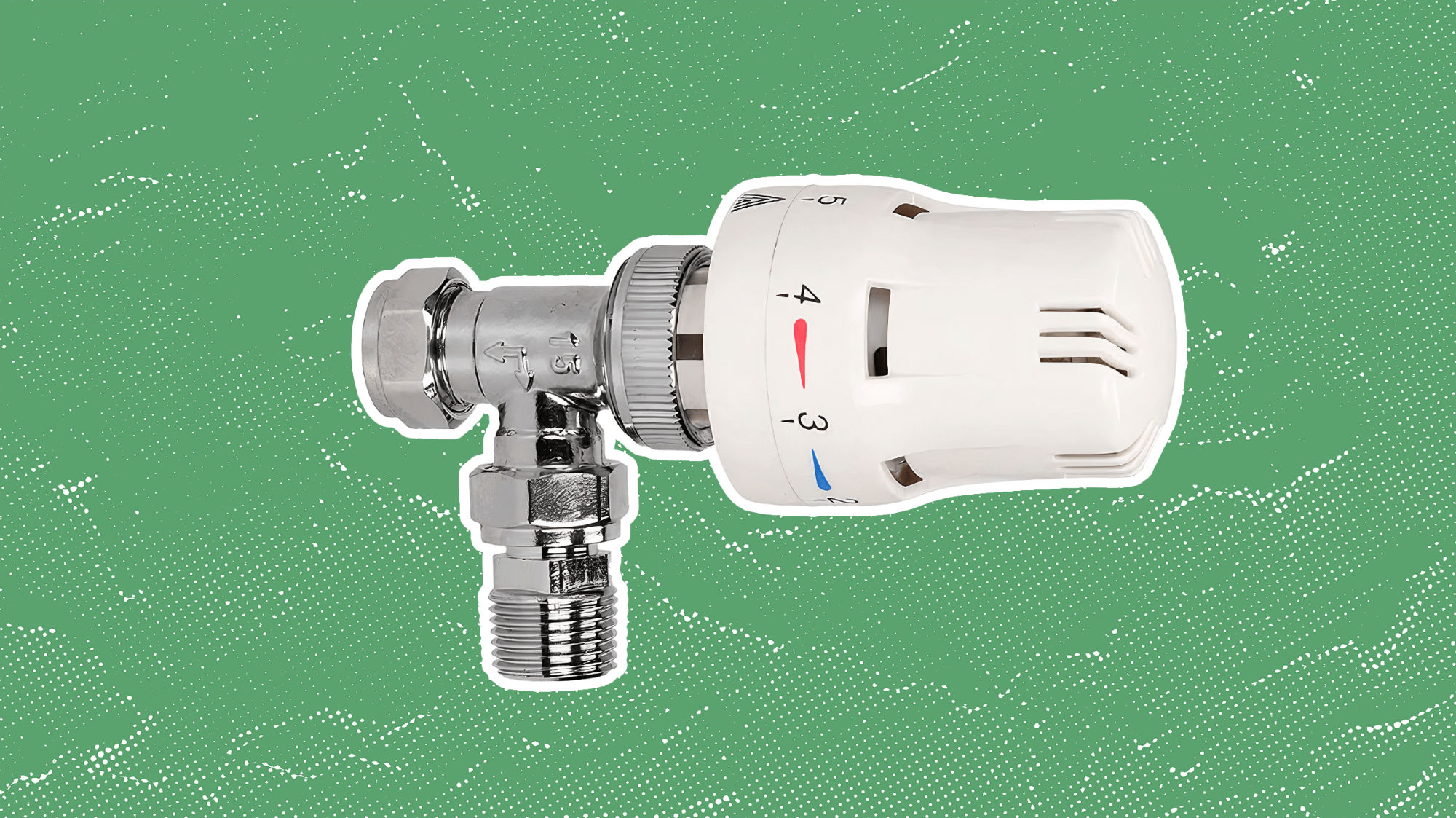
For the lockshield valve, you may need to remove the plastic cap first, then turn it clockwise.
Heatable tip: count how many turns it takes to close the lockshield valve. That way, you can reopen it to the same position later and avoid upsetting the radiator balance.
[5] Keep an eye on it
Once the radiator is isolated, monitor the leak. If the water slows or stops, you have bought yourself some time to arrange a proper repair.
If water keeps flowing, the leak is severe, or you cannot isolate the radiator, turn off the heating system and call a qualified plumber or heating engineer.
Safety note: never work on a hot radiator or a heating system that is still running.
Let everything cool down first to reduce the risk of burns, scalding, or pressure-related issues.
And if you rent your home, contact your landlord or letting agent as soon as possible.
Heating system repairs are usually their responsibility, and it is best to report leaks quickly before they cause further damage.
Where Is the Radiator Leaking From?
Before you reach for a spanner, you need to play detective for a minute.
Radiator leaks are not always coming from where the water ends up.
Water can run down the side of the radiator, along pipework, or drip from a joint before pooling at the bottom.
Start by drying the radiator, valves, and nearby pipework with a cloth or kitchen roll.
Then watch closely to see where fresh water appears. A torch can help if the leak is tucked away near the wall or floor.
Common leak spots include:
Around the radiator valve
Where the pipe meets the valve
From the bleed valve at the top
From the radiator body itself
Around a nut, joint, or fitting
From higher up, with water running down to the bottom
Once you know where the leak starts, you’ll have a much better idea of whether it is a quick check, a simple tightening job, or something that needs a qualified heating engineer.
Radiator Leaking from the Valve
A radiator leaking from the valve is one of the most common radiator leak issues.
This is usually the valve at the side or bottom of the radiator, where the pipework connects into the system.
Over time, small movements, temperature changes, or worn parts can cause water to escape.
Common causes include:
A loose compression nut
Worn valve packing or gland
An old or damaged radiator valve
Pipework moving slightly over time
A valve that has been knocked or disturbed
If the radiator is cool and isolated, you may be able to gently tighten the nut at the base of the valve with an adjustable spanner. The key word there is gently. A small turn may be enough. Overtightening can damage the fitting and make the leak worse.
If the valve is still leaking after that, it may need repacking or replacing. That usually means draining part of the heating system, so it is best left to a plumber or heating engineer.
Heatable tip: if your radiator valve is old, stiff, rusty, or leaking even when closed, replacement is usually the smarter long-term fix.
Radiator Leaking from the Pipe or Joint
If water is coming from the pipe connection, it is usually leaking where the pipe meets the radiator valve or around a nearby fitting.
This can happen because heating systems expand and contract as they warm up and cool down.
Over time, that movement can loosen a joint slightly. In other cases, the fitting may be worn, badly sealed, or reaching the end of its useful life.
A tiny drip from a visible joint may sometimes be slowed by carefully tightening it.
But again, do not force it. Pipework can be easier to damage than people realise, especially in older homes.
If the leak keeps coming back, the joint may need to be remade properly. That is a professional job, not something to bodge with tape and hope for the best.
Radiator Leaking from the Bleed Valve
The bleed valve is the small valve near the top of the radiator. It is what you open when bleeding air from the system.
If water is leaking from here, the bleed screw may not be fully closed. This can happen after bleeding the radiator, or if the screw is worn or damaged.
With the radiator cool, use a radiator key to gently turn the bleed screw clockwise until it feels snug.
Do not overtighten it. If it feels stuck, rounded, or continues to leak afterwards, the bleed valve may need replacing.
A leaking bleed valve is usually not the worst radiator problem in the world, but it still needs sorting.
Small drips have a habit of becoming bigger problems when ignored.
Radiator Leaking from the Bottom
Water at the bottom of a radiator can be a little misleading.
Sometimes the leak is not actually coming from the bottom at all.
It may be leaking from a valve, joint, or bleed point higher up, then running down the radiator before dripping onto the floor.
That is why drying everything first is so important.
However, if the radiator itself is leaking from the bottom, sides, or panel, the cause may be more serious.
Common reasons include:
Internal corrosion
A pinhole leak in the radiator body
Sludge and debris sitting inside the radiator
Poor heating system maintenance
An older radiator reaching the end of its life
If the radiator body is leaking, it is rarely worth trying to patch it as a long-term fix. In most cases, the radiator will need replacing.
A leak from a valve might be repairable. A leak from the radiator body usually means replacement.
Can You Fix a Leaking Radiator Yourself?
Sometimes, yes. But only up to a point.
There are a few safe, sensible things most homeowners can do before calling in help:
Turn off the heating
Let the radiator cool
Catch the leaking water
Dry the radiator and pipework
Identify where the leak is coming from
Close the radiator valves
Gently tighten a clearly loose nut
Make sure the bleed valve is properly closed
That is the useful DIY zone.
You should call a qualified plumber or heating engineer if:
Water is leaking from the radiator body
The valve continues to leak
Pipework or joints are leaking
The boiler pressure keeps dropping
More than one radiator is leaking
The radiator needs draining, removing, or replacing
You are not confident with what you are doing
You live in a rented home
And honestly, there is no shame in stopping early. Heating systems are pressurised, connected to your boiler, and capable of causing a lot of mess when handled badly.
A small leak is much cheaper to fix than a DIY disaster.
If you rent, report the leak to your landlord or letting agent as soon as possible.
Heating system repairs are usually their responsibility, and they will need to arrange the right person to inspect it.
Is a Leaking Radiator Dangerous?
A leaking radiator is not usually dangerous in the dramatic sense, but it should still be taken seriously.
The main risks are:
Water damage to flooring, walls, ceilings, or skirting boards
Slips on wet floors
Water getting near plug sockets or electrical items
Boiler pressure dropping
Loss of heating or hot water
Burns or scalds if the water is hot
The leak worsening if ignored
If water is near electrics, do not take chances. Move electrical items away if safe to do so, avoid touching wet electrical fittings, and get help quickly.
A slow drip might look harmless, but leave it long enough and it can cause damage you really do not want to pay for.
Get Quotes for a New Boiler
If you’re aiming to get the best deal on a new boiler, consider getting a quote from us, here’s why:
Gas Safe installation within 24 hours.
Thousands of satisfied customers with an average score of 4.9 on Trustpilot, surpassing the market leader.
Which? Trusted Trader: Heatable is proudly recognised as a Which? Trusted Trader.
Price match guarantee: We will match any like-for-like cheaper quote.
Flexible payment options, including interest-free finance.
Up to 12-year guarantee on selected boilers.
Fixed price guarantee: No hidden costs.
Save your quote and decide later.
Get an instant fixed price on a new boiler, here.
To learn more about boilers, visit our advice section, check out our YouTube channel, or read customer testimonials here.
Heat Happy.