
Boiler pressure dropped and now your heating’s thrown a strop? Yep - annoying. The good news: in most cases, it’s a quick fix you can do in a few minutes.
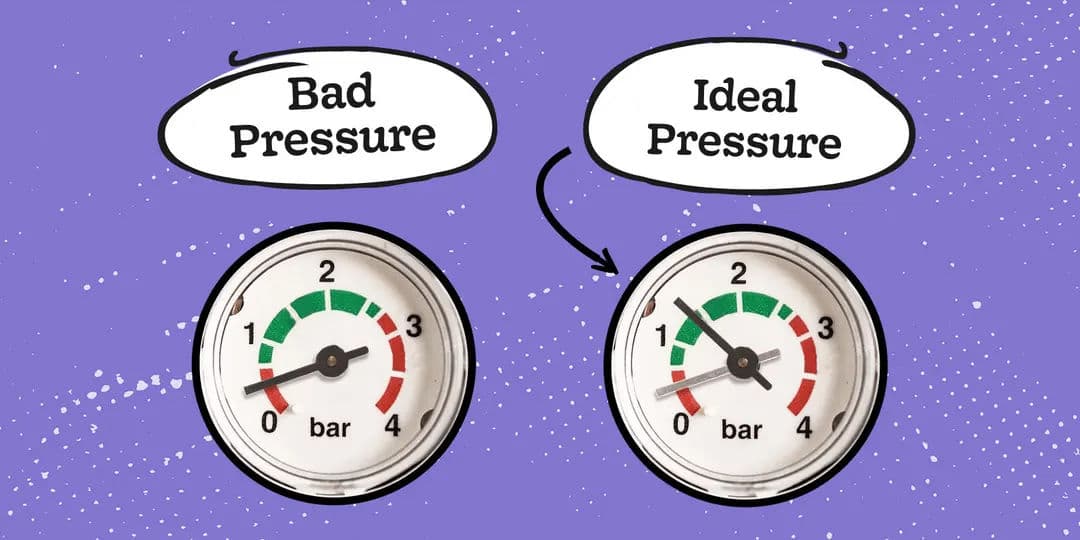
Most combi boilers just need the system topping back up to around 1.0–1.5 bar when it’s cold.
That’s the target. Slow and steady, and you’ll be back up and running.
Quick steps:
Switch the boiler off and let it cool. Find the filling loop / key / easy-fill lever (usually underneath).
Open it slowly while watching the pressure gauge. Stop at 1.0–1.5 bar (cold), close everything properly, then restart and check the pressure holds.
🎥 Prefer video? Check out our YouTube video on repressurising your boiler below:
Steps to Repressurise a Boiler
[1] Switch it off and let it cool
You want a true “cold” reading, not a number that’s puffed up because the heating’s been running. When water heats up it expands, so the pressure naturally climbs a bit.
Turn the boiler off (ideally at the boiler, not just the thermostat) and give it 15–30 minutes to settle.
If you’ve got the patience, waiting a little longer is fine - the calmer the system is, the easier it is to hit the right pressure without overshooting.
[2] Find out how your boiler fills
This is the only “faffy” bit, because boilers don’t all use the same setup.
Most UK combis will have one of these:
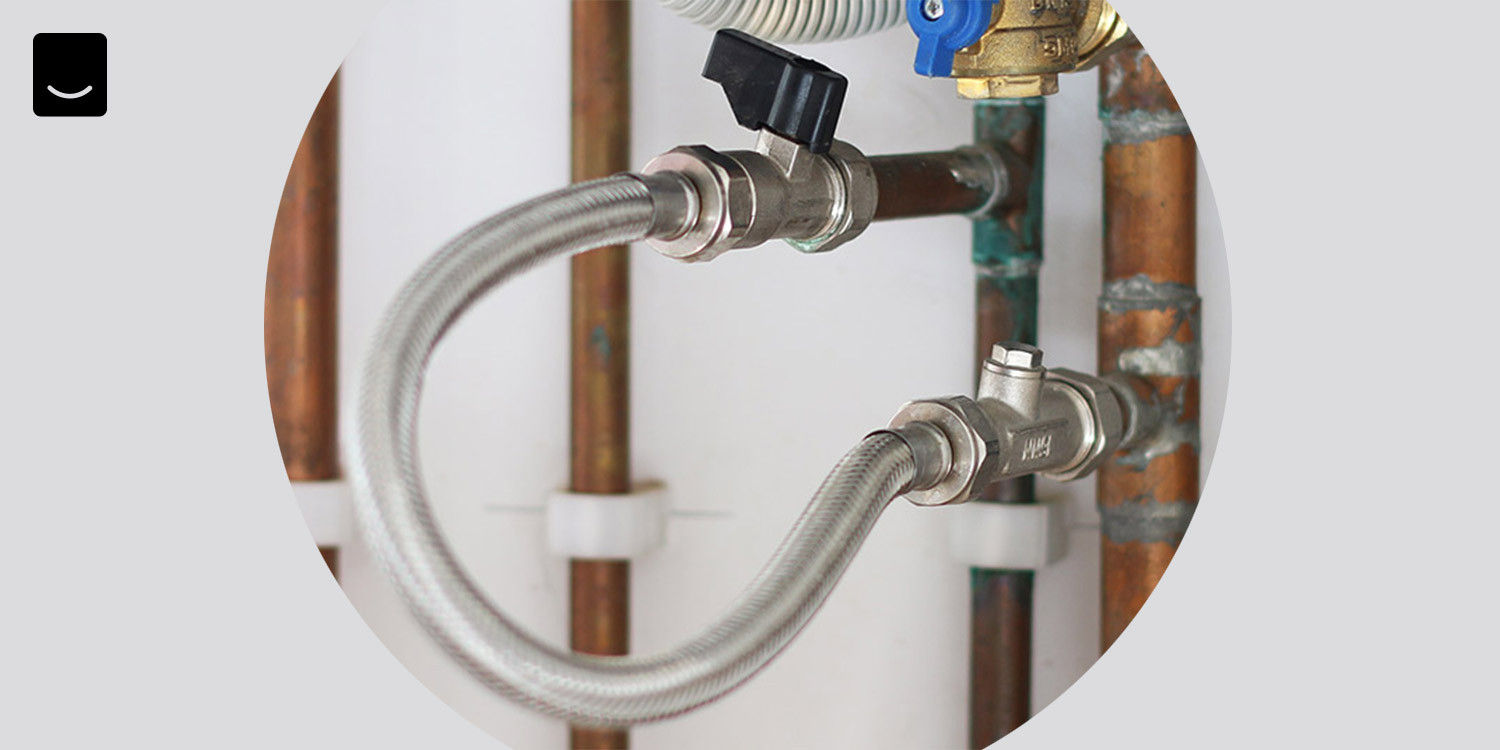
Filling loop - a silver braided hose underneath, with two small valves (often black/blue).
Filling key - a removable key you insert and twist to unlock the filling point (common on some models).
Easy-fill / keyless lever - a built-in lever or slider underneath (no hose, no key).
Start by looking under the boiler.
If you can’t see anything obvious, check the pipework in the airing cupboard or the cupboard next to the boiler - some installers tuck the filling loop away.
Quick sanity check - you’re not looking for the gas pipe (that’s not a DIY situation). The filling setup is part of the sealed heating system and is usually right by the pressure gauge/pipework underneath.
[3] Open the filling method slowly (seriously - slowly)
This is where most overfills happen.
People crack the valve open too much, the gauge shoots up, and suddenly they’ve gone from “no heating” to “why is it at 2.5 bar?”
Open your loop/key/lever a little at a time. You’ll usually hear a gentle rushing sound as water flows into the system.
If you hear nothing and the gauge doesn’t budge after a minute, don’t force it - jump to the “pressure won’t rise” section (that’s often a stuck valve, incorrect key position, or an internal filling link issue).
[4] Watch the gauge and stop at the right pressure
Keep your eyes on the pressure gauge while you fill.
The target for most combi boilers is:
1.0–1.5 bar when cold (boiler off + system cooled)
If you land around 1.2 bar, you’re bang on for most homes.

Top tip: as you approach 1.0 bar, slow down even more. The gauge can creep up slightly after you close the valve, so it’s better to stop just shy and nudge it up than blast straight past the target.
[5] Close everything properly (this bit matters)
Once you’re at the right pressure, close the valves/lever fully.
Filling loop: make sure both valves are shut off again.
Filling key: close the valve, unlock the key, and remove it.
Leaving a filling key in place is a classic “why has my pressure changed again?” situation - and it’s exactly the kind of tiny thing that causes big headaches later.
[6] Turn the boiler back on and check it holds
Switch the boiler back on and let it run for a few minutes.
It’s normal for the pressure to rise slightly when the system warms up (that’s just expansion doing its thing).
What you don’t want is:
pressure dropping back down quickly
the boiler locking out again
water dripping from pipework/radiators
the copper pipe outside (PRV discharge) dripping
If the pressure falls again within a day or two, topping up isn’t the fix - it’s a symptom. That’s when it’s time to look for a leak or get a Gas Safe engineer involved.
Key considerations:
Don’t over-pressurise it
Going too high is the fastest way to turn a 5-minute fix into a “why is it dripping outside?” situation.
If you overfill, the boiler may:
shut down to protect itself, or
dump water out of the copper safety pipe outside (that’s the PRV discharge)
As you get close to the target, slow right down. The gauge often creeps up slightly after you close the valves, so stop a touch early, wait a few seconds, then top up in tiny nudges if needed.
Rule of thumb: aim for 1.0–1.5 bar when cold. If you’re pushing much above that while the system is cold, you’ve gone too far.
If you’re topping up often, something else is going on
Topping up is a reset button - it’s not the underlying fix.
If you’re having to repressurise more than once every few months, it usually points to one of these:
a small leak (often a radiator valve, pipe joint, or the boiler itself)
a tired expansion vessel (pressure swings when heating turns on)
a pressure relief valve (PRV) that’s passing water
At that point, the smart move is diagnosis, not endlessly refilling.
Repeated topping up can actually make some faults worse over time (more fresh water = more corrosion risk in the system).
Different boilers, different filling methods (same goal)
Some boilers use a filling loop (braided hose), some use a filling key, and some have a built-in easy-fill lever.
It looks different, but the job is identical:
Let water in slowly, watch the gauge, stop at 1.0–1.5 bar (cold), then close everything properly (and remove the key if you’ve got one).
If you have a filling loop (silver braided hose + two valves)
This is the most common setup. You’ll usually spot a silver braided metal hose under the boiler (or tucked in the cupboard next to it), joining two pipes. There’ll be two small valves on that loop.
Start with the boiler off and cool so the pressure reading is stable.
Then crack open the first valve slowly (it’s often a quarter-turn handle). Next, open the second valve slowly until you hear water flowing in.
Keep your eyes on the gauge and slow right down as you approach the target.
Once you hit 1.0–1.5 bar (cold) - with around 1.2 bar being a great landing point for most systems - close both valves fully again.
Not sure what “closed” looks like? On quarter-turn valves, the handle is typically across the pipe when it’s closed (not inline).
Close it firmly, but don’t overdo it - you’re sealing a valve, not tightening a bolt.
If you have a filling key
With a filling key setup, you’ll have a small key slot underneath the boiler, sometimes behind a flap. The key needs to be inserted and locked before anything will happen.
With the boiler off and cool, insert the key and turn it until it feels properly seated (if it’s not locked in, the pressure won’t rise and you’ll think the boiler’s broken - it isn’t).
Then open the filling valve slowly and watch the gauge climb. Stop at 1.0–1.5 bar (cold), close the valve fully, then unlock the key and remove it.
Two classic mistakes to avoid: not locking the key properly (so nothing fills), and leaving the key in afterwards (which can cause hassle later).
If you have an easy-fill lever (keyless filling link)
This is the “nice” version: no braided hose, no key - just a small lever or slider underneath the boiler.
Turn the boiler off, let it cool, then move the lever to the fill/open position slowly while watching the gauge.
Stop at 1.0–1.5 bar (cold) and return the lever fully to closed. It’s quick, which is exactly why people overshoot - tiny movements, steady pace.
If the pressure goes too high
If you go past the target, close everything immediately and give the gauge 30–60 seconds to settle.
It’s normal for it to creep slightly after you shut the valves, which is why going slowly near the target matters.
If it’s only a little high, it may not cause immediate issues - but don’t leave the boiler sitting miles above where it should be when cold.
If you’re seeing pressure heading toward 3 bar, or you notice dripping from the copper safety pipe outside (PRV discharge), something isn’t happy.
If it keeps happening when the heating runs, that often points to an expansion vessel or PRV issue rather than “you just filled it wrong.”
Stop and call a Gas Safe engineer if…
If the pressure drops again within a day or two, or you’re topping up regularly, don’t fall into the trap of endlessly refilling and hoping. That usually means there’s an underlying fault that needs diagnosing.
Same goes if you can see any drips around the boiler, radiators, or valves, if the PRV discharge pipe outside is dripping, or if the pressure won’t rise at all when you try to fill.
At that point, repressurising isn’t the fix - it’s just the symptom showing up.
Get A New Boiler Quote Today
If you’re aiming to get the best deal on a new boiler, consider getting your boiler installation with us. Here’s why:
Gas Safe installation within 24 hours.
Thousands of satisfied customers with an average score of 4.9 on Trustpilot, surpassing the market leader.
Which? Trusted Trader: Heatable is proudly recognised as a Which? Trusted Trader.
Price match guarantee: We will match any like-for-like cheaper quote.
Flexible payment options, including interest-free finance*.
Up to a 12-year guarantee on selected boilers.
Fixed price guarantee: No hidden costs.
Save your quote and decide later.
Get an instant fixed price on a new boiler here.
To learn more about boilers, visit our advice section, check out our YouTube channel, or read customer testimonials here.