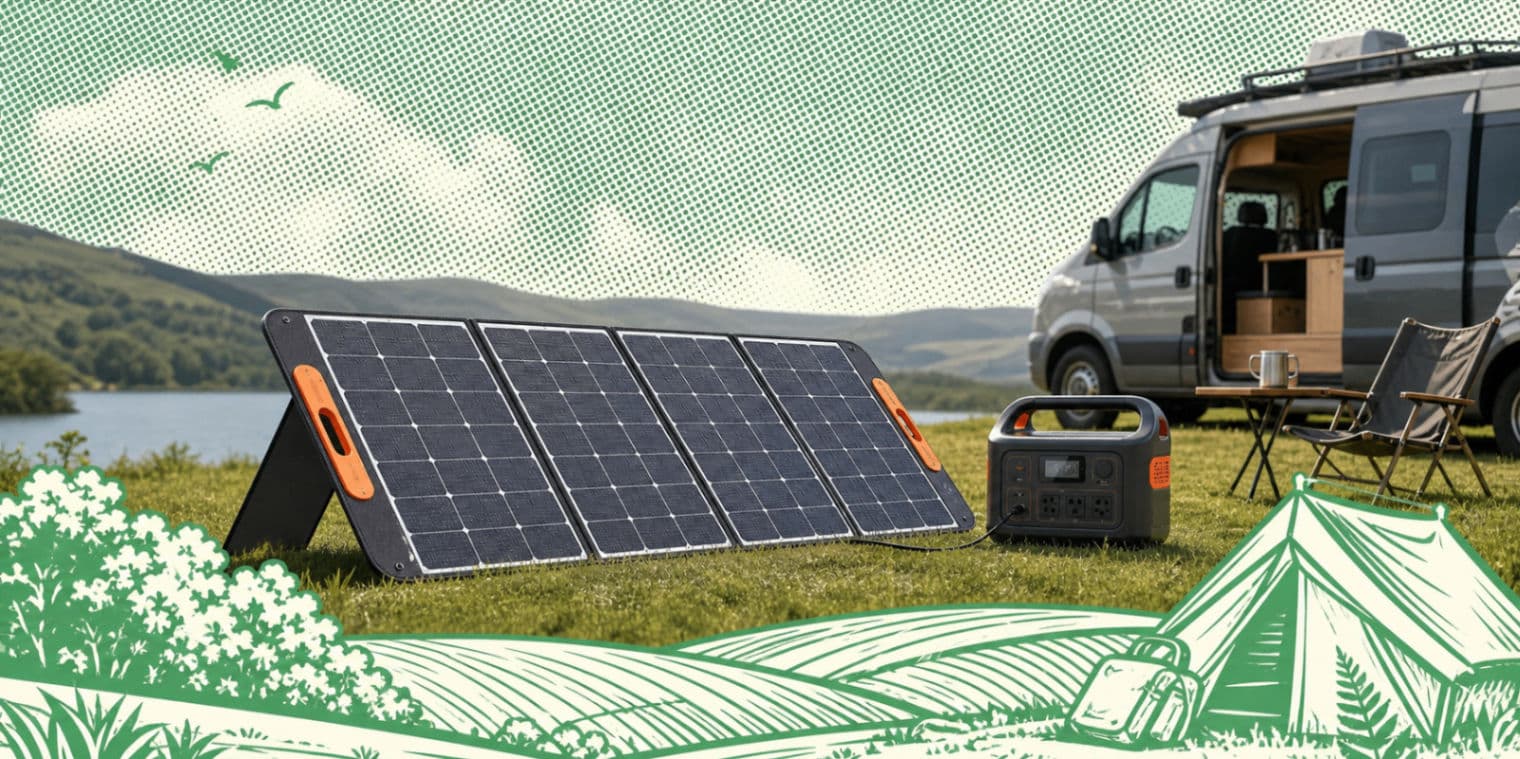

Solar power used to mean one thing - panels on your roof, an inverter in the loft, and at least one neighbour asking if you’re “selling electricity back to the grid now”.
Not anymore.
Portable solar panels are now widely available in the UK. Many are foldable, reasonably lightweight, and designed to work with phones, laptops, camping batteries and portable power stations.
You can take them camping, use them with a campervan, prop them outside a garden office, or keep one around for emergency backup.
Very handy. Very modern. Very “I’d quite like my phone to survive the weekend, please”.
But before we get carried away, here’s the honest bit: portable solar panels are not a mini version of a full home solar PV system.
They are useful for small-scale power, travel and backup. They are not going to run your house, heat your living room or make the kettle sing through a grey February afternoon.
PS We offer MCS-certified solar panel installation nationwide. Simply answer these questions, get your fixed price and arrange your free design.
Portable solar panels UK comparison table:
Model | Approx. wattage | Best for | Works best for | Pros | Watch outs |
Jackery SolarSaga 100W | 100W | Camping, emergency charging, portable power | Jackery Explorer power stations | Well-known, foldable, practical | Check compatibility with non-Jackery units |
EcoFlow 110W Portable Solar Panel | 110W | Camping, vans, backup power | EcoFlow River/Delta power stations | Strong ecosystem fit, portable | Usually pricier than basic chargers |
Anker 625 Solar Panel | 100W | Premium portable charging | Anker power stations | Trusted brand, foldable | Heavier than smaller chargers |
BigBlue 28W Solar Charger | 28W | Phones, power banks, festivals | USB devices and power banks | Affordable, lightweight | Not for appliances or large batteries |
What are portable solar panels?
Portable solar panels are moveable photovoltaic panels that convert sunlight into electricity.
That sounds technical, but the idea is simple: sunlight goes in, usable electrical energy comes out. Ideally. Assuming the British weather decides to behave for five minutes.
Unlike fixed solar panels, portable panels are designed to be carried, folded, packed away and moved around. They are usually:
Foldable or suitcase-style
Lighter than rooftop solar panels
Designed for phones, laptops, camping batteries or portable power stations
Rated in watts, commonly from around 20W to 400W+
They come in a few different flavours.
Popular portable solar panel models available in the UK
Prices, availability and specifications can change, so check the latest product listing before buying.
The models below are popular options to compare, not a definitive ranking. Think of this as a shortlist, not gospel carved into a solar-powered tablet.
[1] Jackery SolarSaga 100W
Best-known camping and power-station option.
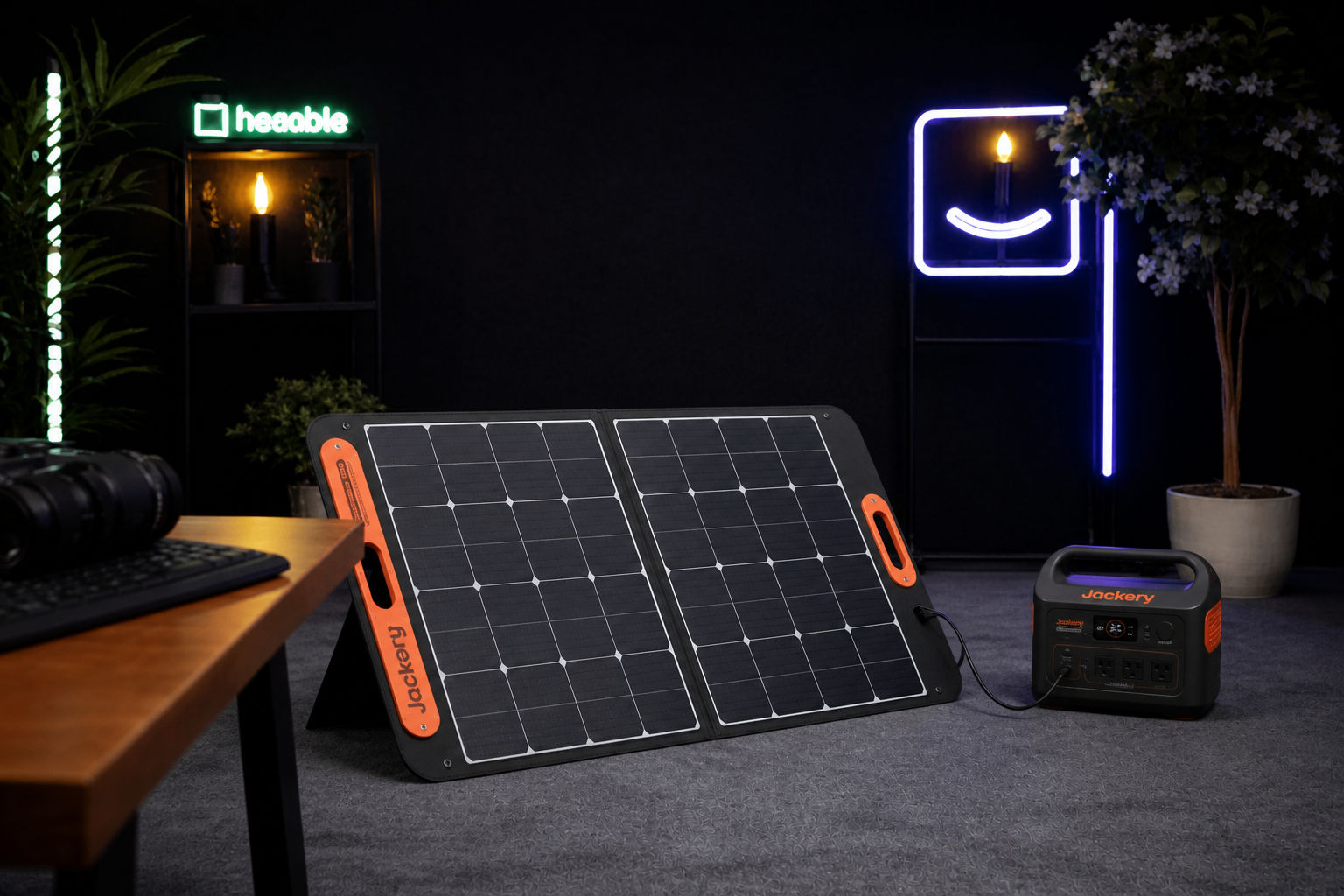
The Jackery SolarSaga 100W is one of the best-known portable solar panels in the UK.
It is foldable, often paired with Jackery Explorer power stations, and popular with campers and backup-power buyers.
Best for: Camping, emergency charging and Jackery Explorer users.
Approximate wattage: 100W
Pros
Well-known portable power brand
Foldable design
Good match for Jackery power stations
Useful for camping and backup charging
Strong recognition among UK buyers
Cons
Usually pricier than basic USB panels
Best value if you are already in the Jackery ecosystem
Connector compatibility needs checking with non-Jackery units
Who should buy it?
People who already own, or plan to buy, a Jackery Explorer power station.
Who should avoid it?
Anyone who just wants to charge a phone at a festival. That is a bit like buying a van to move a cushion.
[2] EcoFlow 110W Portable Solar Panel
Positioning: Strong option for EcoFlow users.
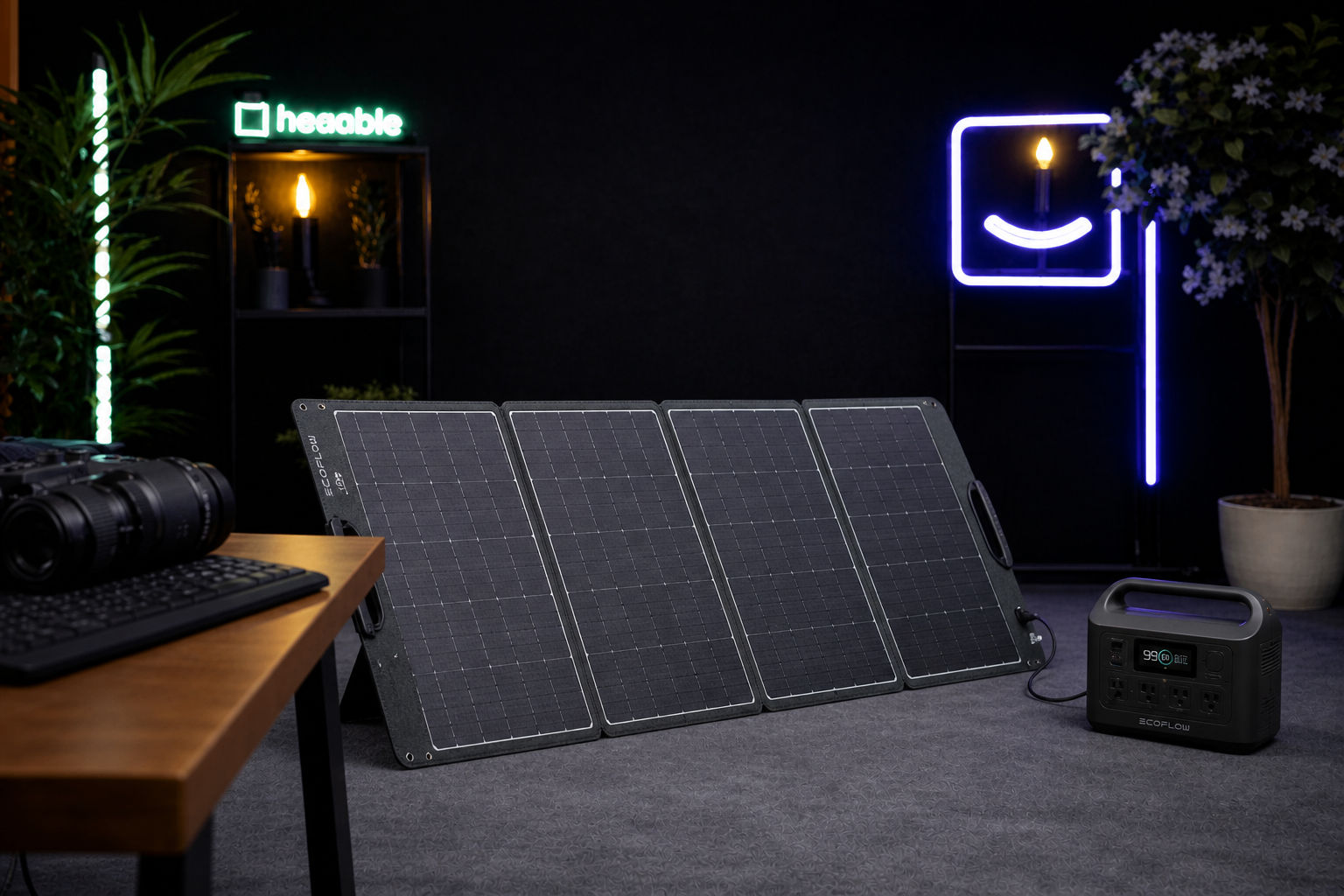
EcoFlow’s 110W portable solar panel is commonly paired with EcoFlow River and Delta power stations.
It is a good option for people who want a branded, ecosystem-friendly setup.
Best for
EcoFlow users, camping, vans and backup power.
Approximate wattage
110W
Pros
Good fit for EcoFlow power stations
Portable and foldable
Useful for camping and emergency charging
Strong brand in portable power
Cons
Usually more expensive than basic panels
Best value if you already use EcoFlow kit
Compatibility still needs checking by model
Who should buy it?
EcoFlow power station owners who want a neat, compatible solar setup.
Who should avoid it?
People using another battery brand who do not want to faff around with connectors and adapters.
[3] Anker 625 Solar Panel, 100W
Positioning: Good premium portable panel.
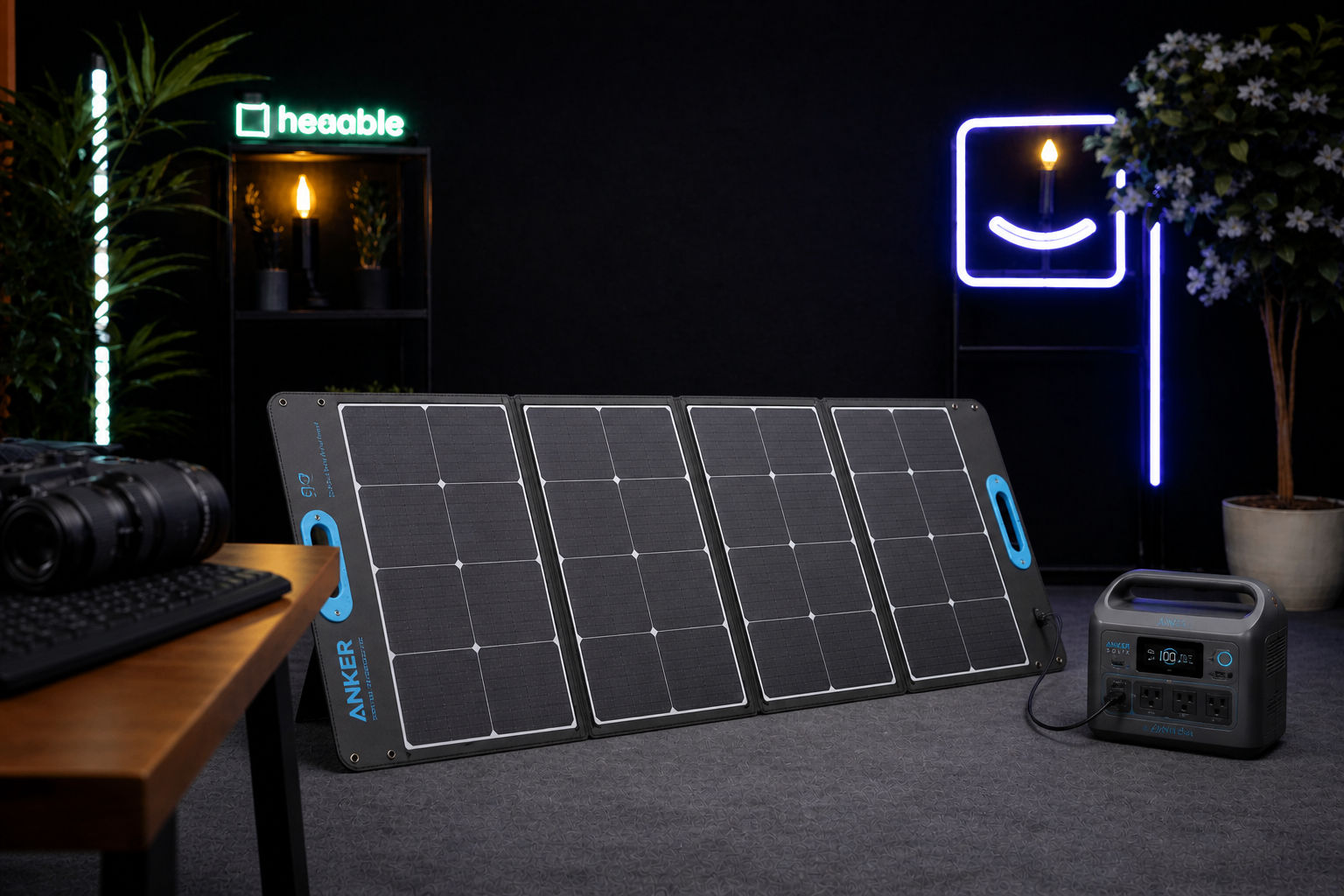
The Anker 625 is a 100W foldable panel designed for outdoor charging and portable power station use.
Anker has a strong reputation in charging tech, which makes this a sensible premium option for people who want something from a familiar brand.
Best for
Anker power station users, camping and emergency backup.
Approximate wattage
100W
Pros
Recognised charging brand
Foldable design
Suitable for portable power stations
Good option for outdoor charging
Cons
More expensive than smaller USB chargers
Not the lightest option
Best suited to compatible Anker setups
Who should buy it?
People already using Anker power stations or wanting a premium branded panel.
Who should avoid it?
Minimalist hikers or anyone who only needs occasional phone charging.
[4] BigBlue 28W Solar Charger
Positioning: Budget-friendly small-device charger.
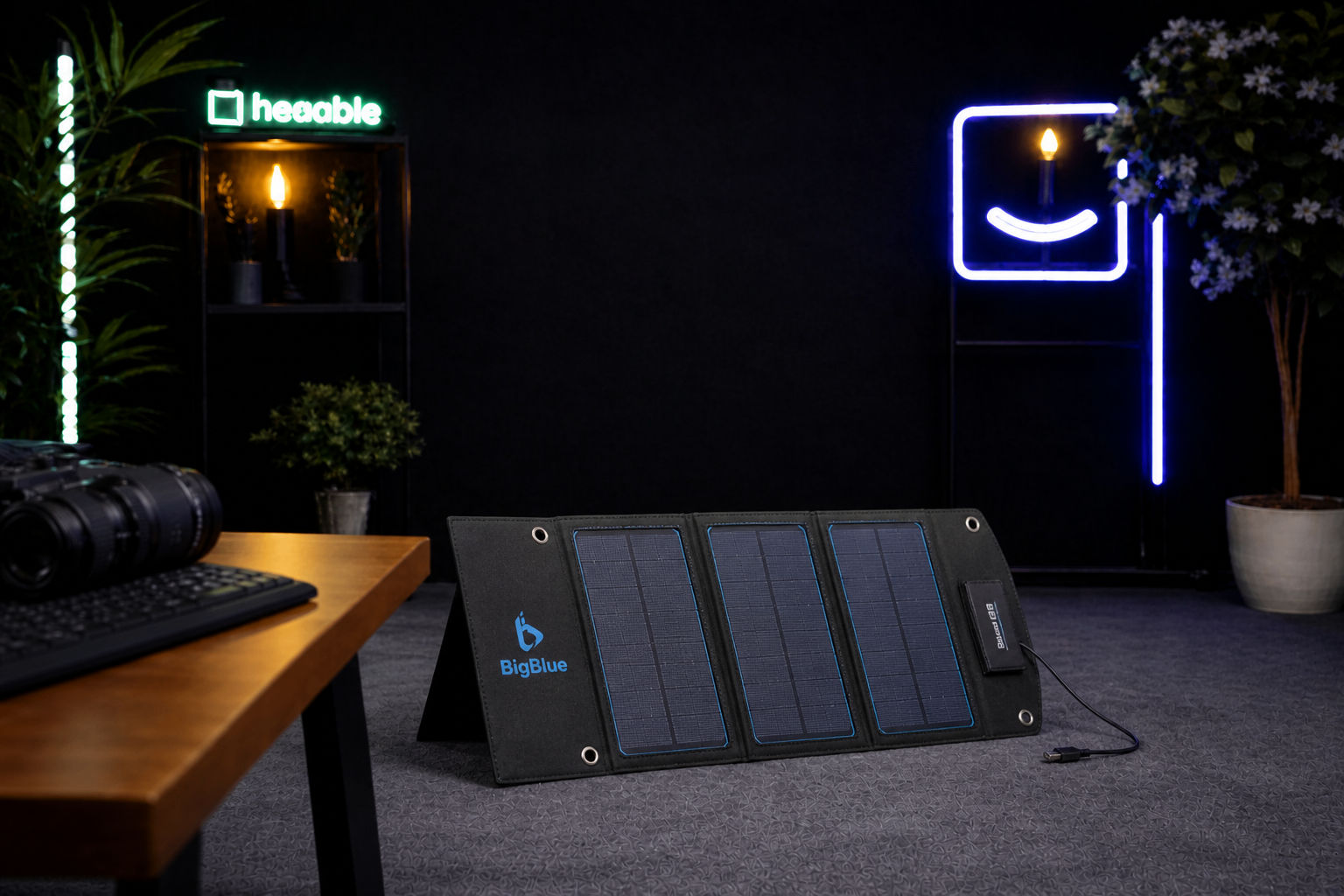
The BigBlue 28W Solar Charger is a smaller solar charger designed mainly for USB devices.
This is more “keep your phone and power bank alive” than “power your weekend”.
Best for
Phones, power banks, hiking, festivals and light camping.
Approximate wattage
28W
Pros
More affordable
Lightweight compared with 100W+ panels
Good for small USB devices
Practical for basic outdoor charging
Cons
Not suitable for appliances
Not ideal for large power stations
Slower charging in poor weather
Who should buy it?
Campers, hikers and festival-goers with modest charging needs.
Who should avoid it?
Anyone expecting it to run a fridge, charge a large battery quickly or save the household budget.
[5] Bluetti PV-series portable panels
Positioning: Good for larger portable power stations.
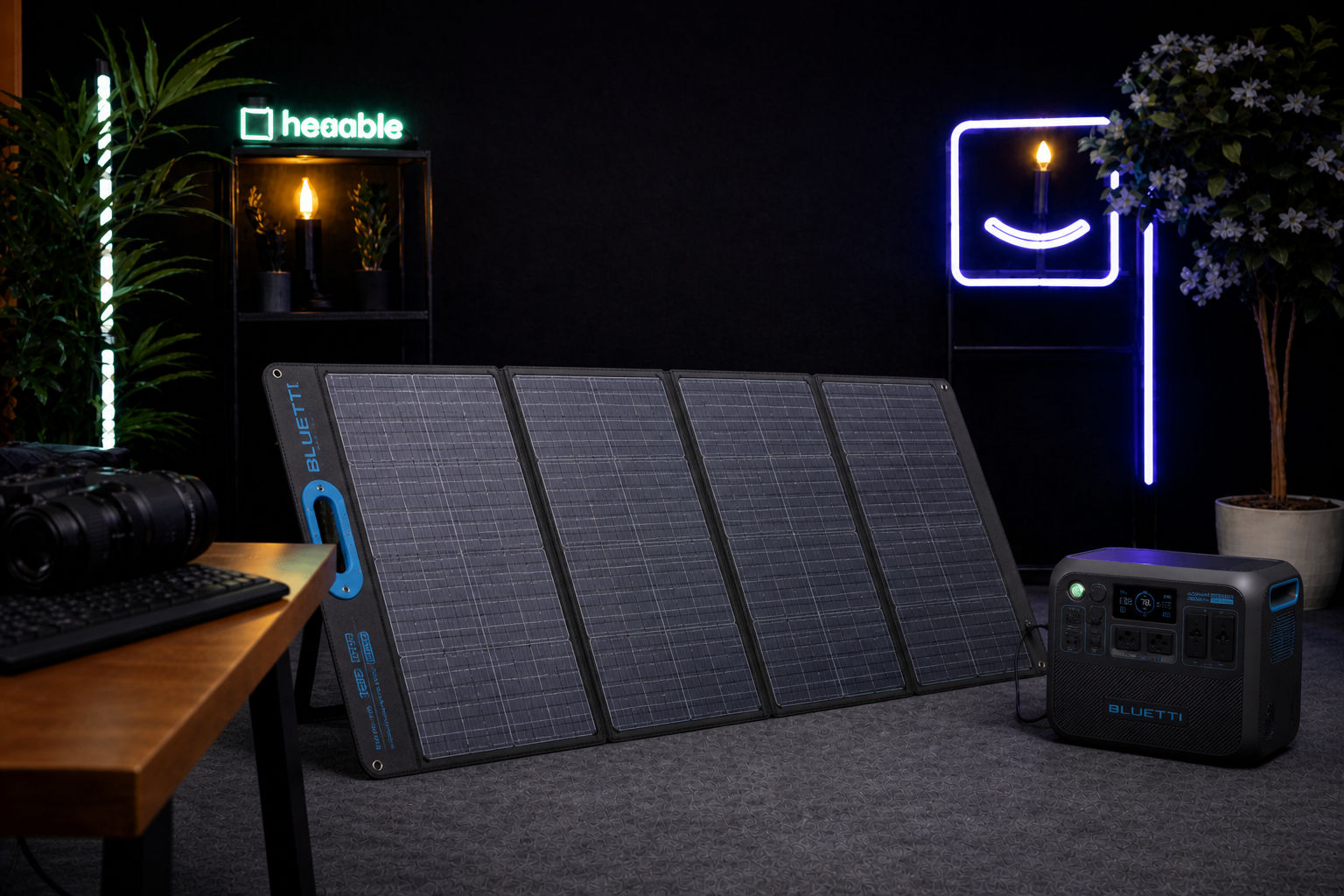
Bluetti’s PV-series panels are aimed at users with larger portable batteries and more serious off-grid needs.
They are a better fit for campervans, motorhomes, backup power and longer trips where a small USB panel would be hopelessly outgunned.
Best for
Larger power stations, campervans, off-grid setups and backup power.
Approximate wattage
Around 120W to 200W, depending on model.
Pros
Higher-wattage options
Better for larger batteries
Useful for campervans and backup setups
Often paired with Bluetti power stations
Cons
Larger and bulkier
More expensive than basic panels
Connector compatibility needs checking
Availability can vary
Who should buy it?
People with a Bluetti power station or another compatible large battery.
Who should avoid it?
Anyone looking for a light, cheap phone charger.
Portable solar panels vs rooftop solar panels
Portable solar panels and rooftop solar panels both turn sunlight into electricity, but they are not trying to do the same job.
Portable solar panels
Portable solar panels are:
Lower cost
Moveable
Useful for off-grid charging
Good for camping, vans, balconies and backup devices
Limited in output
Usually not enough for meaningful home bill reduction
They are for convenience, flexibility and small-scale resilience.
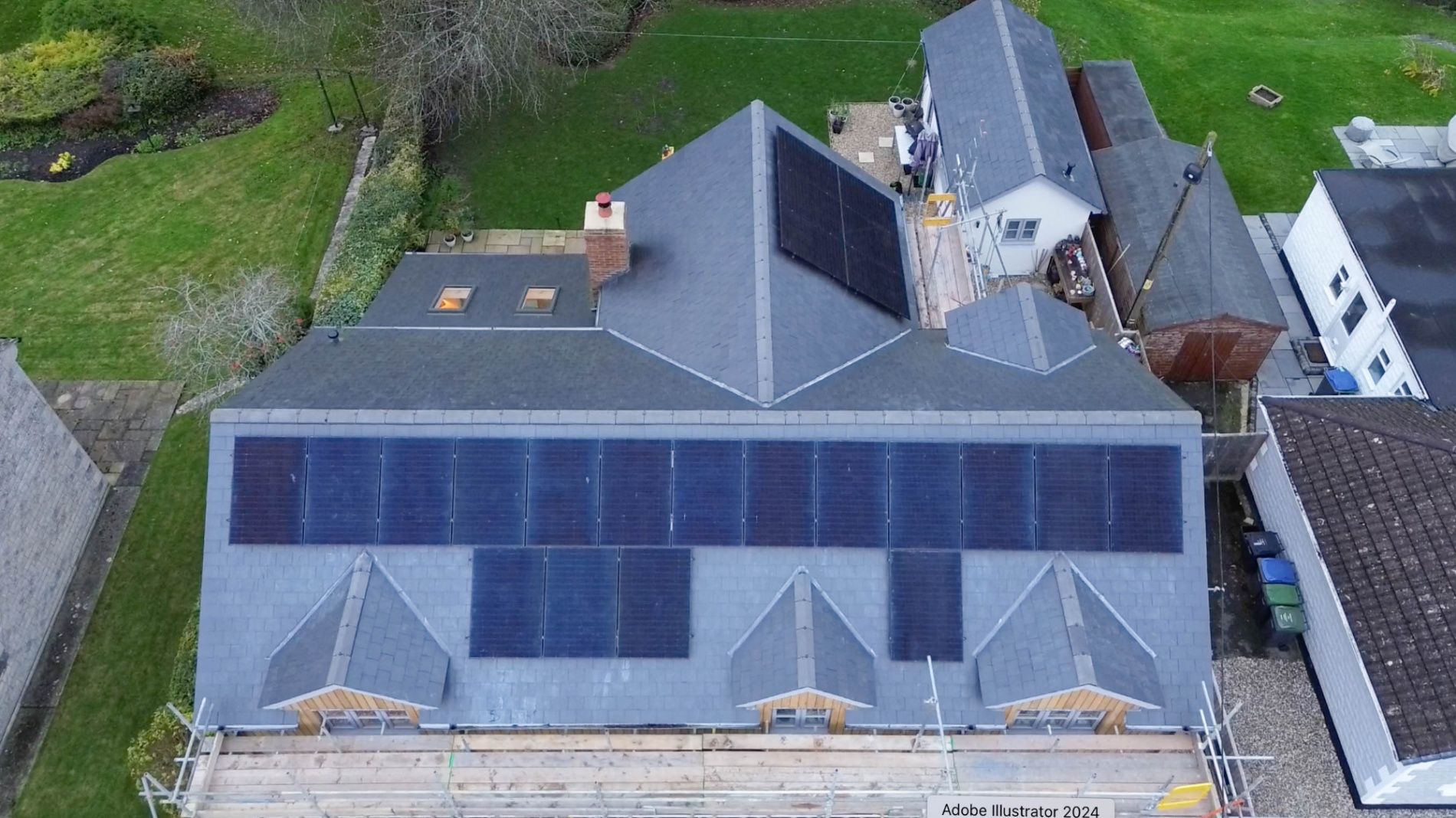
Image showing solar panel installation by the Heatable team
Rooftop solar panels
Rooftop solar panels are:
Professionally installed
Higher upfront cost
Much greater generation potential
Better for reducing electricity bills
Suitable for pairing with home battery storage
Designed as a long-term home energy upgrade
A fixed solar PV system is a different beast. More panels, better positioning, proper inverter setup, grid connection and the option to add battery storage.
Or, put another way:
Portable solar is for keeping your phone alive on a camping trip. Rooftop solar is for making your electricity bills considerably less annoying.
If you are dabbling, portable solar is fine.
If you are serious about home energy savings, it is probably time to look at a proper solar panel installation.
Are portable solar panels worth it?
Portable solar panels are worth it if:
You camp, travel or spend time off-grid
You already own a compatible portable power station
You want backup charging for small devices
You cannot install rooftop solar
You use a campervan, caravan or motorhome
You want a bit more energy independence
You understand that UK weather will affect performance
They may not be worth it if:
You expect major household bill savings
You want to run heating, kettles or large appliances
You live somewhere with poor sunlight access
You do not have a battery or power station
You only need occasional phone charging
You expect rated wattage all day, every day
So, the honest answer is:
Portable solar panels are worth it for portable power. They are not worth it as a substitute for proper home solar.
Useful? Yes.
Miraculous? No.
A good buy for the right person? Absolutely.
A way to power your whole house from a fold-up panel in the garden? Not unless your house is a tent.
How do portable solar panels work?
Portable solar panels work like rooftop solar panels, just smaller and less permanent.
Here’s the simple version:
Sunlight hits the photovoltaic cells.
The panel generates DC electricity.
That electricity charges a device directly or passes through a charge controller.
A portable power station can store the electricity for later.
A charge controller helps regulate the electricity going into a battery. In many portable power stations, this is built in.
A quick reality check on wattage
A 100W portable solar panel will not produce 100W all day.
That 100W rating is based on ideal test conditions. Real life is messier. Especially in the UK, where “bright spells” can mean seven minutes of optimism between two weather warnings.
Your actual output can be reduced by:
Cloud cover
Low winter sun
Shade
Poor panel angle
Dirty panel surface
Cable losses
The limits of your power station’s solar input
So yes, a 100W panel can be useful. But no, it is not a tiny power station miracle cloth.
What can portable solar panels power?
The most important thing to understand is this:
A panel collects energy. A battery stores it. The device you plug in uses it.
That means your battery or power station matters just as much as the panel itself.
A large panel with a tiny battery is limited. A huge battery with a tiny panel will take ages to charge. A powerful appliance plugged into the wrong setup will simply say “absolutely not” and give up.
Small panels: roughly 20W–60W
Small portable solar panels are best for low-power charging.
Good for:
Phones
Head torches
Small USB devices
Power banks
Camping lights
Small radios
Action cameras
Not suitable for:
Kettles
Electric heaters
Fridges
Microwaves
Hairdryers
Household appliances
This is the “keep the essentials alive” category.
Great for a weekend away. Less great for trying to recreate your kitchen in a field.
Medium panels: roughly 100W–200W
This is the sweet spot for many UK buyers.
A 100W to 200W portable panel can be useful for charging a portable power station, especially during camping trips, campervan weekends or outdoor work.
Good for:
Portable power stations
Laptops
Camera gear
Drone batteries
Camping fridges, depending on the battery setup
Longer trips away from mains power
Keeping a decent power bank topped up
This is where portable solar starts to feel genuinely practical, rather than just a nice idea you bought after watching one too many van-life videos.
Larger panels: roughly 200W–400W+
Larger portable panels are better for bigger batteries and heavier use.
Good for:
Van-life setups
Motorhomes
Emergency home backup with a large power station
Off-grid workstations
Field work
Higher-capacity portable batteries
These are the serious options. They can collect meaningful energy in decent conditions, but they still depend on sunlight, space and positioning.
A 400W portable panel in full sun can be impressive. A 400W portable panel folded behind the sofa is just an expensive yoga mat.
Conclusion
Portable solar panels are useful, flexible and increasingly affordable.
They are a great fit for camping, festivals, campervans, garden sheds, outdoor work, renters, emergency backup and off-grid charging.
They are best at small-scale power. Phones, laptops, lights, power banks and portable power stations? Yes.
Kettles, heaters, fridges and meaningful household bill savings? Not so much.
In the UK, weather also plays a big part. A portable solar panel can be brilliant on a sunny summer trip and deeply average on a grey winter day.
That does not make it a bad buy. It just means you need to buy it for the right reason.
For portable power, they can be well worth it.
For serious home energy savings, professionally installed rooftop solar panels are usually the better long-term solution.
Thinking bigger than a camping panel? Get a fixed-price solar quote from Heatable and see how much a proper home solar system could save you.