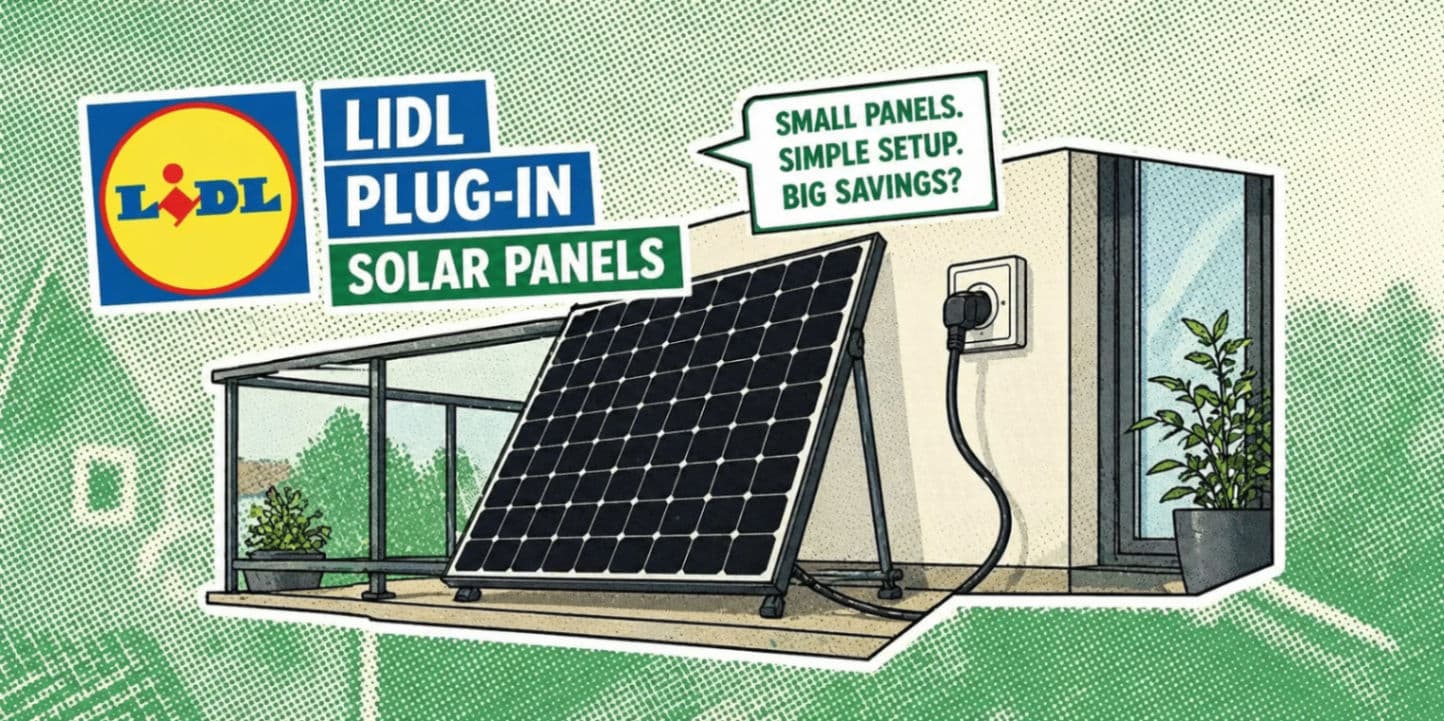

Lidl plug-in solar panels could soon become one of the most talked-about home energy products in the UK.
The idea sounds simple - buy a small solar kit, place the panel on a balcony, patio, garden wall or similar space, then plug it into your home to reduce the amount of electricity you buy from the grid.
Neat, right?
Potentially, yes. But there is a big catch.
As of late April 2026, grid-connected plug-in solar panels are not yet fully approved for simple “plug it into a wall socket and power your home” use in the UK. The UK government announced on 24 March 2026 that it wants plug-in solar panels to be available in shops “within months”, but consumers still need to wait for certified products, final standards and clear official guidance before using one this way.
That distinction matters.
There is also confusion around the phrase “plug-in solar”. Some people use it to describe portable solar panels that charge a battery power station, such as an EcoFlow, Jackery or Anker unit. That is not the same thing as feeding electricity into your home’s fixed wiring through a wall socket.
This guide is about the second category: grid-connected plug-in solar.
We’ll explain what Lidl plug-in solar panels are expected to be, whether they are legal yet, how much power a small 400W system might produce, why some of the marketing claims need a raised eyebrow, and what solar-related products you can actually buy now.
PS We offer MCS-certified solar panel installation nationwide. Simply answer these questions, get your fixed price and arrange your free design.
🔑 Key points:
Lidl plug-in solar panels are expected to be small solar kits for balconies, patios, gardens and other compact spaces.
They are not the same as full rooftop solar panels, which are larger, professionally installed and more powerful.
Grid-connected plug-in solar is not yet fully approved for UK wall-socket use, although rule changes are being developed.
Portable solar battery systems are different: they charge a battery and power appliances from the unit, rather than feeding electricity into home wiring.
The main UK safety concern is about introducing electricity into domestic fixed wiring.
A 400W plug-in solar panel may trim your bill slightly, but it will not perform like a 3kW–5kW rooftop system.
Treat price and payback claims carefully until real-world UK performance, costs and rules are clear.
Wait for UK-certified products and official guidance before plugging any solar generation device into a household socket.
What Are Lidl Plug-In Solar Panels?
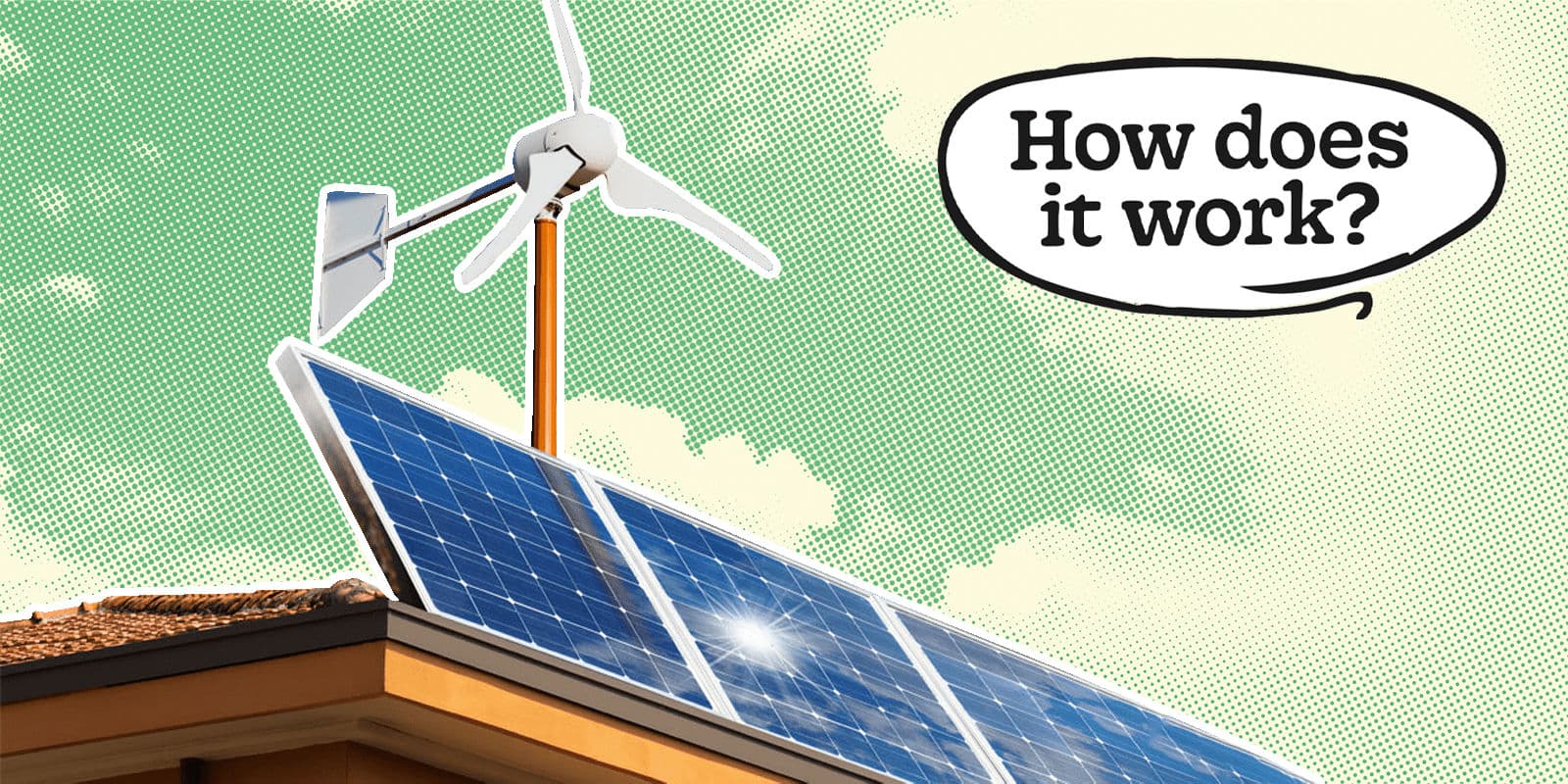
Lidl plug-in solar panels are expected to be small-scale solar kits designed for households that want a cheaper and simpler way to access solar power.
Instead of a full rooftop solar PV system, a plug-in solar kit would usually include:
One or more compact solar panels
A micro-inverter
Cables and mounting equipment
A plug-in connection designed to feed power into the home
The typical output being discussed is around 400W to 800W, which is much smaller than a traditional rooftop solar system.
For context, a standard home solar panel system is often around 3kW to 5kW, professionally installed, connected through the property’s electrical system, and usually supported by MCS certification, DNO paperwork and proper commissioning.
Plug-in solar is different. It is designed to be lower cost, easier to install, and potentially useful for people who cannot fit a full rooftop system.
That could include:
Flat owners
Renters, where permitted
Households with limited roof space
Homes with shaded or unsuitable roofs
People who want a lower-cost first step into solar
These systems are often called balcony solar panels, because they are already popular in parts of Europe.
In the UK, retailers including Lidl and Amazon have been linked with potential launches following the government’s March 2026 announcement that plug-in solar could be sold in shops “within months”.
But “could soon” does not mean “go and plug one in today”.
Products Currently Available
Before looking at specific products, it is worth repeating one important point:
The products below are not automatically the same as Lidl-style grid-connected plug-in solar panels.
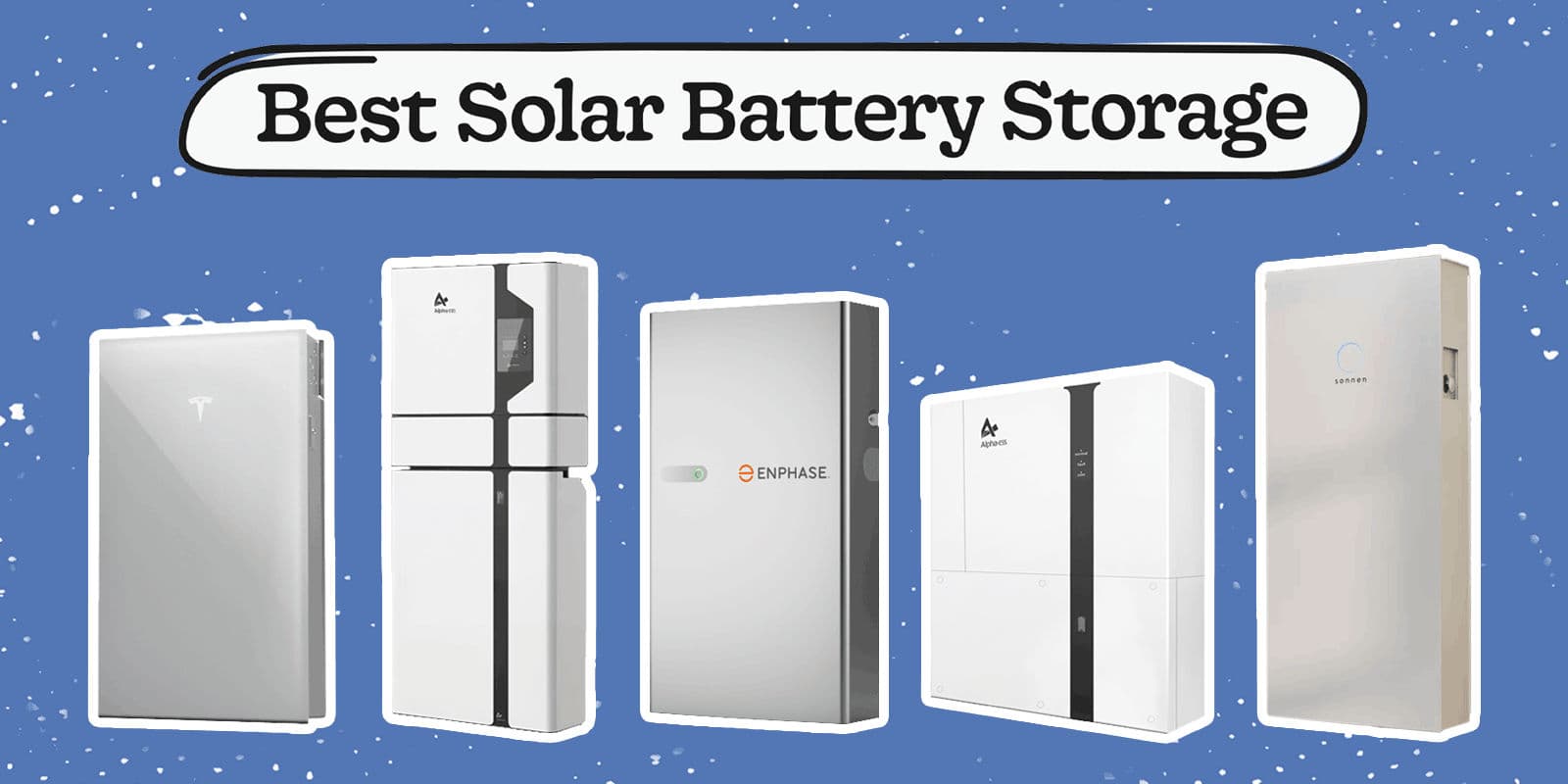
Most currently available options fall into the portable solar battery, solar generator, or home energy storage category.
They can be useful. Some are excellent. But UK buyers should always check whether a specific product is approved for grid-connected socket use before using it in that way.
Product | What it really is | Best for | How we’d describe it |
Portable power station | Backup power, camping, small appliances, solar charging | A portable battery unit, not the same as plug-in solar feeding your home wiring | |
Larger portable power station | Home backup, higher storage, solar charging | A bigger backup battery option for readers exploring energy independence | |
Balcony-style solar and battery product | Small-scale solar for flats or balconies | Closer to the plug-in solar products being discussed in the UK | |
Plug-in solar component | Balcony or plug-in solar setups | Relevant to the discussion, but not something to treat as a blanket “buy now” recommendation |
Prices are approximate RRPs as of April 2026; check retailers for current prices and deals (table includes affiliate links, which may earn us a small commission - at no extra cost to you.)
Are Plug-In Solar Panels Legal in the UK?
Not yet in the simple plug-and-play sense.
At the time of writing, you should not plug a grid-connected solar panel system into a normal UK wall socket unless and until the product is approved for that exact use under UK rules.
The issue is not the solar panel itself. The issue is feeding electricity back into your home’s fixed wiring through a plug socket.
That matters because UK domestic circuits were mainly designed for electricity to flow from the grid into the home, not for generation to be introduced from multiple points around the property.
The government is working with industry bodies to update the rules, including the G98 distribution code and BS 7671 wiring regulations, so that low-power plug-in solar can be used safely in UK homes.
The expected framework may include things like:
A maximum output limit, likely around 800W
Certified micro-inverters
Anti-islanding protection
Clear socket or connection requirements
DNO notification rules
Product certification
Safety instructions for mounting and use
But until the final details are confirmed, the sensible advice is simple:
Do not plug an unapproved solar generation product into your home wiring.
Wait for proper UK-certified products, official instructions, and clear guidance from the manufacturer, your DNO and, where needed, a qualified electrician.
🎥 Prefer video? Check out our video all about plug-in solar below:
Why Has the UK Been Cautious About Plug-In Solar?
Because electricity is not something to bodge.
Plug-in solar sounds simple, but it creates real technical questions.
The main safety concerns include:
Anti-islanding: the system must shut down during a power cut so it does not energise wiring unexpectedly.
Circuit overload: domestic circuits must not be overloaded by extra generation.
Back-feeding: electricity flowing in unexpected directions can create risks if the system is not designed properly.
Inverter quality: cheap or uncertified inverters are a serious weak point.
DNO requirements: local network operators need to understand what generation is connected to the grid.
Mounting safety: panels need to be securely fixed, especially on balconies, flats or exposed areas.
This does not mean plug-in solar is a bad idea. It means the UK needs a safe framework before lots of people start connecting mini solar systems to household sockets.
That is exactly what the government says it is trying to create.
Are Lidl Plug-In Solar Panels Worth It?
They could be - for the right household, at the right price, once they are legal and certified.
Lidl plug-in solar panels may make sense if:
You cannot install rooftop solar
You live in a flat with suitable outdoor space
You are a renter with landlord permission
You have good daytime electricity use
You want a low-cost way to generate some power
You understand the savings will be modest
The product is properly certified for UK use
They are less likely to make sense if:
Your outdoor space is heavily shaded
You expect full solar-panel-level savings
You are rarely home during daylight
Mounting the panel safely would be difficult
You need landlord, freeholder or building permission and cannot get it
The payback claim relies on perfect conditions
A Lidl plug-in solar kit could be a neat entry-level product. But it should not be sold, bought or understood as a replacement for a proper rooftop solar PV system.
Are Small Solar Kits Being Overhyped?
Possibly.
Early coverage has suggested supermarket plug-in solar kits could cost around £400 to £500, with some reports linking Lidl and other retailers to future launches in that price range.
That sounds attractive compared with a full rooftop solar installation, which can cost several thousand pounds.
But consumers need to look past the headline price.
A 400W panel is still a 400W panel. It will not perform like a 4kW rooftop array just because it is sold in a supermarket aisle.
Before getting excited about payback claims, check:
The panel’s realistic annual output
Whether the price includes the inverter
Whether mounting equipment is included
Whether the product is certified for UK grid connection
Whether DNO notification is needed
Whether a special socket or electrician visit is required
The warranty length
The expected lifespan
Whether you will actually use the power during daylight
Whether any battery is included
Whether export payments apply
A £400 kit might be worthwhile if it is safe, legal, durable and used well.
A £400 kit with poor certification, weak instructions, bad mounting equipment and exaggerated savings claims is not a bargain. It is a headache with a plug on it.
The big thing to remember is this:
A 400W plug-in solar panel may trim your bill. It will not transform it.
If you want bigger savings, a properly designed rooftop solar system with battery storage is still the more serious option.
Related: where does the UK get its petrol from?
Final Verdict: Lidl Plug-In Solar Could Be Useful, But Don’t Get Swept Up in the Hype
Lidl plug-in solar panels could become a genuinely useful option for UK households.
They may help renters, flat owners and people without suitable rooftops access a small amount of solar generation without paying thousands for a full installation.
That is a good thing.
But there are three big caveats.
First, grid-connected plug-in solar is not yet a free-for-all in the UK. Consumers should wait for certified products and final official guidance before plugging anything into a household socket.
Second, plug-in solar is not the same as a portable solar power station. Charging a battery from a solar panel is not the same as feeding electricity into your home’s fixed wiring.
Third, a 400W panel is small. It may reduce your electricity bill a bit, especially if you use power during the day, but it will not deliver the same savings as a professionally installed rooftop solar system.
So, are Lidl plug-in solar panels worth it?
Potentially, yes - once they are legal, certified, sensibly priced and properly explained.
Until then, treat the headlines with interest, not blind faith.
And please, whatever you do, do not buy a random solar kit online and plug it into your wall because someone on social media said it was fine.
That is not being energy-savvy. That is gambling with your wiring.