
Thinking of combining solar panels, battery storage, and an EV charger? Here’s everything you need to know about setting up an integrated energy system for your home.
- How Solar Panels, Battery Storage, and EV Chargers Work as One System
- Should I Install Solar Panels First?
- Typical Layouts in the UK
- Should I Get an AC or DC Battery?
- What Battery Type Is Best for EV Chargers?
- How a Home’s Electrical Setup Can Impact Layout Decisions
- Safety and Compliance for Installations
- Best Practices for Layout
- Common Mistakes to Avoid
Energy prices are still fluctuating and electric vehicles (EVs) are becoming more common, which means many UK households are turning to solar panels, battery storage, and EV chargers.
This complete home energy setup gives you much more energy independence, and despite the initial cost to install, you’ll end up saving hundreds on your energy bills.
If you’re considering this, the key is to treat the setup as one integrated system that works in tandem. Getting this up and running takes a bit of planning, but thankfully we’ve put together a handy guide to help you out.
We’ve covered the types of solar, battery, and EV charger layouts you’ll see in the UK, what the best practices for setups are, and mistakes you should avoid.
Psst… we offer MCS-certified solar panel and battery storage installation nationwide. Simply answer a few questions and get a fixed price in 60 seconds with our quote tool. We also install EV chargers, and you can arrange a free EV charger quote with us in moments.
🔑 Key Points:
You’ll benefit most from treating solar panels, battery storage, and EV charging as one integrated home energy system
Layouts will change depending on your home’s unique circumstances - there is no one-size-fits-all approach to home energy systems
It’s best to start with installing solar panels, then battery storage, then finally the EV charger
Pair your setup with a smart tariff to maximise savings
How Solar Panels, Battery Storage, and EV Chargers Work as One System
Solar panels use the sun (crazy right?) to generate DC electricity, which is then converted to usable AC electricity by an inverter. You’ll use this AC electricity to power your home, and if you have battery storage, to charge it (unless you use a DC-coupled battery).
As an extra bonus, you can also export the electricity your solar panels generate to the grid for a small amount of profit via the Smart Export Guarantee (SEG).
You can use your solar panels to charge an EV too, which is a great way to reduce your energy bills and carbon emissions even further.
Some EV chargers come with smart features that help them prioritise solar energy, so you can charge your EV when sunlight is abundant. It’s worth keeping in mind too that these EV chargers typically allow you to charge your EV during off-peak periods - if you have the right energy tariff (one tariff to consider is Intelligent Octopus Go, but there are other EV charger tariffs out there).
If you combine all this together into one smart energy system, you’ll benefit from improved efficiency, and lower energy costs.
It’s important to remember though that there is no perfect layout for solar panels, battery storage, and EV chargers. Every home is different after all (roof sizes affect how many solar panels you can have for instance), and people’s energy needs change over time.
Should I Install Solar Panels First?
Generally yes, installing solar panels as the first part of an integrated home energy setup is a good idea. Layout and wiring order is important for getting the most out of a setup, and for any future upgrades you may want to get.
You want to start with generation, basically, and then you can add components on to that as you need them.
Typical Layouts in the UK
The most common energy system layout in the UK is currently solar-only. So that’s solar panels on the roof and an inverter converting the electricity generated to power a home.
According to the MCS Data Dashboard, there are just over 1.9 million solar panel installations across the UK.
Then there’s solar-plus-battery setups, which lets UK homes benefit from being able to store the energy their panels generate in the day for use at night.
Adding battery storage also lets households take advantage of cheap off-peak electricity (if you’re on a time-of-use tariff) to charge a battery. You can then use your battery to power your home during peak demand (when electricity is at its most expensive).
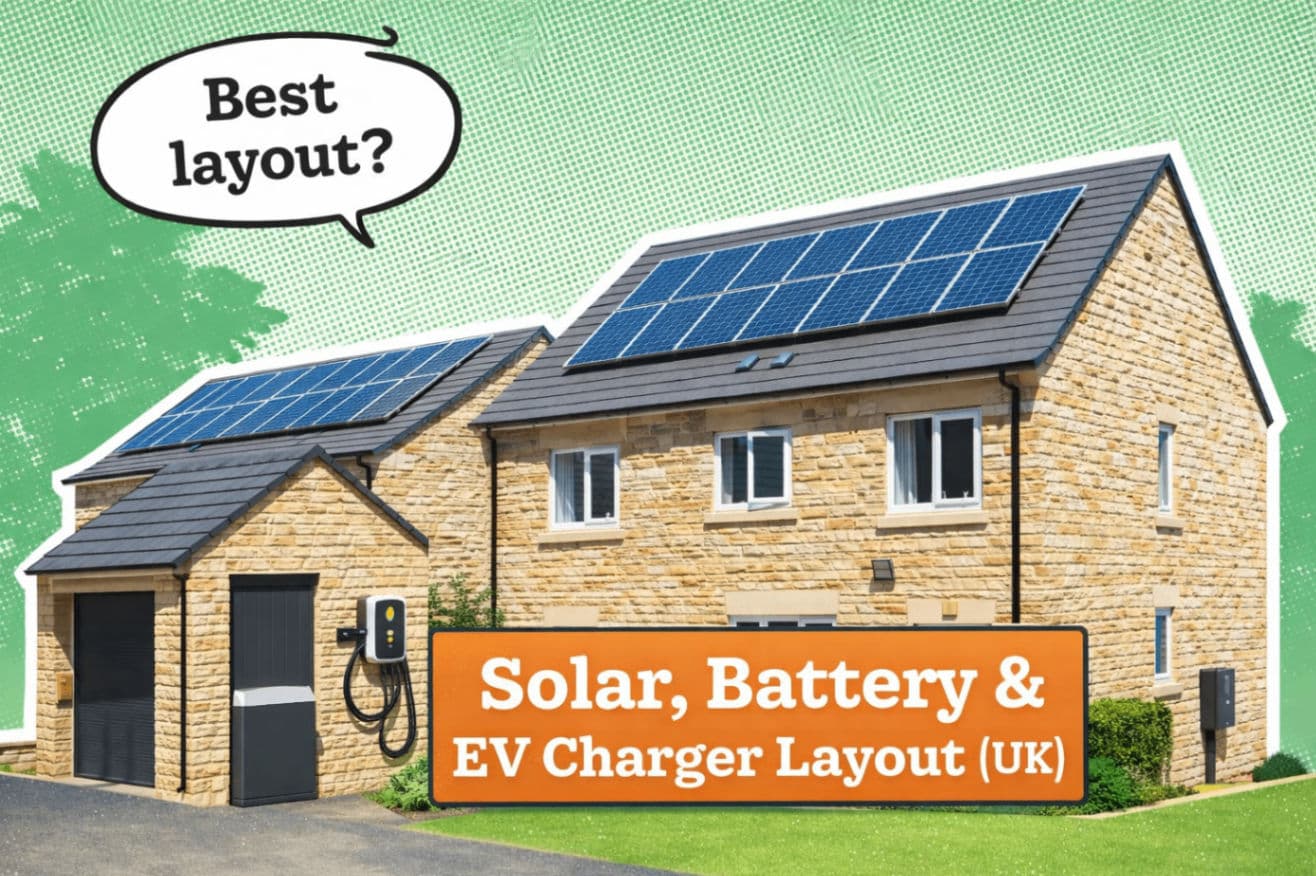
Lastly, there are the complete solar panel, battery storage, and EV charger setups. This is the whole shebang, allowing you to power your home, charge a battery, and charge your EV with free, clean electricity. For EV chargers specifically, they interact with solar panels and battery storage in several ways:
Solar diversion: This is where excess energy from your solar panels is directed to the EV charger.
Smart charging: You can use your battery storage to charge your EV when solar panels aren’t able too. Smart charging also refers to using off-peak electricity to charge your EV when electricity costs are low (this requires a time-of-use tariff however).
Read more:
Energy Tariff Comparison UK (Key Insights and Savings Tips)
Should I Get an AC or DC Battery?
When planning an integrated energy setup, you’ll need to think about what type of storage battery you’ll get.
If you’re planning on getting solar first and waiting a while before installing a battery, you’re more likely to get an AC-coupled battery (meaning it connects on the AC side, after the solar inverter).
AC-coupled batteries are much easier for retrofits onto existing solar systems and typically work with any inverter. However, they’re slightly less efficient than DC-coupled batteries, at roughly 90-94% efficiency.
Realistically this won’t mean much for the average household, but on a long-term scale can mean slightly less savings on your energy bills.
DC-coupled batteries connect directly to solar panels and are more efficient (up to 98%), but are less flexible because they need to be installed close to a specific, compatible hybrid inverter.
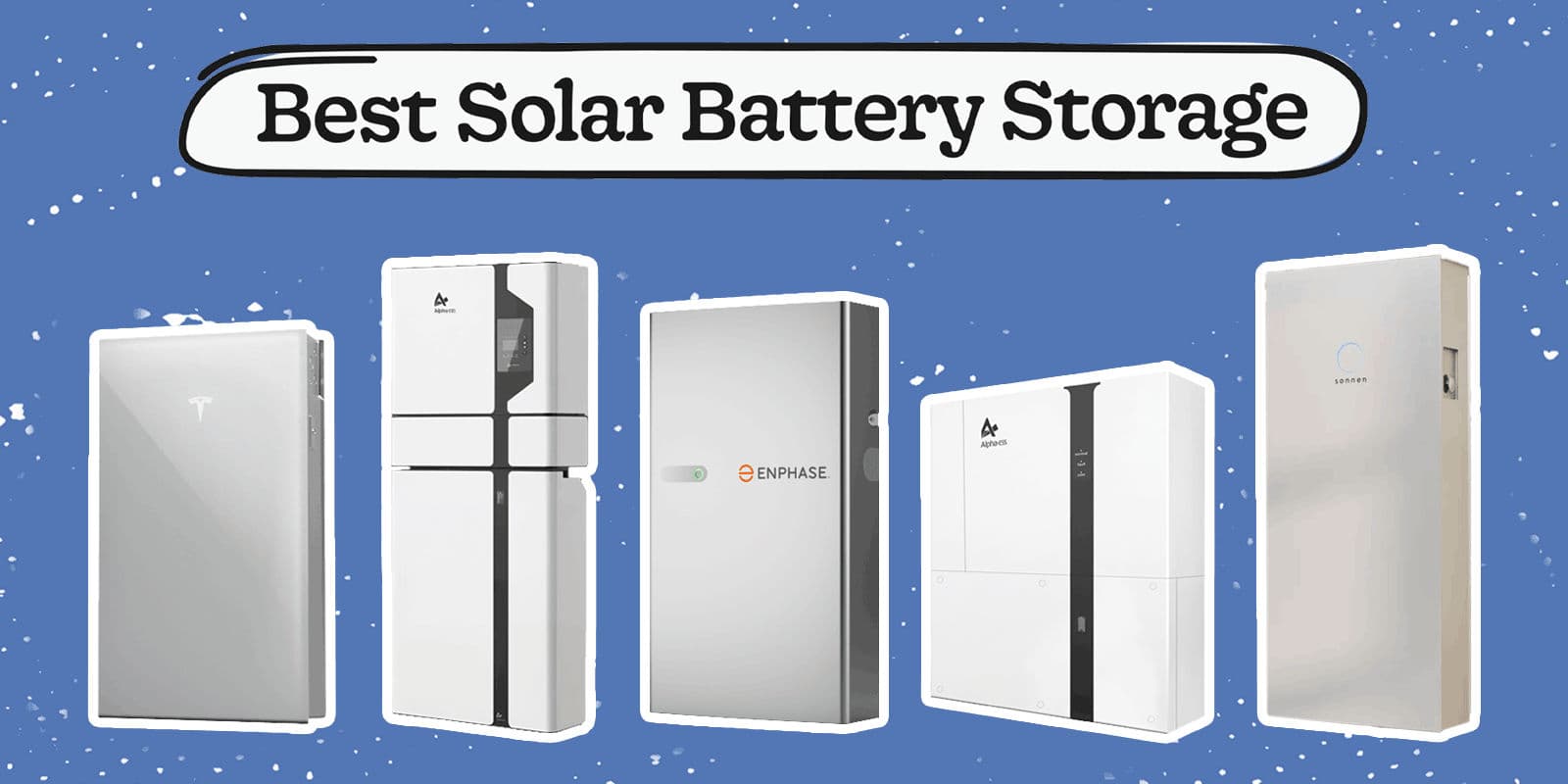
If you’re already set on getting solar panels and battery storage, a DC-coupled battery is generally best because it requires less equipment, resulting in a lower system cost. A great example of a DC-coupled battery is the Tesla Powerwall 3.
A key disadvantage of DC-coupled batteries you should consider is that they cannot be charged with cheap, off-peak grid electricity, whereas AC-coupled batteries can.
Read more:
What Battery Type Is Best for EV Chargers?
DC-coupled batteries can be great for pairing with EV chargers, because a DC-coupled battery allows you to oversize your solar panel system relative to the inverter rating, and use the excess energy to charge your EV.
When we say oversizing relative to inverter rating, we mean getting 5kW of solar panels using a 4kW inverter (as an example).
🎥 You can learn more about what inverter to get with your solar panels in the video below:
You can still charge an EV with an AC-coupled battery, but it won’t be quite as efficient. Again though, as you can charge an AC-coupled battery with cheap off-peak electricity, you can then use this to charge your EV when it’d otherwise be more expensive to do.
Read more:
How Much Does It Cost to Install an EV Charger in the UK?
How a Home’s Electrical Setup Can Impact Layout Decisions
When looking to set up an integrated home energy system, your home’s electrical setup can have an impact on the layout (and cost).
In particular, the consumer unit space (the space where your consumer unit, also known as a fuse box, is stored), the meter position, and your home’s cable routes all need to be considered:
Consumer Unit Space
Adding solar panels, battery storage, and an EV charger usually means needing new circuits and protective devices. Many UK homes have outdated consumer units that frankly aren’t up to scratch, so in these instances, either an upgrade or a second consumer unit might be needed.
You really can’t skip this if you do need an upgrade or secondary consumer unit, because you run the risk of overloads and tripped breakers. In worst-case scenarios, you’ll be increasing the risk of fire hazards in your home.
Meter Position
Your electricity meter is where the solar inverters, battery storage, and CT clamps (which are used for monitoring electrical current) connect. So if your meter is in an awkward position (for example, outside the front of your house, or far from the consumer unit), it can make cabling longer and more complex.
Installers prefer it when the routes to the meter are short and clear; otherwise, it requires extra work to set up cable routes and this can bump up installation costs.
Read more:
Cable Routes
The power your solar panels generate has to travel safely from the panels to the battery (via the inverter), to the consumer unit, and to the EV charger (and back again for monitoring).
If the cables are stretched over long distances, or along tricky paths (such as through walls, under floors, or across a garden) or obstacles, it can complicate installation.
For example, an EV charger located 20 or more metres away from the consumer unit could need thicker, more expensive cabling and additional groundworks to route the cabling to and from. This would potentially add hundreds to the total cost.
Safety and Compliance for Installations
All solar panel, battery storage, and EV charger installations must follow the Microgeneration Certification Scheme (MCS) standards for quality, and to be eligible for any grants or schemes.
The other necessity is for your installer to inform the local Distribution Network Operator (DNO) about your new setup. That includes the solar panels, battery storage, and EV charger.
The reason is so the DNO is aware of where increased demand on the local grid is coming from, either from EVs being charged, or from excess electricity generated by solar panels being fed back.
You should always use an MCS-certified installer who’ll design your system to the best possible quality and to meet compliance.
Best Practices for Layout
When installing a complete home energy system, it’s best to follow the order of:
Solar panels first: You’ll want to be able to generate first, then you can expand from there.
Batteries second: So you can capture the energy your panels are generating. If you’re planning on installing a DC-coupled battery, you’ll likely do this at the same time as installing your solar panels, but AC-coupled batteries can more easily be added afterwards.
EV charger last: It’s much easier to add an EV charger to an existing solar-plus-battery setup, rather than the other way around. You’ll also be able to decide if you want to get a solar-compatible EV charger, to best pair with your existing solar panel system.
Sticking to this order also gives you more flexibility for future upgrades, rather than having to retroactively make space for cable routes or batteries. And, if you pair all this with a smart tariff and technology like a smart thermostat (you might want to add a heat pump in the future), you can really optimise your home’s energy usage, saving you money.
For tariffs specifically, there are battery tariffs, export tariffs for selling solar electricity, and EV charger tariffs to consider.
Read more:
Best Solar EV Chargers UK (2026)
Common Mistakes to Avoid
One mistake we’d recommend avoiding is choosing to install an EV charger without considering solar panels and/or battery storage in the future. If you install an EV charger first, and then decide later down the line to add solar panels and battery storage, it can be much more complicated.
It’s also well worth getting to grips with smart features that help you maximise your system’s efficiency. Many solar panels, batteries, and EV chargers come with useful apps that you can use to manage when your EV is charged with solar power, for example.
Most of the other common mistakes will be avoided simply by picking a trusted, MCS-certified installer, but there’s no harm in being aware. Here’s a few:
Poor cable route planning: Any quality installer worth its salt will think of this when planning your layout, because poor cable route planning can lead to expensive rewiring in the future.
Undersized consumer units: If a new consumer unit is needed, a good installer will consider adding more space to allow for extra circuits if you choose to increase the size of your energy system.
Not leaving space for battery expansion or upgrades: You might find in the future you want to store even more of the electricity you generate (or your energy needs increase). It’s a good idea to leave a bit of space around your battery storage in case you want to expand or upgrade it.
Next Steps:
If you’re ready to install a complete home energy system, we’re MCS-certified installers capable of doing it all. For solar panels and battery storage installation nationwide, answer a few questions and get a fixed price in 60 seconds.
You can easily get an obligation-free quote for an EV charger too by using our quote tool.