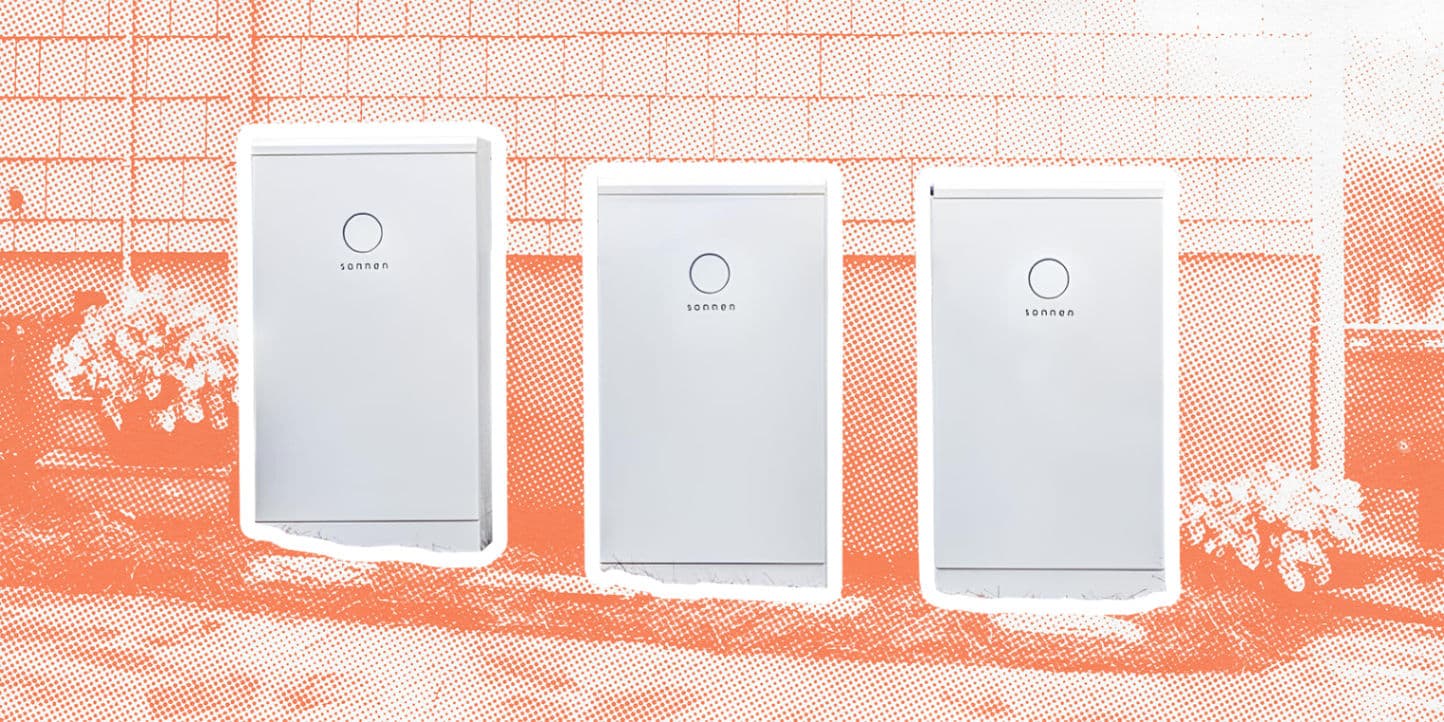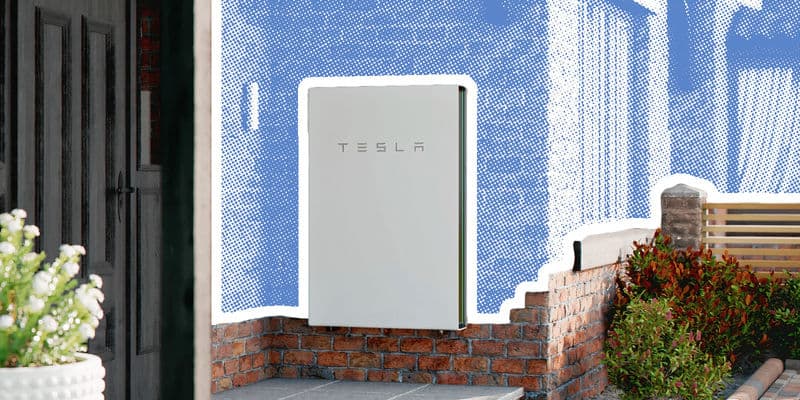

At Heatable, we’re here to help you make smart, eco-friendly choices. With energy prices jumping around like a kangaroo on a trampoline, battery storage solutions like the Sigenergy SigenStor are total game-changers.
The Sigenergy SigenStor has gone from obscure newcomer to one of the most talked-about home batteries in the UK remarkably quickly.
And, having spent some time with one, it isn’t difficult to see why.
Rather than simply bolting a battery onto an inverter, Sigenergy has attempted to build an entire home-energy ecosystem into one modular stack: solar inverter, battery storage, energy management, backup power and even an optional DC EV charger.
It looks good.
It does an awful lot.
And depending on how carried away you get with battery modules, it can store enough electricity to make your local DNO slightly nervous.
But should you actually buy one?
In this review, we’ll look at the SigenStor’s cost, capacity, warranty, solar integration, app, backup capability and real-world usefulness, before comparing it with its biggest UK rival: the Tesla Powerwall 3.
And yes, technically the company pronounces its name closer to “Sige-energy”.
We’re British, so “Sig” it is.
PS We offer MCS-certified battery installation nationwide. Simply answer these questions, get your fixed price, and arrange your free design.
Quick Summary:
Battery sizes: 5.2kWh or 7.8kWh usable per module
Maximum modules per controller: Six
Maximum nominal stack size: Around 48kWh
Battery chemistry: LiFePO4
Depth of discharge: 100%
Backup transition: 0ms under specified conditions
Single and three-phase: Yes
Solar MPPTs: Two on single-phase; up to four on selected three-phase controllers
Weather protection: IP66
Operating range: -20°C to 55°C
Battery/controller warranty: 10 years
Battery retention guarantee: 70%, subject to throughput limits
Optional DC EV charger: Up to 25kW
Sigenergy's current battery datasheet gives 5.2kWh usable capacity for the nominal 5kWh module and 7.8kWh for the nominal 8kWh module, with maximum continuous charge/discharge power of 2.5kW and 4kW respectively.
SigenStor: our quick verdict
Heatable rating: 4.5/5
The SigenStor is one of the most technically ambitious domestic batteries currently available in the UK.
Its biggest advantage is flexibility.
Battery modules can be mixed and expanded, the system supports both single- and three-phase installations, selected controllers offer up to four independent solar MPPTs, the mySigen app can optimise around dynamic tariffs, and proper backup can switch with effectively no interruption to supported loads.
There’s also an optional 25kW DC EV charging module, although the headline V2H/V2G functionality still depends on vehicle compatibility and regional/software support.
The main drawback is still the obvious one:
Sigenergy was founded in 2022.
You’re buying into a considerably younger ecosystem than Tesla, and there simply isn’t a decade of UK field data behind SigenStor yet.
That doesn’t make it unreliable.
It just means we wouldn’t pretend its long-term reliability has already been proven.
What Is the Sigenergy SigenStor?
The SigenStor is what Sigenergy calls a 5-in-1 home energy system.
Rather than installing several unrelated boxes on the wall and hoping they become friends, the platform combines:
a solar inverter
home battery storage
an energy management system
battery power-conversion electronics
an optional DC EV charging module into a modular system.
It is available in both single-phase and three-phase configurations, which immediately gives it an advantage over some domestic systems that primarily target standard single-phase homes.
The individual batteries use lithium iron phosphate, or LiFePO4, chemistry.
Two core module sizes are widely used in the UK:
Battery module | Nominal capacity | Usable capacity | Max charge/discharge |
Sigen Battery 5.0 | 5.38kWh | 5.2kWh | 2.5kW |
Sigen Battery 8.0 | 8.06kWh | 7.8kWh | 4kW |
Up to six battery modules can sit beneath a controller, giving you anything from a relatively modest domestic battery to roughly 48kWh nominal storage in one tower.
That is considerably more flexibility than something like a Powerwall, where capacity increases come in much larger 13.5kWh chunks.
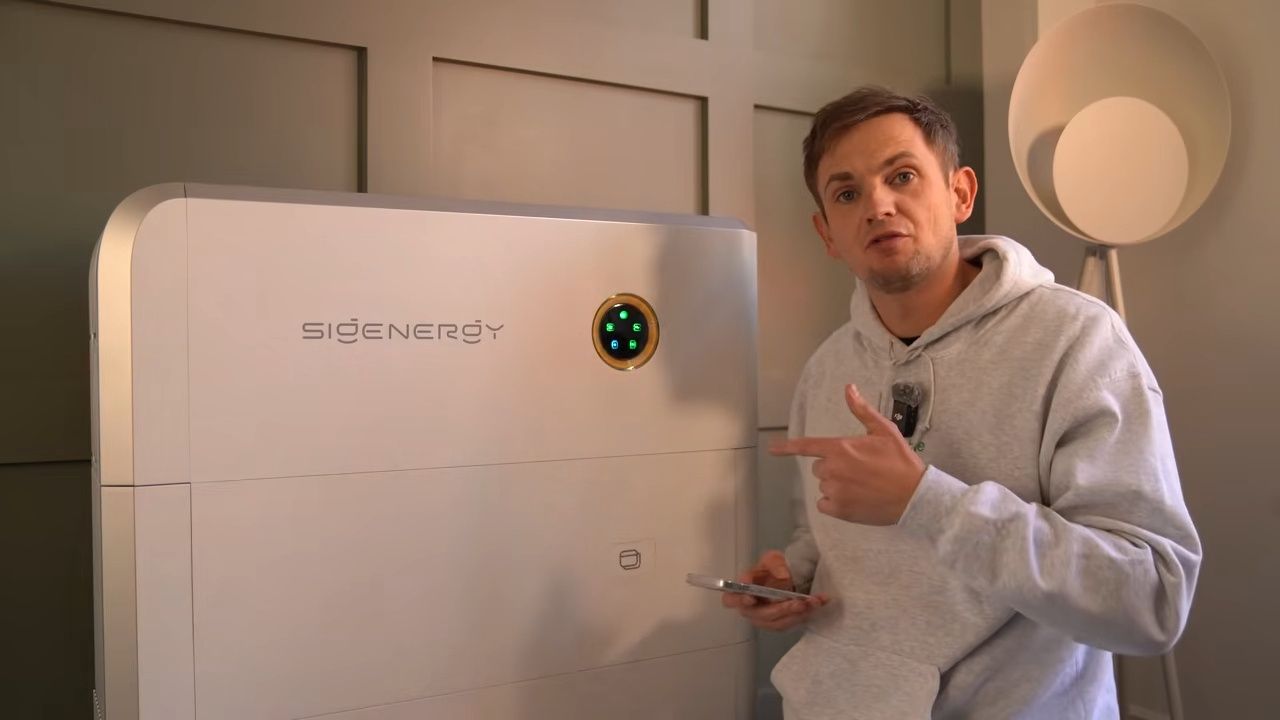
The SigenStor Energy Controller sits at the top of the modular stack, managing solar generation, battery storage and household energy flows.
Available in single- and three-phase variants, it’s designed to be scalable, stylish, and clever, slotting neatly into solar-powered homes.
Its Lithium Iron Phosphate (LiFePO4) battery modules come in 5 kWh or 8 kWh sizes, stackable up to 48 kWh per tower, making it versatile for everything from compact flats to power-hungry family homes.
The mySigen app is a standout, offering real-time monitoring and AI-driven optimisation to fine-tune charging and discharging based on your usage and energy tariffs.
It also boasts a 0ms switchover time for backup power, so you’re never left scrambling during a blackout - perfect for when even a dodgy Wi-Fi signal feels like the end of the world.
But let’s get stuck into what makes this system special…
🎥 Prefer video? Check out our YouTube review of the Signenergy SigenStor:
Heatable has now covered SigenStor twice in detail, including our original deep dive and a newer follow-up looking at inverter sizing, storage options, backup, accessories, pricing and smart controls.
SigenStor battery capacity and scalability
This is probably SigenStor's strongest feature.
Each Energy Controller supports between one and six battery modules.
That gives homeowners considerably more freedom to size the battery around actual consumption.
For example, you might install:
one 8kWh module for modest evening demand
two 8kWh modules for roughly 15.6kWh usable storage
three modules for an EV-heavy household
a substantially larger stack for a home with solar, heat pump and high overnight consumption
And you don't necessarily have to buy everything on day one.
Each battery contains its own DC-DC optimiser, and Sigenergy specifically promotes the ability to mix older and newer batteries within an expanded system rather than requiring every module to have identical age or state of health.
That's useful.
Battery systems have historically had an awkward habit of being expandable right up until the moment you actually want to expand them.
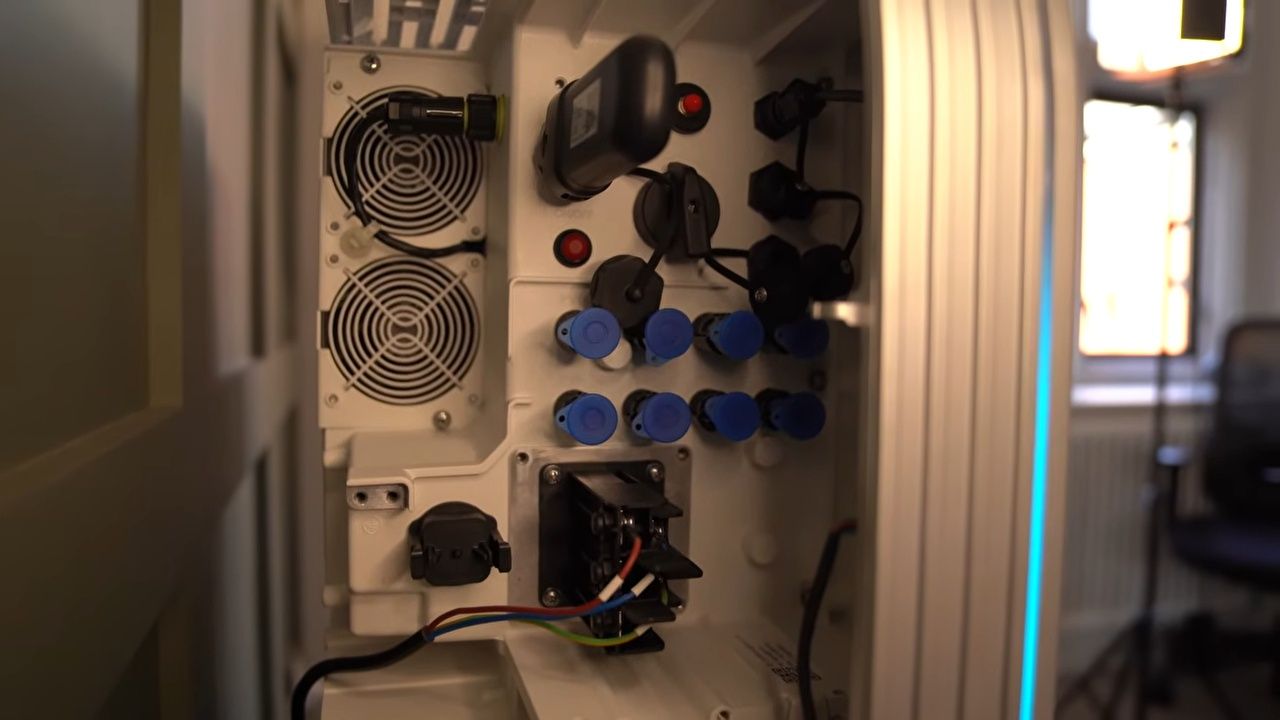
SigenStor uses stackable 5kWh and 8kWh battery modules, allowing capacity to be tailored more precisely than fixed-size batteries.
How much does a Sigenergy SigenStor cost?
This needs to be much higher in the article than it currently is.
Because fascinating though battery optimisers are, most people eventually want to know whether the thing costs £5,000 or the GDP of Luxembourg.
A SigenStor installation varies considerably depending on:
battery capacity
inverter/controller size
whether you're adding solar
whether backup is required
whether a Sigen Gateway is needed
electrical upgrades
phase configuration
EV charging
installation complexity
As a useful comparison point, a roughly 13kWh SigenStor configuration has been advertised by Heatable from around £6,995 installed, although live quote pricing should always be used because configurations vary.
For comparison, we currently offer:
Tesla Powerwall 3: from £7,395 installed
GivEnergy All-in-One 13.5kWh: from £7,295 installed Heatable
So SigenStor isn't necessarily the cheapest battery on the market.
But it is competitively priced against other premium all-in-one systems, particularly when its modularity avoids paying for substantially more storage than you need.
What affects the price most?
Battery capacity
Unsurprisingly, this is the big one.
A 5kWh or 8kWh system costs considerably less than building a 30kWh-plus home battery fortress.
Gateway and backup
Whole-home or critical-load backup requires additional equipment and electrical design.
Solar integration
A new solar-and-battery installation can make better use of SigenStor's integrated inverter than a simple battery retrofit.
DC EV charging
The optional Sigen EV DC module is clever but expensive and unnecessary for most homes today.
A conventional 7kW AC EV charger remains vastly more sensible for many households.
Solar panel integration
SigenStor is particularly attractive when installed alongside solar.
The Energy Controller is a hybrid solar inverter, allowing PV to feed household loads, charge the battery or export electricity without necessarily passing through a separate inverter first.
But I would tighten some of the existing claims here.
The number of solar inputs depends on which controller you buy.
Single-phase systems
Current single-phase controllers provide:
two MPPTs
one string per MPPT
up to 16A input current per MPPT.
Three-phase systems
The three-phase range offers two, three or four MPPTs depending on controller output.
That's genuinely useful for properties with:
east/west roof faces
multiple roof pitches
extensions
complicated array layouts
But it would be inaccurate to say every SigenStor has four MPPTs.
Likewise, there isn't one universal “25kW solar input” figure.
Maximum PV input depends on the Energy Controller. The larger three-phase models can accept considerably larger arrays than a typical single-phase domestic controller.
The mySigen app and AI mode
One thing that has improved since the earliest SigenStor reviews is the software proposition.
The mySigen app provides live monitoring of:
household consumption
solar production
battery state of charge
grid import and export
energy costs
system status
More interestingly, Sigen AI Mode can combine household consumption history with electricity prices, weather information and solar forecasts to decide when to charge or discharge the battery. Dynamic tariff support includes the UK.
This is potentially very useful if you're on tariffs with substantial price variation.
Rather than manually telling the battery:
charge at 2am, discharge at 5pm, unless tomorrow is sunny, except Tuesdays after a full moon
the system can increasingly make those decisions itself.
That doesn't guarantee magical savings.
Battery economics still depend on your tariff, consumption, solar yield and how much you paid for the battery in the first place.
But this is exactly the sort of automation that can make a smart tariff much less irritating to manage.
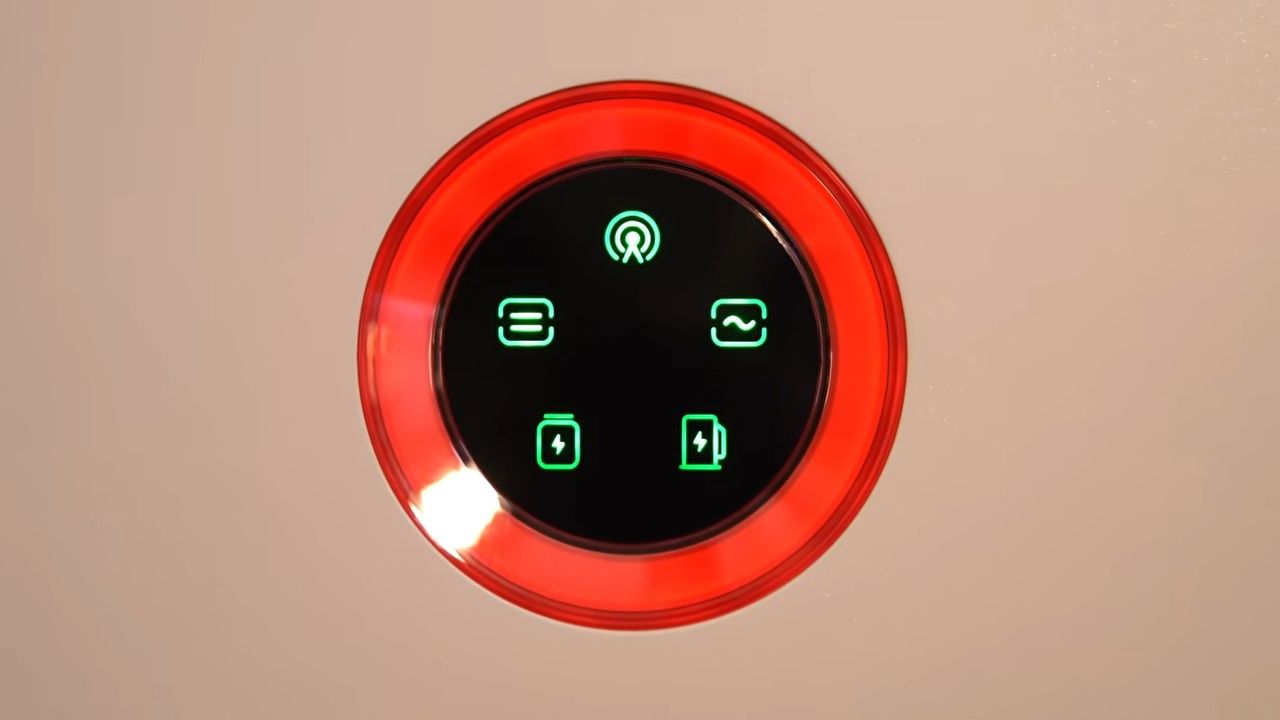
The mySigen app monitors solar, battery and grid energy flows and can automatically optimise charging around electricity prices and household demand.
Backup power
With the appropriate Sigen Gateway and system design, SigenStor can provide backup power during a grid outage.
Sigenergy specifies 0ms load-side disruption under its defined backup test conditions.
In other words, supported loads can continue running without the noticeable interruption you may get from systems with a longer transfer time.
That's useful for:
computers
internet equipment
lighting
fridges and freezers
alarm systems
sensitive electronics
There is a qualification here.
0ms does not mean every conceivable appliance in every house is automatically guaranteed uninterrupted power.
Actual backup capability depends on:
inverter size
battery output
which circuits have been configured for backup
instantaneous household load
system design
The clever battery still has to obey electricity.
SigenStor EV charging and V2H
This is the feature that makes SigenStor look particularly futuristic.
Sigenergy offers an optional Sigen EV DC Charging Module rated at either 12.5kW or 25kW.
Because it connects to the system's DC architecture, solar and stored battery energy can feed the vehicle directly.
The 25kW unit is also designed for bidirectional operation.
That opens the door to:
V2H: Vehicle-to-Home
V2G: Vehicle-to-Grid
So, theoretically, the enormous battery sitting in your driveway can also supply the house.
Sigenergy itself states that V2X capability depends on the EV, software, standards and regional support.
So we'd describe this as future-facing capability rather than a reason to buy SigenStor solely for V2H today.
For most UK homeowners, a conventional 7kW AC charger is still cheaper and entirely adequate.
Recommended Heatable video still #6
Pull from: approximately 07:46.
Image description / alt text:
Sigenergy SigenStor DC EV charging module demonstrated during Heatable’s hands-on product review.
Caption:
The optional Sigen EV DC charger can deliver up to 25kW and is designed to support future vehicle-to-home and vehicle-to-grid operation.
SigenStor safety and weather protection
The battery uses LiFePO4 chemistry, which has become popular in stationary energy storage partly because of its strong thermal stability.
Sigenergy also builds several additional protections into the battery architecture, including:
1. extensive cell-temperature monitoring
2. insulating/aerogel barriers
3. an internal fire-extinguishing system
4. high-temperature-resistant insulation
5. pressure/decompression protection.
The battery has an IP66 ingress-protection rating and is specified to operate between -20°C and 55°C. SigEnergy
It also contains battery heating for cold conditions.
That makes outdoor installation possible, subject to Sigenergy's installation rules.
And given Britain’s atmospheric commitment to moisture, IP66 is welcome.
SigenStor warranty
Sigenergy currently gives the Sigen Battery and Sigen Energy Controller a 10-year product warranty in Europe.
The optional Sigen EV DC Charging Module has a three-year warranty.
For battery performance, Sigenergy guarantees the earlier of:
70% usable energy remaining after 10 years, or
the applicable minimum warranted throughput.
The stated throughput figures are:
Battery | Usable capacity | Warranted minimum throughput |
5kWh module | 5.2kWh | 15.85MWh |
8kWh module | 7.8kWh | 23.77MWh |
Our warranty verdict: 4/5
Ten years is respectable and roughly where we'd expect a premium home battery to sit.
But Tesla currently gives UK Powerwall 3 customers 10 years with 80% retained energy capacity under normal self-consumption, tariff-control and backup use.
So Sigenergy's 70% retention threshold isn't the strongest in the category.
SigenStor pros and cons
Pros:
Extremely scalable
The 5kWh and 8kWh modules let you size the system more precisely than fixed 13.5kWh batteries.
Single and three-phase options
Particularly attractive for larger homes and more complicated electrical installations.
Excellent solar integration
Integrated hybrid inverter with up to four MPPTs on selected three-phase controllers.
Proper smart-energy features
The mySigen app combines tariff, weather, solar and consumption data rather than merely showing you a pretty battery percentage.
Strong backup capability
0ms load-side disruption is one of the standout technical features when configured appropriately.
Excellent weather protection
IP66 battery/controller hardware is reassuring for outdoor UK installations.
EV integration
No major rival currently has quite the same integrated DC charging proposition.
Cons:
Sigenergy is still a young company
The hardware looks excellent.
Ten years of real-world UK reliability evidence does not yet exist.
Warranty retention could be better
Tesla's current 80% retention guarantee beats Sigenergy's 70%.
It can become expensive
The modular design makes it easy to keep adding batteries and accessories until you've accidentally built a small power station.
Some features are configuration-dependent
Four MPPTs, very high output and V2H are not universal characteristics of every SigenStor installation.
DC EV charging is still niche
Impressive technology, but conventional AC charging remains more practical for most homes.
Is the SigenStor worth it?
For the right homeowner, yes.
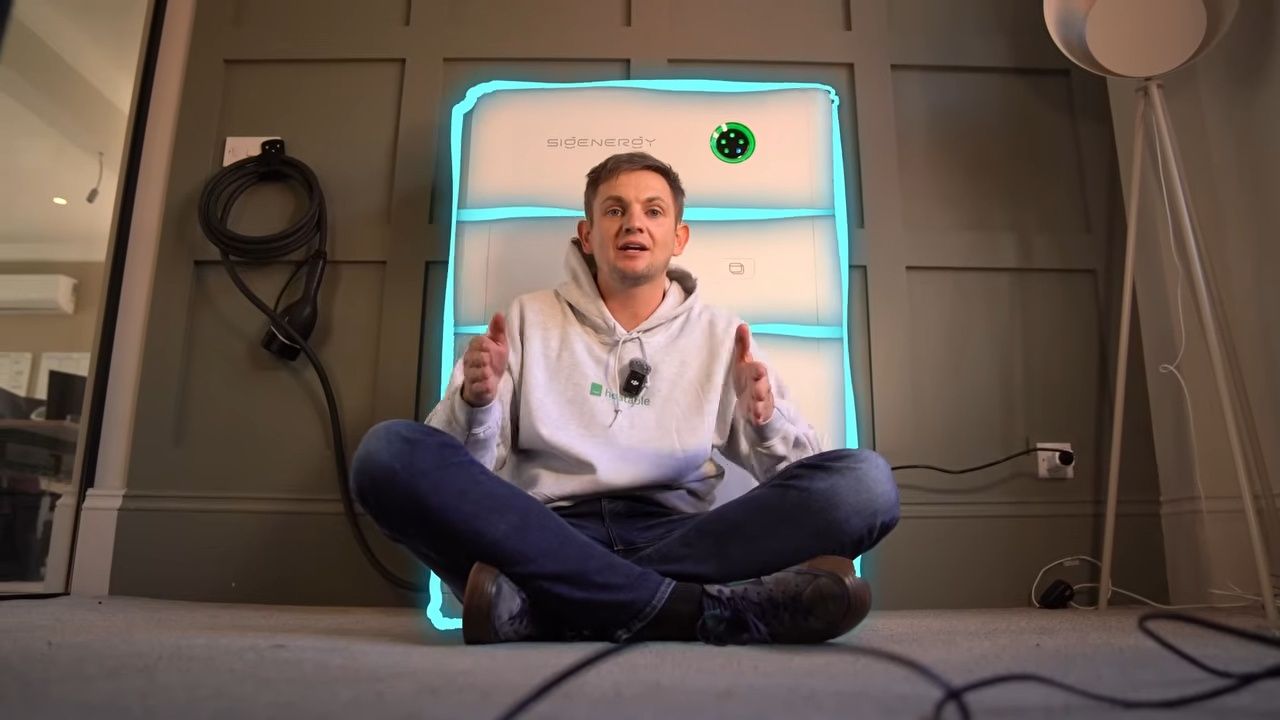
Heatable takes a final look at the complete SigenStor system after examining its batteries, inverter, backup, app and EV charging options.
The Sigenergy SigenStor is one of the best home energy-storage systems we've reviewed.
Not because it has the biggest battery.
It doesn't.
Not because it is dramatically cheaper than everything else.
It isn't.
What makes it interesting is the architecture.
You can start with a relatively small battery, expand it later, integrate substantial solar, add three-phase support where required, provide genuine backup and potentially fold DC EV charging into the same ecosystem.
That's a much more flexible proposition than simply buying a fixed battery box.
The mySigen software has also become one of its strongest features, particularly for homeowners using increasingly complicated dynamic tariffs.
Would we choose it over Tesla?
For a straightforward single-phase home wanting 13.5kWh and enormous power output, Powerwall 3 is extremely difficult to beat.
For a more complicated property, unusual capacity requirement, three-phase supply or long-term plan involving solar, EVs and further electrification?
SigenStor may be the more interesting system.
And against GivEnergy, the choice has become closer as GivEnergy's hardware has evolved.
Heatable verdict: 4.5/5
SigenStor is no longer merely an intriguing Tesla alternative.
It's good enough to be judged on its own merits.
The only thing it still can't manufacture overnight is a decade-long reliability record.
Time will have to handle that one.
Who should buy a SigenStor?
We'd shortlist it particularly strongly if you:
want to start with a smaller battery and expand later
have, or may move to, three-phase power
have a complicated solar array
use a dynamic electricity tariff
want genuine backup capability
expect to add an EV or heat pump
enjoy detailed energy monitoring
want one integrated solar/battery/EV ecosystem
Who should look elsewhere?
Powerwall 3 may make more sense if:
you want roughly 13.5kWh anyway
maximum output from one battery matters
you prefer Tesla's app/ecosystem
the stronger capacity-retention guarantee matters to you
GivEnergy may make more sense if:
UK-based product/support infrastructure is particularly important
the latest AIO proposition suits your electrical design
warranty duration is a major deciding factor
Next Steps For Your Battery Journey:
When planning to install battery storage for your home, there are several important factors to consider. Make sure to refer to the following guides to help you make informed decisions:
To dive deeper into these topics, head over to our advice section, check out our YouTube channel for informative videos, or read a customer case study to see how others have benefited from their battery installation.
Get a Quote for a SigenStor Battery Today
Without boasting, you should get your battery storage installed with us, here's why:
Thousands of Happy Customers: We boast an average score of 4.9 on Trustpilot, outperforming the market leader.
Which? Trusted Trader: Heatable is proudly recognised as a Which? Trusted Trader.
Tesla Certified Installer: Heatable is proudly certified and approved by Tesla to install the Powerwall.
MCS Accredited: Our accreditation by the Microgeneration Certification Scheme (MCS) ensures high-quality standards.
Consumer Protection: As members of the HIES consumer code, we provide 2-year deposit protection.
Flexible Payment Options: Choose from multiple payment methods, including finance options.
Fixed Price Guarantee: Enjoy transparency with no hidden costs.
Save Your Quote: You can save your quote and decide later.
Bespoke Battery Quote Tool: Find out which battery is ideal for your home, here.
![What size solar battery do I need? [UK, 2026]](/_next/image?url=https%3A%2F%2Fassets.heatable.co.uk%2F1720791617113_Fc5oG64OI.png&w=3840&q=75)