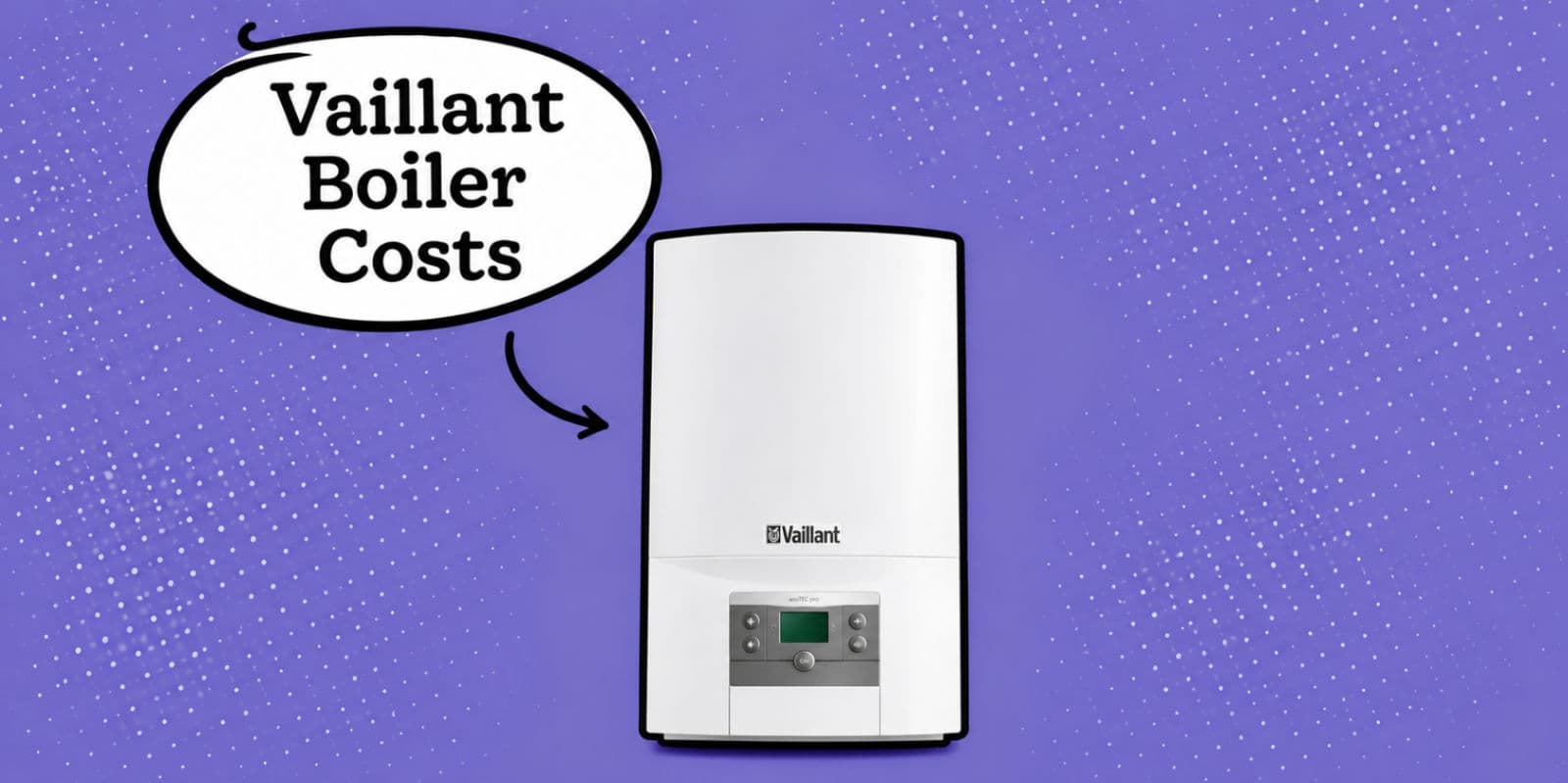

If your Vaillant boiler is showing F83, it’s basically telling you: the boiler fired up, but it didn’t see the temperature change it expected.
In Vaillant’s servicing documentation, F.83 is described as a “dry fire” fault-the burner starts, but the temperature rise registered by the flow/return sensors is too small or non - existent.
The most common reasons are insufficient water in the boiler/system or a temperature sensor that isn’t positioned correctly on the pipework.
This fault is seen most often on Vaillant ecoTEC models (commonly ecoTEC plus).
Boiler old, unreliable and costing a fortune in repairs? Simply answer these questions, get your fixed price and you could get a new one installed as quick as tomorrow.
What Does F83 Mean?
F83 = the boiler thinks it’s “dry firing” (not enough water/flow for safe heat transfer), because it can’t detect a normal temperature rise when the burner starts.
That can happen if:
system pressure is low / there’s not enough water in the system
circulation is poor (airlocks, pump issues, blockage/sludge)
a flow/return temperature sensor (thermistor/NTC) is misreading or incorrectly positioned
Common causes of an F83 fault (most likely first)
[1] Low system pressure / not enough water
If your pressure is too low, the boiler can’t push enough water through the heat exchanger and pipework - so the flow/return sensors don’t see a “normal” temperature rise when the burner starts.
What causes low pressure?
You’ve recently bled radiators (classic - pressure drops after).
A small leak somewhere in the system (often not dramatic… just annoying).
A pressure relief valve (PRV) that’s dribbling outside (look for a pipe through the wall with water stains below it).
Expansion vessel issues can also cause weird pressure behaviour over time.
If you top up and it drops again within days (or keeps needing topping up), don’t keep “feeding the beast” - get it checked. Repeated pressure loss usually means there’s an underlying fault.
[2] Air in the system (airlocks + dodgy circulation)
Air trapped in radiators or pipework can mess with circulation - and if water isn’t moving properly, the boiler won’t see the temperature change it expects.
What you’ll notice:
Radiators cold at the top / warm at the bottom
Gurgling / sloshing noises
Heating that starts… then gives up
Bleeding radiators can help - but remember: bleeding often lowers pressure, so you may need to top up afterwards.
[3] Poor circulation (pump, blockage, sludge, or bypass issues)
Even with decent pressure, you can still get F83 if the water isn’t circulating properly.
Common causes include:
Pump problems (sticking, failing, or struggling to shift water)
Blockages/sludge (magnetite buildup is the usual villain)
A stuck valve somewhere in the system
Bypass valve issues (if the system can’t maintain the right flow path)
If your boiler is older and the system hasn’t been cleaned/treated in years, sludge-related circulation faults are more likely - and they often show up as intermittent weirdness before it fully breaks.
[4] Flow/return temperature sensor (NTC thermistor) issues
Your boiler uses sensors (thermistors) on the flow and return to monitor temperature change.
If a sensor is loose, poorly seated, reading incorrectly, or has wiring issues, the boiler can think the temperature isn’t changing properly - even if it is.
Vaillant specifically flags sensor positioning as a potential factor with this fault.
What might be wrong
Sensor not sitting correctly against the pipe
Faulty sensor giving dodgy readings
Wiring/connection issues between sensor and PCB
This is not really a DIY job - it’s fast work for a heating engineer, but it’s still “boiler-insides stuff”.
[5] Heat exchanger not transferring heat properly (rarer, but possible)
If heat can’t transfer into the water properly, you can end up with the same basic symptom: burner on, but the expected temperature change doesn’t register.
This can be down to:
Internal restriction/scale (more common in hard water areas)
Deeper circulation issues creating a “hot spot” scenario
It’s not the most common cause, but it’s one reason F83 can come back even after pressure has been corrected.
You may be interested in Gas Engineer Allen Hart explaining the most common boiler problems and how you can resolve them in the video below:
Can I Fix an F83 Fault DIY?
Whether or not you can fix a Vaillant F83 error by yourself would depend on the nature of the issue.
Low Pressure - Possibly, Yes
If low pressure has caused the problem (as could be the case where there is insufficient water in your system), you could top it up DIY.
Repressuring your boiler is one possible solution, but you may also need to bleed your radiators. If you’re unsure what to do or lack any suitable skills or knowledge, it’s best to hire a professional.
Other Cause - No
For any other issue, such as a leak (another possible reason for insufficient system water), the low heat input into the heat exchanger or thermistors that need recalibration, you’d need to hire a qualified heating engineer.
Most work involves a boiler or heating system but be dealt with by a Gas Safe Register engineer both legally and for safety reasons.
This is for good reason. After all, DIY accidents cost the NHS around £200 million in 2019.
And DIY gas accidents are particularly dangerous, sometimes taking lives and destroying entire homes in the process.
Cost of Hiring a Heating Engineer to Fix an F83
On average, heating engineers charge around £30 to £60 an hour in labour fees.
However, this would depend on a range of factors like where in the UK you live.
For instance, labour costs tend to be higher in the Southeast while they are generally lower than the UK average in North England, Scotland, and Northern Ireland.
As you may notice from the list below, we mention ‘replacing an entire boiler’.
This is because if your PCB or heat exchanger need replacing, your boiler may be beyond economic repair, especially if it’s quite old.
However, many Britons may consider it ridiculous to consider buying a new boiler in the current economic climate.
But the good news is that you can purchase a boiler replacement on finance if you’d prefer. In other words, you can buy now and pay later.
Here is the overall cost of potential F83 fixes (labour + supply costs both included):
Fixing a leak - £30 to £120.
Fixing a heat exchanger - £50 to £200.
Recalibrating thermistors - £50 to £200.
PCB to thermistor wiring issue - £50 to £200*
Replacing a heat exchanger - £400 to £600.
Increasing gas flow pressure - £30 to £120.
PCB Replacement - £300 to £600.
Replacing an entire boiler - £800 to £2,800.
*PCB to thermistor wiring would need to be dealt with by a qualified electrician.
Get in touch with us if you have any questions about an F83 fault or a related issue with your Vaillant boiler.
Will my Warranty Cover Repairs or Replacement Work for an F83 Fault?
Sometimes - but it depends on the root cause and whether you’ve met the warranty conditions.
Vaillant’s domestic guarantee terms include:
Register within 30 days of installation
Annual servicing by a Gas Safe engineer, recorded in the Benchmark logbook
Coverage is generally for manufacturing defects (parts/labour) under the guarantee terms
If F83 is caused by system pressure loss/leaks/sludge, that’s often not a “manufacturing defect” scenario (and may not be covered).
But if it’s a genuine component failure and you’re in warranty with servicing history, it’s worth checking.
Looking for a great deal on a new boiler?
If so, get your boiler replacement installed with Heatable. Here’s why:
Gas Safe installation within 24 hours.
Thousands of happy customers – an average score of 4.9 on Trustpilot (that’s better than the market leader).
Price match guarantee – if you find a cheaper quote, we will match (must be like for like).
Multiple payment options - interest-free available.
10-year guarantee.
Fixed price guarantee – no hidden costs.
Save your quote until later.
Use this clickable form to get a fixed price on the screen instantly.
Heat happy.