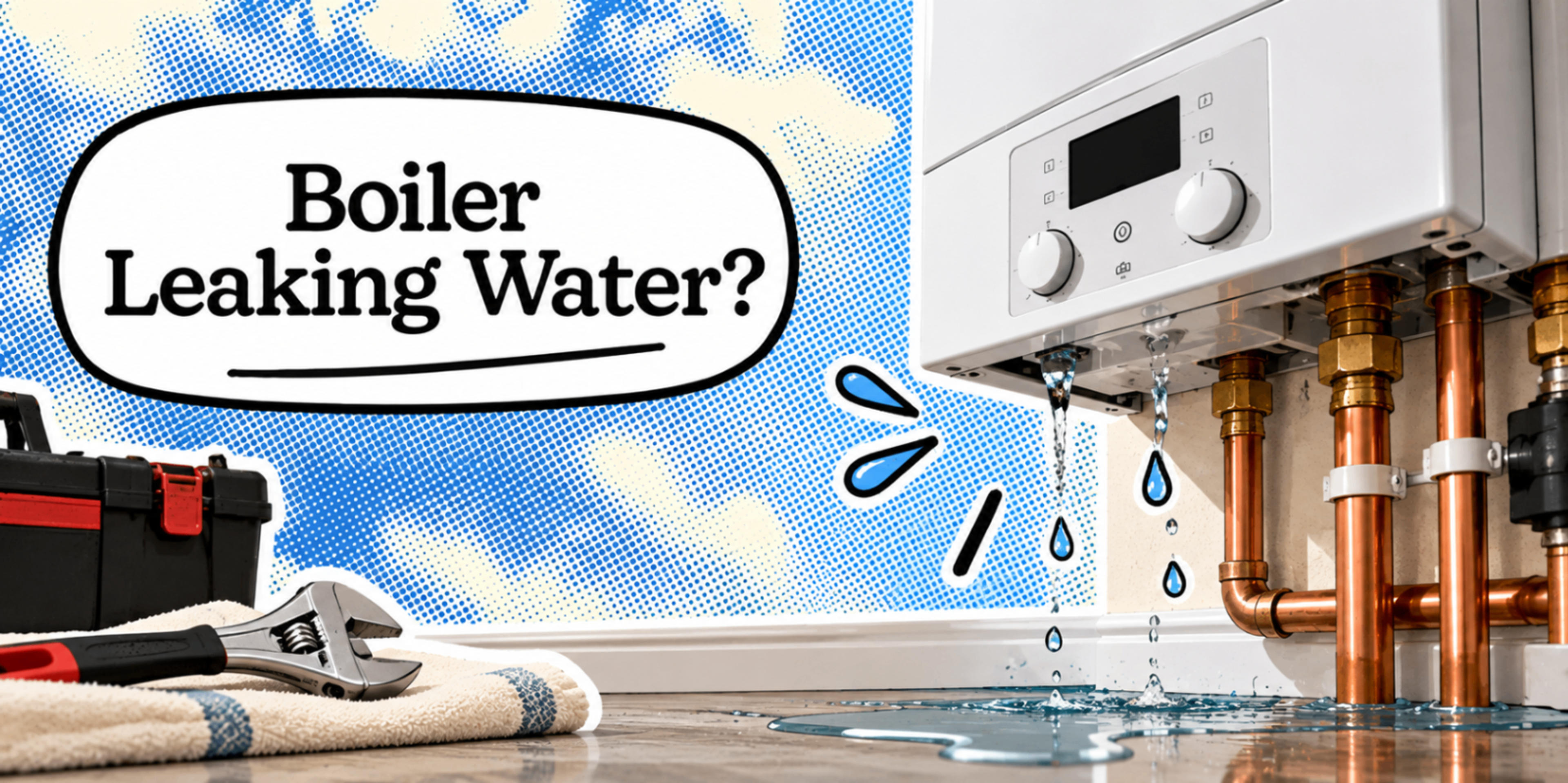

Spotted your boiler leaking water? Not ideal, is it? The good news is that a leaking boiler is not always a full-blown emergency. Sometimes it is a small drip from a pipe or pressure valve.
Other times, it can point to something more serious, especially if water is getting near electrics, your boiler pressure is dropping fast, or your heating and hot water have packed in.
As a rule, any boiler leak should be taken seriously. Water and boilers are not a great combo, and ignoring even a small leak can lead to water damage, rusty components, pressure problems, or a boiler that eventually gives up altogether.
You should treat it as an emergency if you smell gas, see water near electrical parts, notice a sudden pressure drop, or have no heating or hot water during cold weather, particularly if there are children, elderly people, or vulnerable people in the home.
The sensible move? Turn the boiler off if it is safe, keep away from any wet electrics, and call a Gas Safe registered engineer. And whatever you do, don’t start removing the boiler cover or trying to “have a quick look” inside. That is where a small problem can quickly become a dangerous and expensive one.
Boiler old, unreliable and costing a fortune in repairs? Simply answer these questions, get your fixed price and you could get a new one installed as quick as tomorrow.
What to Do Immediately If Your Boiler Is Leaking
Stay calm and act quickly.
A leaking boiler is not always a full emergency, but you should still take steps to reduce the risk of water damage, electrical hazards, and further boiler faults.
[1] Turn off the boiler
Switch the boiler off at the electrical isolator or fused spur, usually located near the boiler. This can help reduce the risk of electrical issues or further damage.
[2] Isolate the water supply, if safe
If you know how to do so safely, turn off the water supply to the boiler or heating system.
This may be via a valve near the boiler, cylinder, or filling loop. If you are unsure, leave it and wait for an engineer.
[3] Avoid electrics and standing water
Do not touch switches, plugs, sockets, or the boiler itself if water is pooling nearby. Water and electricity are a serious safety risk.
[4] Contain the leak
Place towels, a bucket, or a shallow tray beneath the leak to catch water and protect flooring, walls, or ceilings. Do not remove the boiler casing or interfere with internal parts.
[5] Check for the smell of gas
If you smell gas, or notice a rotten egg-like odour, treat it as an emergency.
Turn off the gas supply at the meter if it is safe to do so, open windows and doors, leave the property, and call the National Gas Emergency Service on 0800 111 999.
Do not use electrical switches, naked flames, or phones inside the property.
[6] Call a Gas Safe registered engineer
Contact a qualified heating engineer as soon as possible. Tell them where the leak appears to be coming from, how severe it is, whether the boiler pressure has dropped, and whether you still have heating or hot water.
These steps can help protect your home while you arrange expert help.
However, never attempt internal boiler repairs yourself; anything inside the boiler casing should only be handled by a Gas Safe registered engineer.
When is a leaking boiler an emergency?
A leaking boiler should be treated as an emergency if there is an immediate risk to your safety, your heating system, or your home.
Act quickly and arrange urgent help if you notice any of the following:
Water near electrics
If water is leaking close to the boiler’s wiring, controls, plug sockets, or other electrical components, turn the boiler off if it is safe to do so and avoid touching anything wet.
This could create a serious electric shock or fire risk.
A strong or persistent leak
A small drip is one thing, but a steady flow of water or a leak that is spreading quickly can cause serious damage to floors, walls, ceilings, and nearby electrics.
A rapid drop in boiler pressure

If your boiler pressure gauge is falling quickly, it may suggest a significant leak somewhere in the system.
This can stop your boiler working properly and should be checked by a professional as soon as possible.
No heating or hot water
Loss of heating or hot water can become urgent, especially during winter or in homes with elderly people, young children, or anyone vulnerable.
Burning smells, unusual noises, corrosion, or steam
Warning signs such as banging, gurgling, visible corrosion, steam, or burning smells may point to a more serious internal fault.
Do not remove the boiler casing or attempt to investigate inside the appliance.
A suspected gas leak
If you smell gas at any point, leave the property and call the National Gas Emergency Service on 0800 111 999. Do not use electrical switches, naked flames, or phones inside the property.
In any of these situations, a leaking boiler is more than a minor inconvenience.
Prioritise safety, turn the system off where safe, and contact a Gas Safe registered engineer for urgent advice or a same-day visit where possible.
When is a boiler leak less urgent?
Not every boiler leak needs an immediate out-of-hours callout.
In some cases, the issue may be less urgent, especially if the leak is small, slow, and there are no signs of electrical danger, gas smells, or major pressure loss.
A boiler leak may be less urgent if:
It is a small, slow drip
A minor drip with no other warning signs is usually less serious than a constant flow of water. However, it should still be checked before it gets worse.
The leak appears to be from an external pipe joint
If water is dripping from visible pipework outside the boiler casing, it may be caused by a loose connection or worn fitting. Do not attempt internal boiler repairs yourself.
Water is coming from the pressure relief or overflow pipe
This can sometimes happen when boiler pressure is too high.
It still needs attention, as repeated pressure issues can point to a faulty valve, expansion vessel problem, or another system fault.
There is a condensate pipe issue
Modern condensing boilers can sometimes develop leaks or drainage problems around the condensate pipe, particularly during freezing weather if the pipe becomes blocked or frozen.
Even if the leak seems minor, do not ignore it. Small leaks can lead to corrosion, reduced efficiency, water damage, or a more expensive repair later on.
Keep an eye on the boiler pressure, contain any dripping water, and arrange for a Gas Safe registered engineer to inspect the problem as soon as practical, ideally within a day or two.
Understanding why your boiler is leaking can help you describe the problem clearly when you contact an engineer.
The exact cause should always be diagnosed by a qualified professional, but some of the most common reasons include:
High boiler pressure
If the pressure is too high, often above 2.5–3 bar, your boiler may release water through the pressure relief valve to protect the system.
Corroded pipes or internal parts
Rust and corrosion can weaken pipework, valves, and internal components over time.
This is more common in older heating systems or systems that have not been properly maintained.
Loose pipe connections
Boilers heat up and cool down repeatedly, which can cause joints and fittings to expand, contract, and eventually loosen.
Damaged seals or gaskets
Seals can wear out over time, allowing water to escape from inside or around the boiler.
Faulty pressure relief valve
The pressure relief valve is designed to release water when pressure gets too high. If it becomes stuck, worn, or faulty, it may continue leaking even when the pressure is normal.
Cracked heat exchanger
A cracked heat exchanger is a more serious fault and can be expensive to repair. In some cases, especially with older boilers, replacement may be more cost-effective than repair.
Frozen or blocked condensate pipe
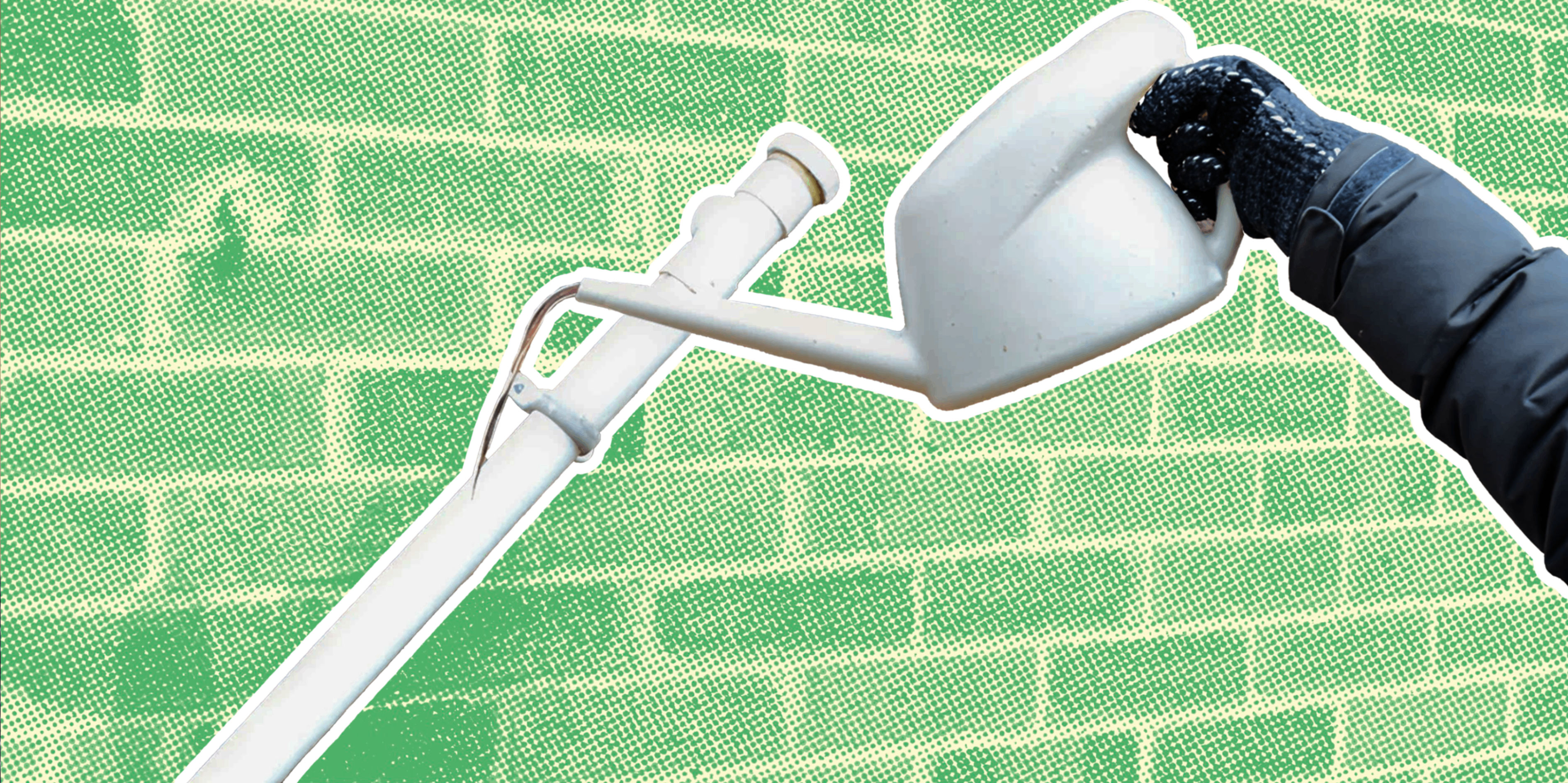
Modern condensing boilers use a condensate pipe to carry wastewater away.
In cold weather, this pipe can freeze or become blocked, causing water to back up and potentially leak.
A Gas Safe registered engineer will be able to inspect the boiler safely, identify the cause of the leak, and advise whether a repair or replacement is the better option.
Can you fix a leaking boiler yourself?
There are a few basic checks homeowners can safely carry out, but you should never attempt internal boiler repairs yourself.
You may be able to:
Check the boiler pressure
Look at the pressure gauge on the front of the boiler. If the pressure is too low, you may be able to top it up using the filling loop, following your boiler manual carefully.
If the pressure keeps dropping, there may be a leak that needs professional attention.
Inspect visible external pipework
You can look for obvious leaks around external pipes, valves, or joints near the boiler. Avoid overtightening anything, as this can damage fittings and make the problem worse.
Wipe up water and monitor the leak
Clean up any water around the boiler and keep an eye on how quickly it returns. This can help you explain the issue to an engineer.
However, you should never remove the boiler casing, attempt internal repairs, or work on gas components.
Gas and combustion-related work must only be carried out by a Gas Safe registered engineer.
DIY repairs can void your warranty, worsen the leak, damage the boiler, or create serious safety risks, including gas leaks and carbon monoxide exposure.
Should you repair or replace a leaking boiler?
Whether you should repair or replace a leaking boiler depends on the cause of the leak, the age of the boiler, and how much the repair is likely to cost.
You may want to consider replacement if:
Your boiler is over 10–15 years old
Older boilers are more likely to suffer from corrosion, worn seals, faulty valves, and repeated breakdowns. A repair may only solve the problem temporarily.
The repair is expensive
If the repair costs a large chunk of the price of a new boiler, replacement may offer better long-term value.
The boiler keeps breaking down
One leak may be fixable. Repeated leaks, pressure problems, or component failures usually suggest the boiler is nearing the end of its working life.
Your warranty has expired
If the boiler is out of warranty, you will need to cover the repair cost yourself. With an older appliance, that money may be better put towards a newer, more reliable model.
Your boiler is inefficient
An old, inefficient boiler can cost more to run, even after repair. A modern A-rated combi or system boiler may help improve reliability and reduce wasted energy.
For many UK homeowners and landlords, replacing an ageing or repeatedly faulty boiler can be the smarter long-term option.
At Heatable, we make boiler replacement simple with straightforward, fixed-price online quotes and trusted boiler brands suited to your home.
How to prevent boiler leaks
You cannot prevent every boiler fault, but regular care can reduce the risk of leaks and help catch problems early.
Book an annual boiler service
A yearly service by a Gas Safe registered engineer can help identify worn parts, corrosion, pressure issues, and early signs of leaks before they become bigger problems.
Check your boiler pressure regularly
Most boilers should sit at around 1–1.5 bar when cold, although you should always follow your manufacturer’s guidance. Pressure that is too high or too low can point to an issue.
Insulate external condensate pipes
If your condensate pipe runs outside, insulating it can help reduce the risk of freezing during cold weather.
Deal with small leaks quickly
Even a minor drip can lead to corrosion, water damage, pressure loss, or a more expensive repair if ignored.
Consider replacing an old boiler before it repeatedly fails
If your boiler is old, inefficient, or regularly breaking down, replacing it before a major leak occurs can save stress, disruption, and ongoing repair costs.
Get a Quote for a New Boiler Today
If you’re aiming to get the best deal on a new boiler, consider getting a quote from us, here’s why:
Gas Safe installation within 24 hours.
Thousands of satisfied customers with an average score of 4.9 on Trustpilot, surpassing the market leader.
Which? Trusted Trader: Heatable is proudly recognised as a Which? Trusted Trader.
Price match guarantee: We will match any like-for-like cheaper quote.
Flexible payment options, including interest-free finance.
Up to 12-year guarantee on selected boilers.
Fixed price guarantee: No hidden costs.
Save your quote and decide later.
Get an instant fixed price on a new boiler, here.
To learn more about boilers, visit our advice section, check out our YouTube channel, or read customer testimonials here.
Heat Happy.