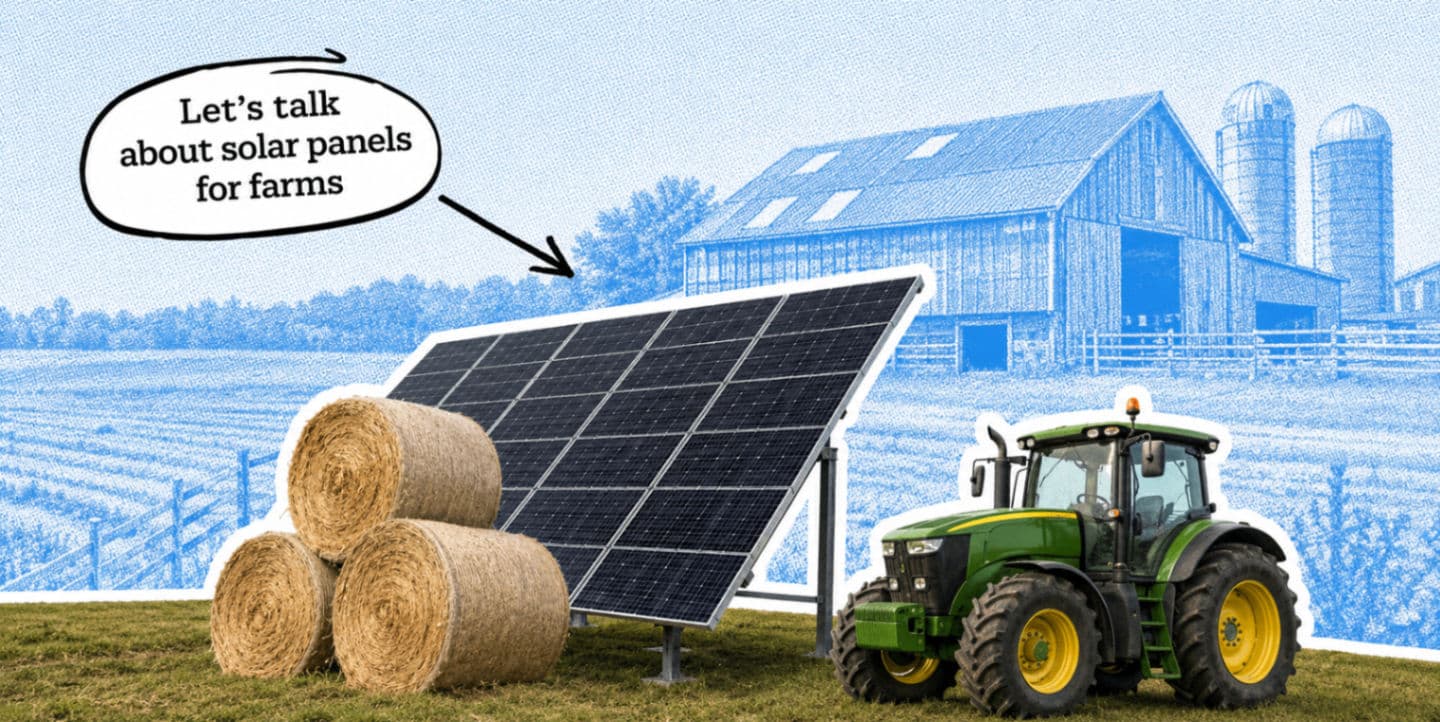

Farms are some of the best candidates for solar panels in the UK.
- Are solar panels worth it for farms?
- Why farms are well suited to solar
- Roof-mounted solar panels for farms
- Can solar panels be installed on agricultural land?
- Do farms need planning permission for solar panels?
- How much do solar panels for farms cost?
- Can farms get grants for solar panels?
- Can farms sell solar electricity back to the grid?
- Should farms add battery storage?
- What should farmers check before installing solar?
- Why a consultation matters for farm solar
Not because every farm should become a solar farm, but because many agricultural businesses already have the ingredients that make solar work - large roofs, high electricity usage, long-term buildings, open space and daytime demand.
For farms with dairy equipment, cold storage, grain drying, poultry ventilation, irrigation, workshops, packing sheds or farm offices, solar panels can reduce grid electricity use and help make long-term energy costs more predictable.
In many cases, the best place to start is not agricultural land at all. It is the roof.
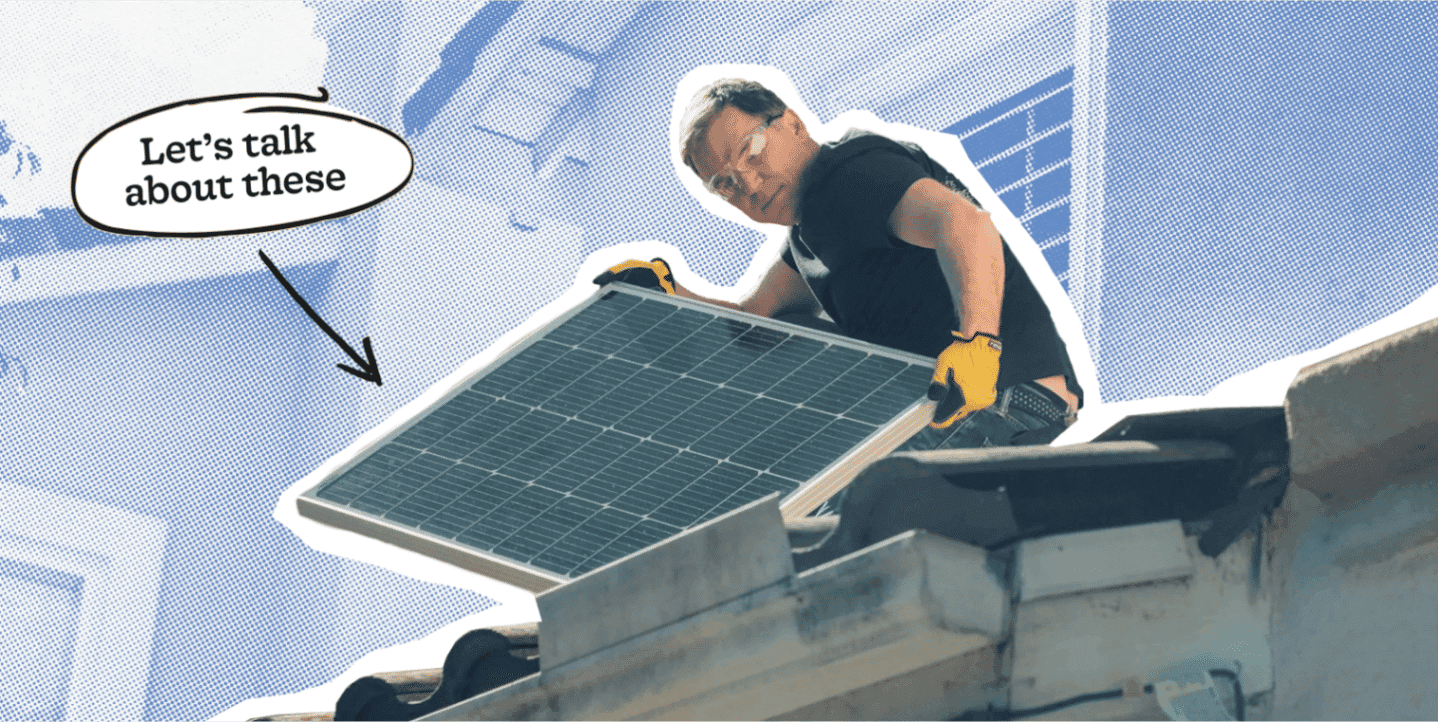
Barns, sheds, grain stores, livestock buildings and machinery buildings can often provide enough space for a sizeable solar PV system without taking productive land out of use.
Ground-mounted solar panels on agricultural land can also make sense, especially for larger sites, but they usually need more careful planning, grid checks and land-use assessment.
This guide explains how solar panels for farms work, when they are worth it, what to think about before installing them, and whether rooftop or ground-mounted solar is the better option for your agricultural business.
ℹ️ Get renewable energy consultancy with Heatable
🔑 Key takeaways:
Farm solar panels can reduce electricity bills, improve energy resilience and help protect agricultural businesses from long-term energy price volatility.
Roof-mounted solar is usually the simplest starting point for farms, especially where there are large barns, sheds or livestock buildings with suitable roof space.
Ground-mounted solar on agricultural land can work, but it is usually more complex because of planning, land grade, grid connection and visual impact.
The best returns usually come when the farm can use a high proportion of the solar electricity on site, rather than exporting most of it back to the grid.
Battery storage can help some farms use more of their own solar power, but it should be modelled properly rather than added by default.
Grants and funding may be available from time to time, but a farm solar project should still make commercial sense without relying entirely on grant support.
Are solar panels worth it for farms?
For many farms, yes.
Agricultural businesses often use far more electricity than a typical home. If that usage happens during daylight hours, solar can be especially valuable because the electricity generated by the panels can be used directly on site.
That matters because using your own solar electricity is usually worth more than exporting it. Every unit of solar power used by the farm is one less unit bought from the grid.
Solar panels may be particularly useful for farms with milking parlours, milk cooling, poultry sheds, ventilation systems, cold stores, refrigeration, grain drying, irrigation pumps, workshops, machinery buildings, farm shops, offices or packing facilities.
The stronger the overlap between daytime electricity use and solar generation, the stronger the business case is likely to be.
That is why solar should not be designed around roof size alone. A huge roof is useful, but the real question is how much of the electricity the farm can actually use.
Why farms are well suited to solar
A lot of UK farms have been hit hard by rising energy costs. Solar will not remove that pressure entirely, but it can reduce exposure to grid prices over the long term.
There are a few reasons farms are naturally well suited to solar PV.
First, agricultural buildings often have large, open roof areas. A barn or grain store can sometimes host a much larger system than a domestic property, and the installation can be more efficient if the roof is simple and accessible.
Second, many farms use electricity during the day. Dairy, poultry, storage, irrigation and processing operations can all have meaningful daytime demand.
Third, farms often have space for the wider energy system. That might include inverters, battery storage, EV charging, backup systems or future electrification of machinery and heating.
In short, a farm solar system can be more than a bill-saving measure. It can become part of the farm’s long-term infrastructure.
Roof-mounted solar panels for farms
For most agricultural businesses, rooftop solar is the cleanest first option.
It usually avoids the biggest objections associated with ground-mounted solar, because the panels are fitted to existing buildings rather than installed across open land.
Suitable buildings can include barns, livestock sheds, poultry units, machinery stores, grain stores, workshops, packing sheds and farm shops.
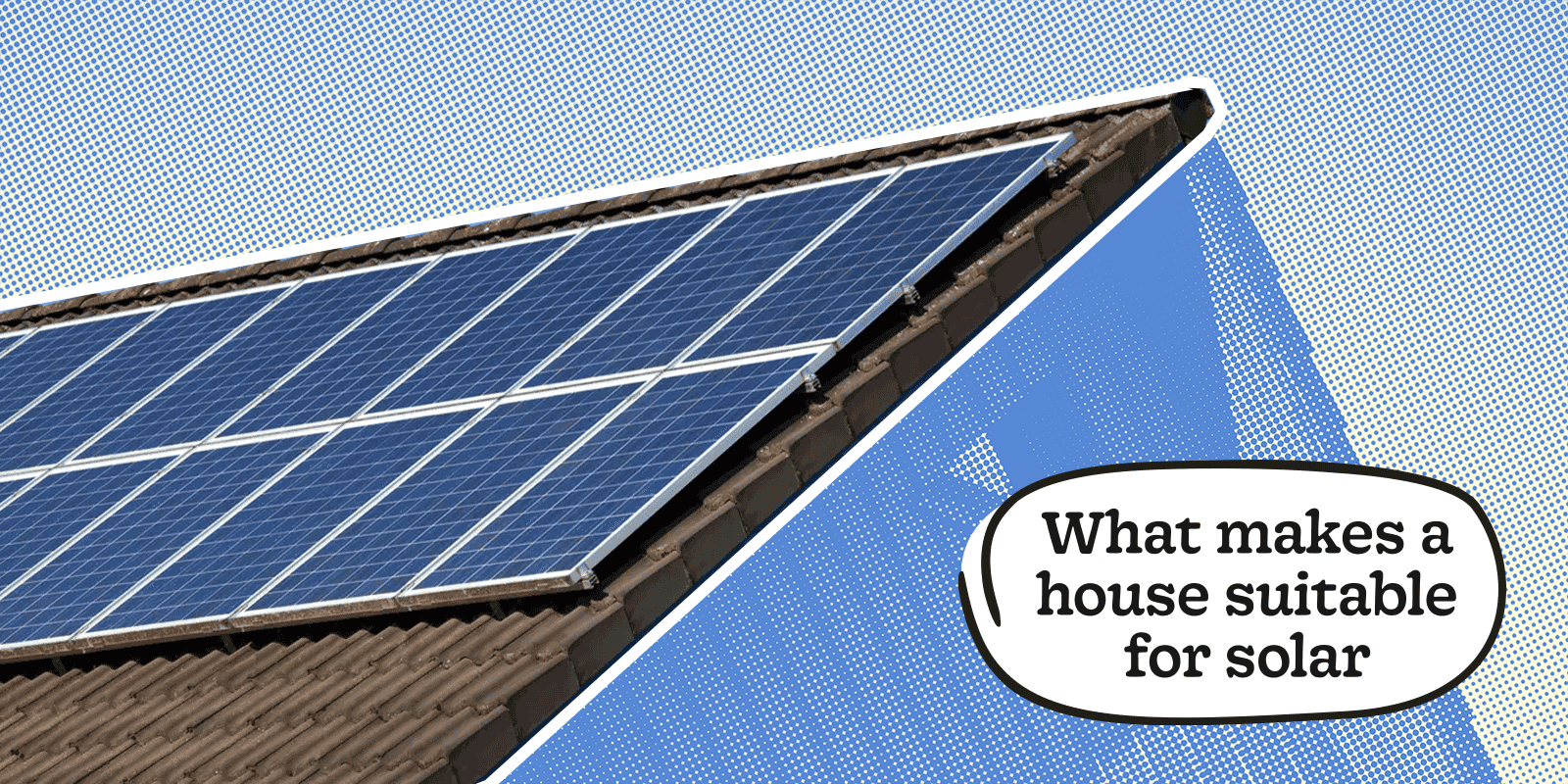
A roof-mounted farm solar system may be a good fit if the building has enough usable roof space, limited shading and a structure that can safely support the panels.
However, agricultural roofs need proper assessment before installation. Older roofs, asbestos cement roofs and lightweight structures may need additional checks before solar panels can be installed.
The main things to consider are roof condition, orientation, pitch, shading, structural strength and the location of the electrical connection.
If the roof is suitable, rooftop solar can be one of the most practical ways to cut farm energy costs without changing how the land is used.
Ground-mounted solar panels on agricultural land
Ground-mounted solar panels are installed on frames fixed into the ground instead of being attached to a roof.
This can be useful if the farm has limited roof space, unsuitable buildings or a larger electricity demand than the roofs can support.
It may also be an option where there is lower-grade or less productive land that could be used for renewable energy generation.
However, ground-mounted solar on agricultural land is usually a bigger project than rooftop solar.
Planning permission may be needed. The local grid may not have enough capacity. The land grade may matter. The system may need fencing, access routes, biodiversity planning and visual impact assessment.
That does not mean agricultural land should be ruled out. It just means the decision needs to be made carefully.
For many farms, the sensible order is: assess the roofs first, then look at ground-mounted solar if the roof space is unsuitable or not enough.
Can solar panels be installed on agricultural land?
Yes, solar panels can be installed on agricultural land in the UK.
There is no automatic ban on solar panels on farmland. But the planning system will usually look more closely at ground-mounted schemes, especially where the land is productive, visually sensitive or part of a larger solar farm proposal.
Smaller systems designed mainly to power the farm may be treated differently from large commercial solar farms designed mainly to export electricity to the grid.
The quality of the land can also matter. Planning policy generally prefers solar development on rooftops, previously developed land, lower-grade land or land with limited agricultural value where possible.
So the answer is not simply “yes” or “no”. It depends on the site, the scale of the system, local planning policy, grid connection and how the land is currently used.
Do farms need planning permission for solar panels?
It depends on where the panels are installed and how large the system is.
Solar panels on agricultural buildings may fall under permitted development rights if the installation meets the relevant rules. That can make rooftop solar more straightforward than a ground-mounted system.
However, restrictions can still apply. Listed buildings, conservation areas, protected landscapes, roof projection limits and system size can all affect whether permission is needed.
Ground-mounted solar panels are more likely to need planning permission, especially if they cover a large area of land or have a noticeable visual impact.
A good installer should help you understand the likely planning route before you commit to the project.
How much do solar panels for farms cost?
The cost of solar panels for farms depends on the size of the system, the type of installation and the complexity of the site.
A rooftop system on a modern agricultural building will usually be simpler than a ground-mounted system requiring planning, trenching, fencing and additional grid works.
The biggest cost factors are system size, roof condition, structural requirements, inverter setup, battery storage, grid connection and whether the installation is roof-mounted or ground-mounted.
Large commercial systems often cost less per kWp than smaller domestic systems because some fixed costs are spread across a bigger installation. But every farm is different.
The more important number is not just the installation cost. It is the payback period.
A proper feasibility assessment should show expected annual generation, how much electricity the farm is likely to use directly, how much may be exported and what the realistic savings could be.
Be wary of any proposal that only talks about panel output. For farms, the value of solar depends heavily on when and how the electricity is used.
Can farms get grants for solar panels?
Sometimes, yes.
Farm solar grants and funding schemes have been available in the UK, including support through government-backed agricultural productivity and energy-efficiency schemes.
However, grant availability changes.
Funding rounds open, close and change criteria, so it is important to check the latest position before assuming support is available.
Grants can improve the return on investment, but they should not be the only reason the project works.
A strong farm solar project should still make financial sense because it reduces energy costs and supports the long-term needs of the business. A grant should make a good project better, not turn a weak project into a good one.
Can farms sell solar electricity back to the grid?
Yes, farms may be able to sell surplus solar electricity back to the grid, depending on the system size, metering setup and export agreement.
For smaller systems, export payments may be available through a supplier export tariff. Larger systems may need a more commercial export arrangement or power purchase agreement.
But export should not usually be the main financial argument for a farm solar system.
In most cases, using the electricity on site is more valuable than exporting it. That means the best solar systems are usually designed around the farm’s actual energy demand.
If a farm exports too much electricity at a low rate, the payback may be weaker than expected.
Should farms add battery storage?
Battery storage can be useful for farms, but it should not be treated as automatic.
A battery stores excess solar electricity so it can be used later, such as in the evening, overnight or during periods of higher demand.
This can make sense for farms with cold storage, evening electricity use, overnight loads, EV charging or time-of-use tariffs.
It may be less useful where the farm already uses most of its solar electricity during the day.
The right answer depends on the data. A solar proposal should model the system with and without battery storage so the farm can see whether the extra cost is justified.
What should farmers check before installing solar?
Before installing solar panels, farmers should understand three things: the site, the electricity usage and the grid connection.
The site assessment should look at roof space, land availability, shading, structural condition and access.
The electricity assessment should look at actual usage data, ideally half-hourly data, so the system can be sized around real demand.
The grid assessment should check whether the local connection can support the proposed system and whether export capacity is available.
These checks matter because the wrong system can still generate plenty of electricity but deliver disappointing savings.
The goal is not simply to install as many panels as possible. The goal is to install the right system for the farm.
Why a consultation matters for farm solar
Farm solar is more complex than a standard residential solar installation.
With a home, the main questions are usually roof space, electricity usage, battery storage and installation cost.
With a farm, there are more moving parts.
The right design may need to account for multiple buildings, three-phase supply, variable seasonal demand, export limits, planning rules, land grade, battery storage, roof structure, existing equipment, access, tenancy arrangements and future electrification.
That is why a farm solar consultation is more useful than a quick quote.
A consultation helps establish whether solar is viable, where it should go, how large the system should be, whether battery storage makes sense and what the likely return could look like.
It also helps avoid the biggest mistake with farm solar: installing a system that looks impressive on paper but does not match how the farm actually uses electricity.
Final thoughts: should your farm install solar panels?
Solar panels can make excellent sense for UK farms, especially where the business has high electricity use, suitable buildings and a long-term need to reduce energy costs.
For most farms, rooftop solar should be the first option to explore. It is usually simpler, less disruptive and easier to justify than putting panels on agricultural land.
Ground-mounted solar can still work, particularly for larger sites or farms with unsuitable roof space, but it needs a more detailed assessment.
The best farm solar projects are not just about generating green electricity. They are about reducing energy costs, improving resilience and making the farm’s buildings and land work harder.
If your farm has high electricity bills, large agricultural buildings or unused land, solar is worth a proper look.