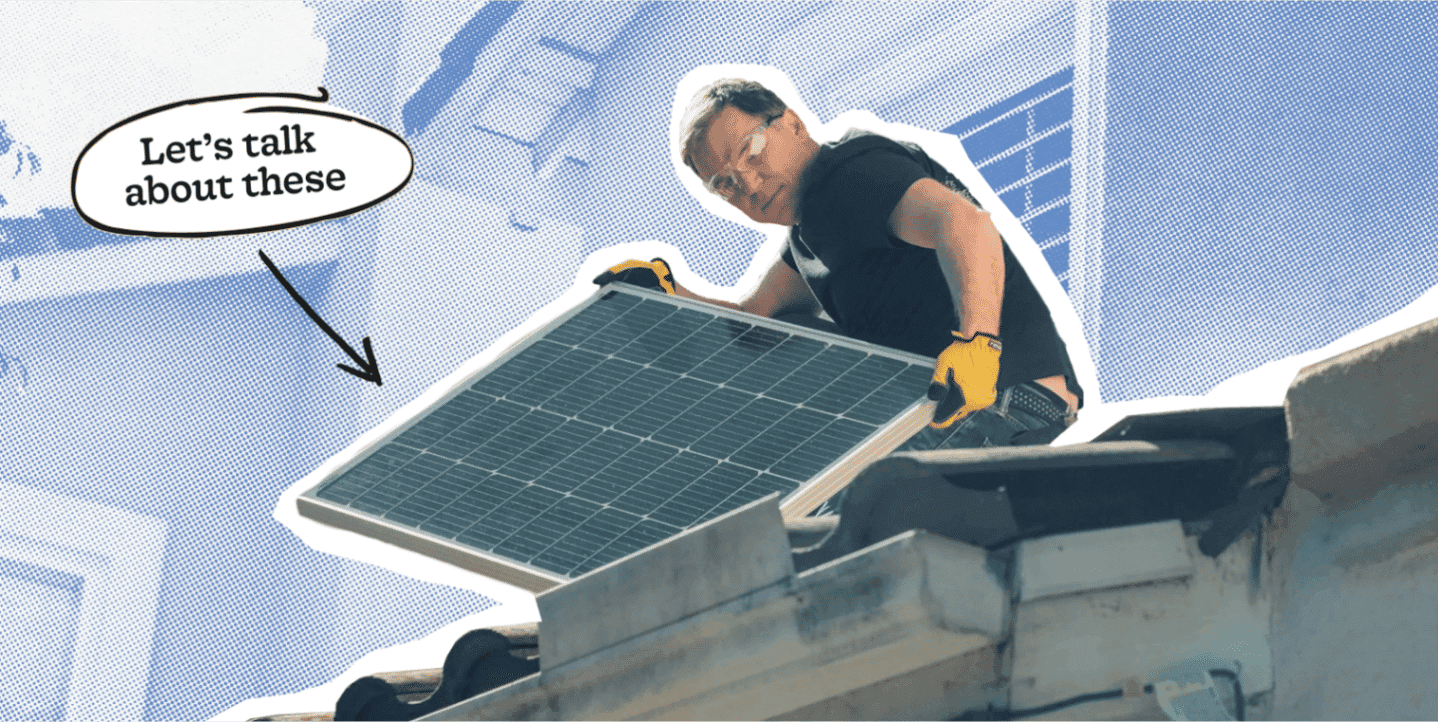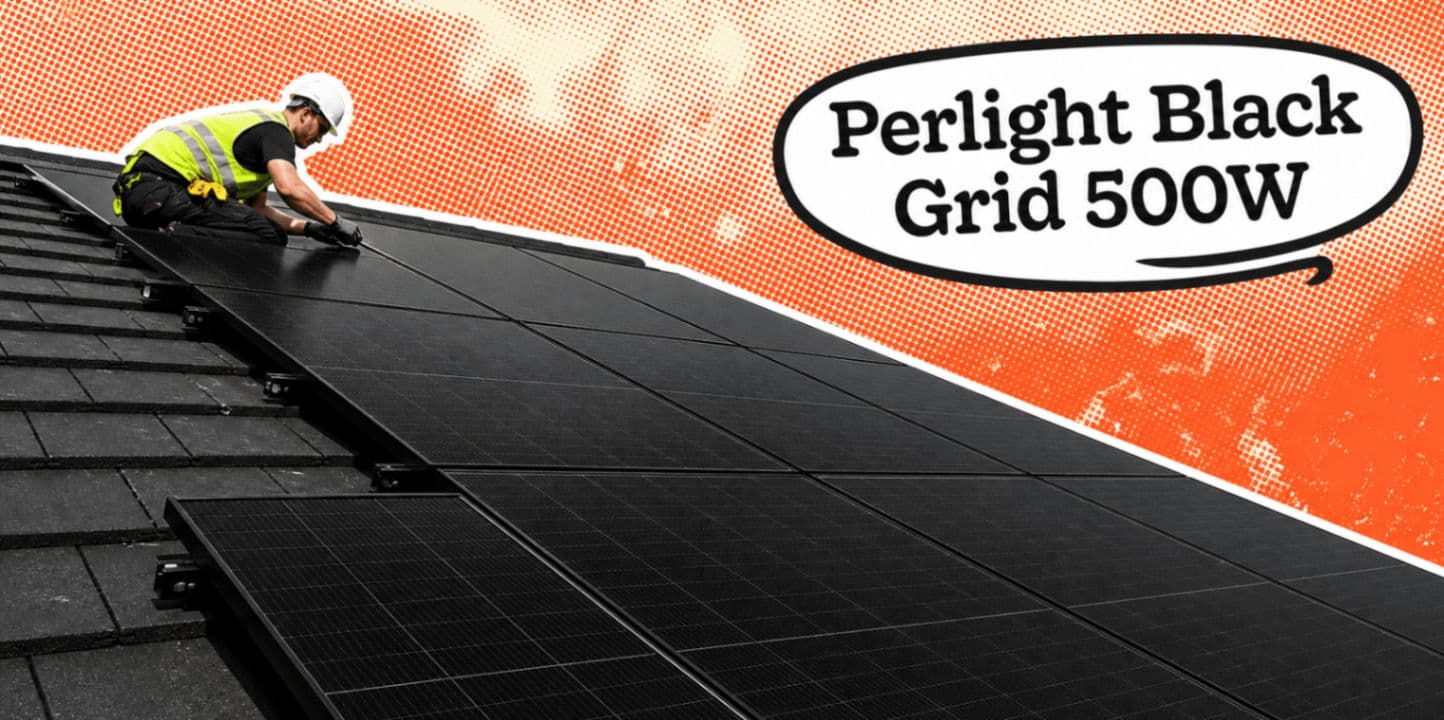

The Perlight Black Grid offers 500W output, bifacial technology and a hefty 30-year warranty. But is its headline efficiency quite as simple as it sounds?
Perlight may not have the instant recognition of LONGi, JA Solar or AIKO, but it has been producing solar panels since 2006 and supplies products worldwide.
Its Black Grid 500W panel is aimed at homeowners who want plenty of power, an all-black finish and warranty cover that lasts longer than some mortgages.
On paper, it looks seriously competitive.
You get N-type TOPCon cells, bifacial generation, dual-glass construction and 30-year product and performance warranties.
There is, however, one important number to unpick.
The Perlight Black Grid is sometimes promoted with an efficiency figure of around 26%. Under standard front-side testing, the current 500W model is rated at 23.10%. The higher figure applies under bifacial testing, where light also reaches the back of the panel.
Still impressive? Yes.
A conventional 26%-efficient panel? Not quite.
So, is the Perlight Black Grid one of the best solar panels for UK homes, or has the marketing department enjoyed a particularly sunny afternoon?
Let’s find out…
PS We offer MCS-certified solar panel installation nationwide. Simply answer these questions, get your fixed price and arrange your free design.
How do we review solar panels?
We review panels using the features most likely to matter once they are sitting on your roof - not simply whichever number looks biggest on the brochure.
These include:
Power and efficiency
Likely UK performance
Product and performance warranties
Long-term degradation
Heat resistance
Size and weight
Cell technology and construction
Manufacturer reputation
Price, installation and aftercare
Solar panels are a long-term purchase. A slightly less efficient panel with a better roof layout, reliable warranty and competent installer may prove the smarter buy.
Perlight Black Grid 500W: main features
The model reviewed here is the Perlight PLM-500DH8N-120 Black Grid panel commonly offered in the UK.
Feature | Specification |
Rated output | 500W |
Standard efficiency | 23.10% |
Bifacial test efficiency | Up to 25.52% |
Cell technology | N-type TOPCon |
Construction | Bifacial dual glass |
Product warranty | 30 years |
Performance warranty | 30 years |
Output guaranteed at year 30 | 87.4% |
Temperature coefficient | -0.30%/°C |
Dimensions | 1,908 × 1,134 × 30mm |
Weight | 27.2kg |
Appearance | All black |
Specifications can change between model years, so check that the model number on your quote matches the supplied datasheet.
That mildly boring job could prevent you from comparing two different panels wearing remarkably similar black outfits.
Perlight Black Grid solar panel review
[1] High 500W output
The obvious attraction is the 500W rated output.
Many residential panels sold in the UK fall somewhere around 430W to 485W. With Perlight:
Eight panels create a nominal 4kWp array
Ten panels create 5kWp
Twelve panels create 6kWp
However, wattage alone does not tell you how effectively a panel uses your roof.
At approximately 1.91 metres long, the Black Grid is taller than many residential panels.
Its 500W output is partly achieved by giving you more solar panel in the literal sense.
That may be irrelevant on a large, uncomplicated roof. On a smaller roof interrupted by chimneys, dormers or skylights, a compact 450W to 485W panel could allow a better layout.
The important figure is not simply the output of one panel. It is how much generation your installer can sensibly fit across the usable roof.
Roof design wins. The number on the panel comes second.
[2] Excellent efficiency - with an asterisk
Perlight lists the panel at 23.10% module efficiency under Standard Test Conditions, or STC.
That is excellent. Plenty of respectable modern panels operate in the 21% to 23% range, placing the Black Grid towards the higher-performing end of the market.
So where does the figure of approximately 26% come from?
The Black Grid is bifacial, meaning it can collect light through its front and rear faces. Under Bifacial Standard Test Conditions, Perlight gives an efficiency of up to 25.52%.
BSTC assumes useful light is reaching the rear of the panel. It is not the same measurement as standard front-side efficiency.
Put simply:
23.10% is the appropriate figure for standard comparisons.
Up to 25.52% includes additional rear-side light under bifacial testing.
Calling it a straightforward 26%-efficient panel therefore requires a fairly chunky asterisk.
The normal efficiency remains very good. It just isn’t quite the solar-panel witchcraft the larger figure initially suggests.
[3] Will bifacial technology help on your roof?
Bifacial panels generate additional electricity from light reflected onto their rear surface.
They work particularly well with:
Reflective surfaces
Light-coloured flat roofs
Ground-mounted arrays
Plenty of clearance behind the panels
Mounting systems with minimal rear obstruction
A conventional pitched roof is less ideal.
Roof tiles are normally dark, panels sit relatively close to them and mounting rails may obstruct the rear surface.
You should not assume your system will deliver the full bifacial gain achieved under laboratory testing.
Ask your installer whether rear-side generation is included in the forecast and which assumption they have used.
If the answer involves vigorous hand-waving towards the sky, request a more conservative estimate.
[4] Modern N-type TOPCon cells
The Black Grid uses N-type TOPCon cells.
TOPCon stands for Tunnel Oxide Passivated Contact - an extremely effective way of making three words sound unnecessarily frightening.
What matters is that modern N-type TOPCon panels typically offer:
Strong conversion efficiency
Good low-light performance
Reduced light-induced degradation
Better heat performance than older P-type PERC panels
Stable long-term output
These qualities suit the UK, where panels spend plenty of time working under cloud cover instead of uninterrupted Mediterranean sunshine.
No panel produces its full rated output under thick grey skies. TOPCon technology simply helps it make better use of the available light.
[5] A standout 30-year warranty
Perlight offers a 30-year product warranty on the Black Grid.
Product warranties cover manufacturing and material defects. Thirty years is an unusually strong term and compares favourably with panels offering 15, 20 or 25 years.
There is also a 30-year linear performance warranty, guaranteeing at least 87.4% of the original rated output at the end of the term.
For a 500W panel, that equates to at least 437W under the warranty’s test conditions after 30 years.
Reassuring - but warranties need reading, not simply admiring.
Before buying, check:
Who handles claims in the UK?
Are labour and access costs included?
Who pays for scaffolding?
What happens if the original model is discontinued?
What workmanship and insurance-backed cover does the installer provide?
Product, performance and installer workmanship warranties protect different things. Your quote should explain all three.
Some premium rivals guarantee closer to 89% or 90% output after 30 years, so Perlight’s retained-output figure is good rather than class-leading. The length of its product warranty is the bigger attraction.
[6] Tough dual-glass construction
The Black Grid sandwiches its cells between two layers of glass rather than using a conventional polymer backsheet.
Potential benefits include:
Greater protection against moisture
Better resistance to environmental wear
Reduced risk of some backsheet failures
Improved resistance to microcracking
Rear-side generation
Strong fire and weather performance
The panel is tested for loads of up to 5,400Pa on the front and 2,400Pa on the rear.
For anyone who sensibly deleted school physics from their memory, 5,400Pa is roughly equivalent to 550kg of force per square metre.
It also carries testing certifications covering salt mist, ammonia, sand, dust and potential-induced degradation - useful reassurance for coastal and exposed homes.
[7] Large and fairly heavy
Dual-glass panels are durable, but glass has the inconsiderate habit of being heavy.
At 27.2kg, the Perlight weighs several kilograms more than many single-glass residential panels. It is also taller than many standard domestic options.
That does not make it unsuitable, but proper surveying matters.
Your installer should confirm:
The roof structure is appropriate
The mounting system is correctly specified
The dimensions work around obstructions
Safe lifting and access have been considered
Relevant wind-load requirements are met
This is especially important for older properties and roofs with limited usable space.
[8] Good heat performance
Solar panels enjoy sunlight but are less enthusiastic about heat.
As a panel warms up, its output falls. The Black Grid’s temperature coefficient is -0.30% per °C, meaning it loses approximately 0.30% of its rated power for every degree above the standard 25°C test temperature.
That is a good modern result and better than many older panels sitting around -0.35% to -0.40% per °C.
Although Britain is hardly famous for scorching weather, panels can become considerably hotter than the surrounding air in direct sun. A lower temperature coefficient helps preserve more output when conditions warm up.
Perlight Black Grid pros and cons
Pros:
High 500W output
Excellent 23.10% standard efficiency
Modern N-type TOPCon cells
Potential additional bifacial generation
Strong 30-year product warranty
30-year performance warranty
Durable dual-glass construction
Good heat and low-light performance
Attractive all-black design
Extensive environmental testing
Cons:
The headline 26% figure relates to bifacial testing
Larger than many residential panels
Heavy at 27.2kg
Bifacial gains may be modest on pitched roofs
Some rivals guarantee higher output after 30 years
Perlight lacks the scale and recognition of some Tier 1 manufacturers
Warranty value depends on UK support and claim terms
Is Perlight a Tier 1 manufacturer?
Perlight is not generally included among the manufacturers appearing on BloombergNEF’s Tier 1 list.
That does not mean its panels have failed a product quality test.
Tier 1 primarily measures manufacturer bankability and participation in qualifying financed projects.
It is not a direct quality award, although it can provide reassurance about scale, financial strength and likely longevity.
Perlight was established in 2006 and has a longstanding international presence. Its products also carry recognised technical certifications.
Nevertheless, buyers should investigate the support behind the warranty. A good panel from a smaller manufacturer can be perfectly sensible when supplied by a reputable installer with a clear UK aftercare process.
How much do Perlight Black Grid panels cost?
At the time of writing, individual 500W Black Grid panels are listed by some UK suppliers at roughly £80 to £100 before VAT.
That is not the cost of an installed system.
The panel is only one ingredient in the great solar lasagne. A complete installation may include:
Inverters or microinverters
Roof fixings and mounting rails
Scaffolding
Cabling and electrical protection
Monitoring equipment
DNO paperwork
MCS certification
Labour and aftercare
Battery storage
A domestic solar installation will normally cost several thousand pounds depending on its size, equipment and complexity.
Compare complete quotes like-for-like instead of becoming hypnotised by the wholesale price of one panel.
Our verdict: is the Perlight Black Grid worth it?
The Perlight Black Grid 500W is a strong panel with more going for it than an impressive wattage figure.
Its 23.10% standard efficiency is excellent. Its N-type TOPCon cells, dual-glass construction, heat performance and 500W output make it technically competitive.
The 30-year product warranty is the star of the show.
However, buyers should treat the 26% claim carefully because it relates to bifacial test conditions. Its size and 27.2kg weight are also worth considering.
A smaller panel with slightly lower output could generate more electricity overall if it enables a better roof layout.
Next Steps For Your Solar Journey:
When planning to install solar panels for your home, there are several important factors to consider. Make sure to refer to the following guides to help you make informed decisions:
To dive deeper into these topics, head over to our advice section, check out our YouTube channel for informative videos, or read a customer case study to see how others have benefited from their solar installation.
Get a Quote for Solar Today
Without boasting you should get your solar installed with us, here's why:
Thousands of Happy Customers: We boast an average score of 4.9 on Trustpilot, outperforming the market leader.
Which? Trusted Trader: Heatable is proudly recognised as a Which? Trusted Trader.
MCS Accredited: Our accreditation by the Microgeneration Certification Scheme (MCS) ensures high-quality standards.
Exclusive Panels: We offer REA Fusion solar panels, available only through Heatable.
Consumer Protection: As members of the HIES consumer code, we provide 2-year deposit protection.
Flexible Payment Options: Choose from multiple payment methods, including finance options.
Fixed Price Guarantee: Enjoy transparency with no hidden costs.
Save Your Quote: You can save your quote and decide later.
Bespoke Design Tool: Draw your own conclusion (literally) on whether solar is worth it for you, here.