
Free solar panels used to sound like the ultimate energy-bill loophole - let someone else pay for the kit, you enjoy the sunshine savings. Lovely…right up until you hit the paperwork and realised the “free” bit came with a 20-something-year relationship status.
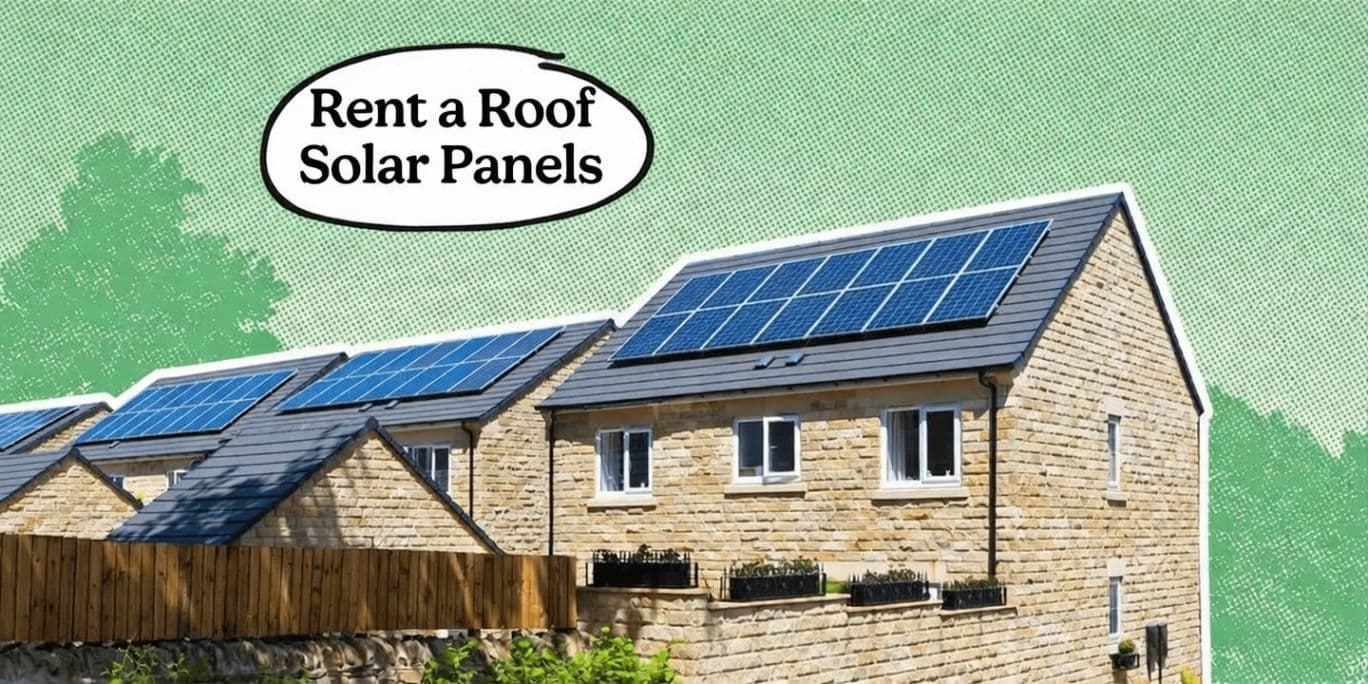
That’s basically what rent-a-roof was - a company installed solar panels on your roof at no upfront cost, then leased the roof space and kept the government subsidy payments.
You’d typically get some cheaper daytime electricity, but you didn’t own the system and you weren’t the one banking the big returns.
It took off in the 2010s, then largely disappeared when the Feed-in Tariff scheme closed to new applicants in 2019. And now it mainly pops back up when people try to sell a house, remortgage, or get told by a solicitor, “So…about your roof lease.”
If you’ve already got rent-a-roof panels - or you’ve been offered a modern “no upfront cost” solar deal that feels a bit familiar - here’s what actually happened, what the risks are, and what to do next.
PS We offer MCS-certified solar panel installation nationwide. Simply answer these questions, get your fixed price and arrange your free design.
What was the “rent-a-roof” solar scheme?
Imagine a company turns up, bolts solar panels to your roof for £0 upfront, and promises to look after them. Sounds like a bargain - and that was the pitch.
The catch - you’d sign a roof lease (usually 20–25 years) giving them the right to use your roof space.
In return, they owned the solar system, and they collected the Feed-in Tariff (FIT) payments for the electricity it generated.
You’d typically benefit by using some of that power in the day (so your bills could drop a bit), but the main payout - the subsidy income - went to the company.
So yes, it was marketed as “free solar panels”… but it was really you renting out part of your roof to someone who got paid for what the panels produced.
The panels were on your house - but the profits weren’t.
Why did it take off in the 2010s?
Because, back then, solar wasn’t the “stick it on Klarna and forget about it” purchase it can feel like today.
Panels were a lot more expensive, and most people didn’t fancy dropping a chunky upfront payment on something that sounded a bit…experimental.
Then the government launched the Feed-in Tariff (FIT) on 1 April 2010, and suddenly the maths looked ridiculous (in a good way) - especially for companies.
FIT paid you for the electricity your panels generated, and the rates were high enough that a third party could cover the install, handle maintenance, and still make a tidy return over time.
For homeowners, the sell was simple: free panels + smaller electricity bills, right when energy prices were marching upwards and “going green” was becoming mainstream.
It felt like a clever, eco-friendly win-win… until people realised the win wasn’t exactly split evenly.
So…what went wrong?
It wasn’t all sunshine and smug low bills.
Once these deals had been out in the wild for a few years, the real-life friction started showing up - and it turned a “clever hack” into a “why is my solicitor calling me?” situation.
You didn’t own the panels (or the income)
The panels were on your roof, but they weren’t yours.
The company owned the system and usually kept the Feed-in Tariff money - which was often the biggest chunk of the value.
You might shave a bit off your electricity bill by using the power you generated in the daytime, but you missed out on:
owning an asset that could add appeal/value
having full control over export income later
making decisions like adding a battery, upgrading kit, etc.
You handed over control of your roof
A roof lease sounds harmless until you need to…use your roof.
Fixing a leak, replacing tiles, re-roofing, adding an extension, even putting up scaffolding could mean:
asking permission
arranging access through the solar company
and sometimes paying for panels to be removed and refitted
In practice, it could turn basic maintenance into a paperwork marathon. (And yes, it can feel a bit like having a tenant upstairs who gets to approve your DIY plans.)
Selling or remortgaging got harder
This is where rent-a-roof really earned its reputation.
Buyers can get nervous about anything that looks like a 20–25-year legal tie to a third party.
And mortgage lenders can be even fussier, because a roof lease can complicate valuation and - in worst-case scenarios - repossession.
Plenty of sales and remortgages have been delayed simply because:
the lease wording didn’t meet a lender’s requirements
there were legal/consent issues in the paperwork
or everyone needed extra time to work out who’s responsible for what
Exiting early could be impossible (or expensive)
If you decided you didn’t want the arrangement anymore, you couldn’t always just “end it.”
Some contracts had eye-watering buyout fees, and others didn’t allow buyouts at all until the lease ended.
Which is fine…until you need to move, renovate, or remortgage and suddenly you’re stuck with it.
What actually killed the scheme?
Two things changed: the money and the mood.
First, the Feed-in Tariff closed to new applicants on 1 April 2019, which basically removed the subsidy engine that made “free installs” viable in the first place.
Without that guaranteed income stream, the classic rent-a-roof model stopped making financial sense.
Second, the stories started stacking up - homeowners struggling to sell, remortgage, or sort roof work without jumping through hoops.
Once the press (and the public) clocked that “free solar” could come with a long legal tail, the whole thing started looking less like a bargain and more like a liability.
And that’s why the original rent-a-roof scheme mostly faded into history - only to reappear years later when someone opens a conveyancing pack and goes, “…hang on. Who owns my roof?”
🏡 Case Study: A Real Solar Installation
Case study: See how one Heatable customer saved £750/year with a 4.0 kWp system and battery in our detailed Q&A.
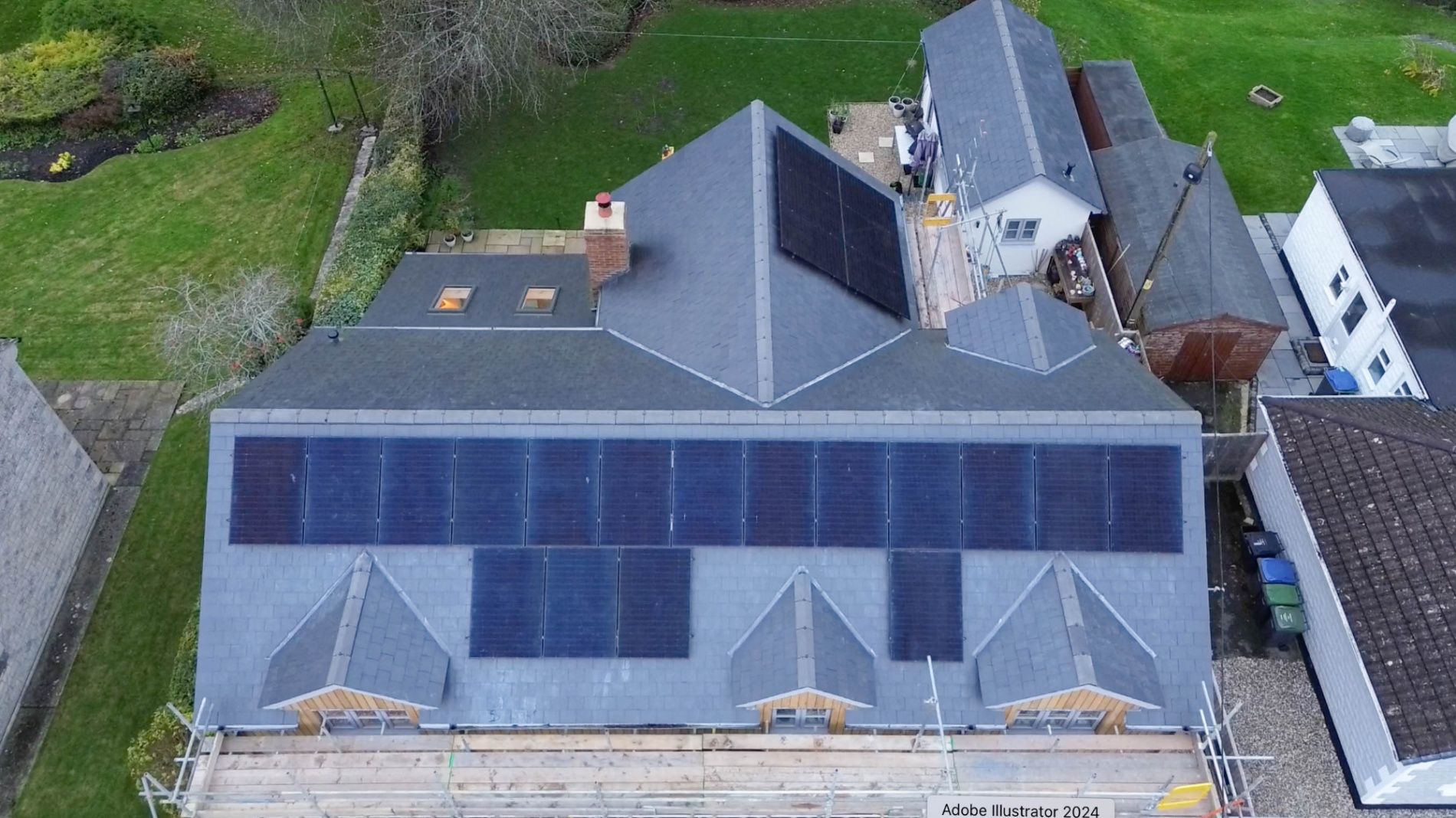
The image above shows a 23-panel solar installation, carried out by the MCS-certified solar team at Heatable, featuring the REA Fusion2 solar panels.
Can you still get “rent-a-roof” solar panels in 2026?
The original, Feed-in Tariff (FIT)-fuelled “free panels for a 20–25 year roof lease” deal? Basically dead since 2019.
That particular money printer stopped, so the classic rent-a-roof model stopped making sense.
But… the energy of rent-a-roof absolutely lives on in modern outfits:
Third-party ownership (someone else owns the kit, you pay a monthly fee)
Subscription / “solar as a service” (fixed monthly, sometimes with an option to buy later)
Roof lease / rent models in various shiny new wrappers
They’re not all scams - but they all come with the same golden rule:
If you don’t own the panels, you’re signing up for terms and restrictions.
So before you get excited by “£0 upfront”, check the contract for the stuff that ruins your day later, like:
what happens if you move house
whether the agreement is transferable to a new buyer
whether you can buy out early (and what it costs)
who controls the kit, upgrades, battery add-ons, monitoring, and repairs
Free lunch? No.
But you can still get a decent deal - as long as you understand who owns what and what you’re locked into.
I already have rent-a-roof panels - what should I do?
Don’t panic.
This is common - and it’s usually manageable if you get organised early.
[1] Dig out your paperwork (this is the unlock)
You want:
the roof lease agreement (the big one)
installer docs + warranties (if you have them)
MCS certificate (proof it was installed under the UK scheme)
any FIT / agent details (if the company receives payments)
This tells you who owns the system, what rights they have, and what you’re allowed to do.
[2] Selling or remortgaging? Tell your solicitor immediately
Don’t let this be a “surprise” during conveyancing.
Roof leases can trigger:
extra buyer questions
lender checks
extra legal work (and time)
The earlier it’s raised, the smoother it usually goes.
[3] Planning roof works? Check removal/refit responsibility before you book anyone
If you need repairs, reroofing, scaffolding, or an extension:
you may need the solar company’s permission
you may have to pay for remove + refit
you’ll want written clarity on who’s liable if anything breaks
Assume nothing. Read the lease.
[4] If the solar company has vanished…
This is where you stop guessing and get proper help.
Ownership/maintenance rights may have been sold on, transferred, or absorbed by another entity.
A conveyancer/solicitor (or a solar specialist who deals with legacy schemes) can help you trace what’s happened and what you can do next.
[5] Don’t just rip them off
Even if the panels are old or annoying, many leases restrict removal until the term ends or require permission.
Removing them incorrectly can land you in breach of contract - and that’s the kind of drama you don’t want attached to your house.
Better options now (without the 25-year headache)
Solar in 2026 is cheaper, more efficient, and way less legally sticky - if you structure it the right way.
Buying outright is still the cleanest win
If you can, owning your system is usually the best long-term play:
you keep the savings
you control upgrades (like adding a battery)
you avoid roof-lease headaches when you move
you can benefit from export payments via SEG
Where Heatable fits: we can help you figure out what size system makes sense for your home (and whether a battery will actually pay off), then give you a straight quote without dressing it up as “free”.
Finance/subscription options can be fine - but read the “moving house” bits twice
There are modern plans with low or zero upfront, and some do end with ownership.
The main risk is total cost and portability:
Can you transfer it if you sell?
Can you pay it off early?
Are you stuck with one supplier for maintenance/monitoring?
Where Heatable fits: if you want to spread the cost, we’ll always show you the “own it” path alongside any finance option - so you can see what you’re actually paying over time, not just the monthly number.
Add a battery if it genuinely improves your savings
A battery can make solar feel much better - especially if you’re not home all day - because it lets you use more of your own electricity later.
Where Heatable fits: we’ll be honest if a battery is overkill for your usage (because it sometimes is).
Want a quick sanity-check?
If you’ve been offered a “no upfront cost” solar deal and you want someone to translate the small print into English - or you just want a straightforward quote for an owned system - we can help.
No hard sell. Just numbers that make sense.
Next Steps For Your Solar Journey:
When planning to install solar panels for your home, there are several important factors to consider. Make sure to refer to the following guides to help you make informed decisions:
To dive deeper into these topics, head over to our advice section, check out our YouTube channel for informative videos, or read a customer case study to see how others have benefited from their solar installation.
Get a Quote for Solar Today
Without boasting you should get your solar installed with us, here's why:
Thousands of Happy Customers: We boast an average score of 4.9 on Trustpilot, outperforming the market leader.
Which? Trusted Trader: Heatable is proudly recognised as a Which? Trusted Trader.
MCS Accredited: Our accreditation by the Microgeneration Certification Scheme (MCS) ensures high-quality standards.
Exclusive Panels: We offer REA Fusion solar panels, available only through Heatable.
Consumer Protection: As members of the HIES consumer code, we provide 2-year deposit protection.
Flexible Payment Options: Choose from multiple payment methods, including finance options.
Fixed Price Guarantee: Enjoy transparency with no hidden costs.
Save Your Quote: You can save your quote and decide later.
Bespoke Design Tool: Draw your own conclusion (literally) on whether solar is worth it for you, here.