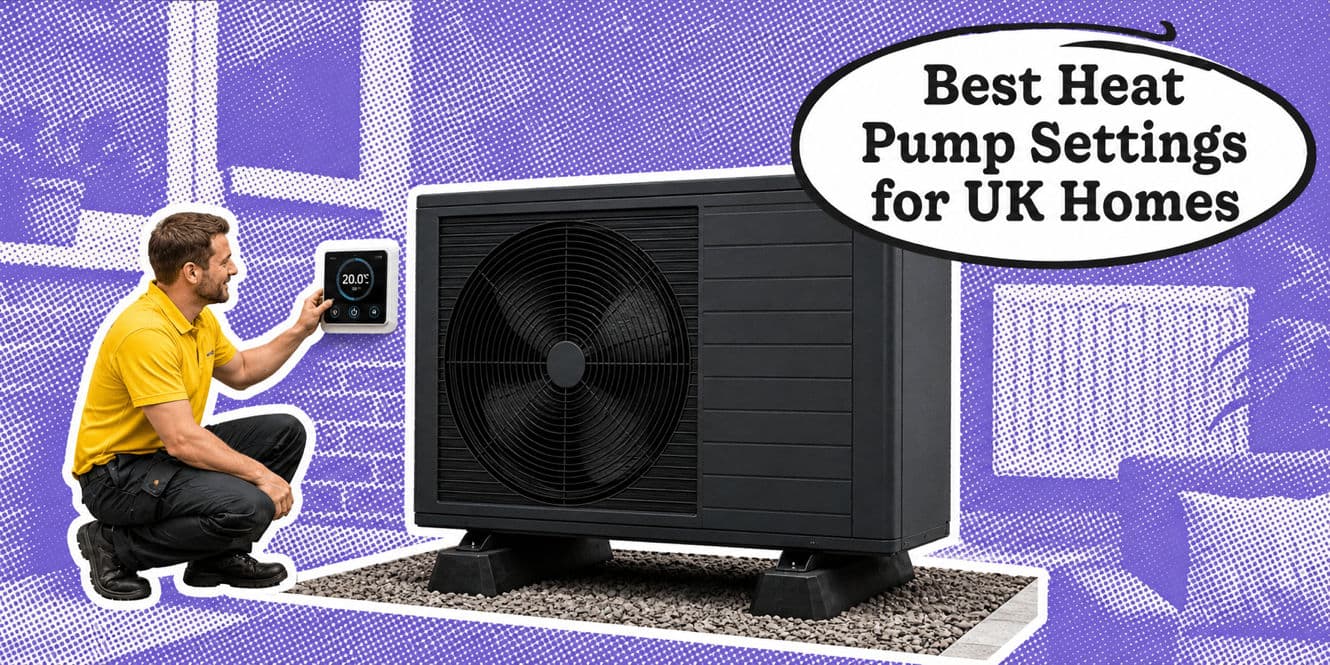

Running your heat pump like a boiler? That could be sending your electricity bill in the wrong direction. Here’s how to set it up for steady warmth without making it work its socks off.
- What Temperature Should a Heat Pump Be Set To?
- What Is the Best Air Source Heat Pump Temperature?
- The Best Heat Pump Settings for Winter
- What Is the Most Efficient Flow Temperature?
- Should You Keep a Heat Pump on All Day?
- How Should You Set Thermostatic Radiator Valves?
- Heat Pump Settings That Can Increase Your Bills
- When to Stop Adjusting and Call an Installer
Heat pumps are efficient little beasts, but only when they’re allowed to behave like heat pumps.
A gas boiler typically fires up, sends very hot water around the house and switches off again.
A heat pump prefers a gentler life - lower water temperatures, longer running periods and fewer dramatic changes.
That makes choosing the right settings rather important.
In this guide, we’ll explain the best heat pump settings for UK homes, including room temperature, flow temperature, winter schedules, hot water and weather compensation.
We’ll also cover Mitsubishi heat pump settings and Aira heat pump settings, because the controls don’t work in quite the same way.
Ready to make your home more energy-efficient and cut down on your heating bills? Get a heat pump quote today.
🔑 Key Takeaways:
Set your room temperature to the lowest level that remains comfortable - typically somewhere around 18–21°C
Let the heat pump maintain a steady temperature instead of switching it off for large parts of the day
A nighttime setback of around 1–2°C is usually more suitable than a dramatic temperature drop
Use weather compensation and aim for the lowest flow temperature that can still heat your home properly
Avoid using boost or immersion heating as part of your normal daily routine.
Don’t change installer-level settings, frost protection or Legionella controls without professional advice
Heat Pump Settings: The Quick Answer
There isn’t one perfect set of numbers for every property.
The right settings depend on your home’s heat loss, insulation, radiators, underfloor heating and the heat pump model itself.
Your installer’s system design should always take priority over generic advice from the internet - yes, even this rather lovely article.
That said, the following settings provide a useful starting point for many UK homes:
Setting | Sensible starting point |
Room temperature | 18–21°C |
Overnight setback | Around 1–2°C below daytime temperature |
Heating schedule | Long, steady operation |
Radiator flow temperature | Often around 35–45°C, depending on system design and weather |
Underfloor heating flow temperature | Often around 30–40°C |
Hot water cylinder | Use the lowest setting that meets household demand |
Weather compensation | On, unless your installer specifies otherwise |
Heating boost | Occasional use only |
These are starting ranges, not universal instructions. A draughty Victorian terrace with radiators will behave very differently from a modern, heavily insulated home with underfloor heating.
What Temperature Should a Heat Pump Be Set To?
For most households, a room temperature between 18°C and 21°C is a sensible place to start.
The best setting is ultimately the lowest temperature that keeps everyone comfortable.
If 19°C feels perfectly cosy, there’s little point paying to maintain 22°C.
Elderly people, babies and anyone with certain medical conditions may need a warmer home, so comfort and health should always come before chasing the lowest possible energy use.
Once you’ve chosen a temperature, try to keep it relatively stable.
Heat pumps are particularly good at maintaining warmth, but less keen on repeatedly reheating a cold building.
Don’t treat it like a boiler
Many of us have spent years programming boilers to produce two fiery bursts of heat: one in the morning and another after work.
Applying the same schedule to a heat pump can be counterproductive.
Letting the house cool substantially means the heat pump has to raise both the air temperature and the temperature of the building fabric. It may then need a higher flow temperature or backup heater to catch up quickly.
A steadier schedule normally allows it to run at a lower temperature and higher efficiency.
What Is the Best Air Source Heat Pump Temperature?
People searching for the best air source heat pump temperature are often referring to one of three different measurements:
Room temperature - how warm you want the house to feel.
Flow temperature - the temperature of the water leaving the heat pump.
Hot water temperature - the temperature stored in the cylinder.
These are separate settings, so it’s worth knowing which one you’re changing before pressing buttons with wild abandon.
Room temperature
Start somewhere around 18–21°C and adjust for comfort.
Make changes in small steps - preferably 0.5°C at a time - and allow the home enough time to respond.
Flow temperature
The flow temperature has a major effect on efficiency. It determines how hot the water is when it travels to your radiators or underfloor heating.
As a general rule, a heat pump becomes less efficient as the required flow temperature rises.
The aim is therefore to use the lowest temperature that can still replace the heat your property is losing.
A radiator system might operate somewhere around 35–45°C in typical conditions, while underfloor heating can often work at around 30–40°C. Some properties will need higher or lower temperatures.
For comparison, a traditional boiler may send water to its radiators at 60–75°C.
This lower temperature is why heat-pump radiators are often larger.
They need more surface area to deliver the same amount of warmth without relying on scorching-hot water.
Hot water temperature
Your domestic hot water cylinder needs a separate schedule and temperature.
Higher cylinder temperatures provide more usable hot water, but they also make the heat pump work harder.
Use the lowest normal setting that reliably meets your household’s needs, based on the manufacturer and installer’s instructions.
Your system should also run a Legionella protection cycle that periodically raises the cylinder to a higher temperature.
Do not disable or casually alter this safety function.
If the cycle is running more often than required, it could increase electricity consumption.
Ask your installer to check the schedule if you suspect this is happening.
The Best Heat Pump Settings for Winter
Winter is when good settings really earn their keep.
Your heat pump has to replace heat as it escapes through the walls, roof, windows and floor. The colder it gets outside, the faster that heat is normally lost.
The best heat pump settings for winter are therefore designed to keep the system running steadily and adjust its output according to the weather.
1. Leave the heating running for longer
Instead of switching the system off for hours, give it a stable temperature to maintain.
That doesn’t necessarily mean the compressor will run flat out all day. A correctly controlled heat pump can reduce its output or stop temporarily once demand falls.
2. Use a small nighttime setback
Try lowering the target by around 1–2°C overnight rather than turning the heating off.
For example, you might use:
20°C during occupied daytime hours
18.5–19°C overnight
18.5–19°C when the home is empty for a few hours
If the property takes a long time to recover in the morning, reduce the size of the setback.
A highly insulated home may retain heat well enough for a deeper setback. A less efficient property may lose so much heat that the morning recovery wipes out much of the saving.
3. Use weather compensation
Weather compensation automatically changes the heating flow temperature according to the outdoor temperature.
When it’s mild, the heat pump sends cooler water around the house. When it gets colder, the flow temperature rises to replace the additional heat being lost.
This helps the heat pump run more steadily instead of repeatedly switching on and off.
It can also improve efficiency, reduce wear and maintain a more consistent indoor temperature.
4. Fine-tune the heating curve carefully
The relationship between outdoor temperature and flow temperature is often called the heating curve or weather-compensation curve.
If the curve is too high, the house may overheat and the heat pump will use more electricity than necessary.
If it’s too low, the property may fail to reach its target temperature during cold weather.
To find the sweet spot:
Make a small adjustment - around 1°C where your controller permits it.
Leave the system alone for at least a day or two.
Check comfort during different parts of the day.
Lower it again if every room remains warm.
If the house becomes consistently too cool, return to the previous setting.
Don’t make several changes at once. You’ll have no idea which one helped - and your heat pump will think you’re being terribly indecisive.
5. Don’t panic about defrost cycles
Air source heat pumps can collect frost on their outdoor heat exchanger during cold, damp weather.
The system will occasionally reverse its operation to melt this frost. You may notice steam, water beneath the outdoor unit or a temporary pause in heating.
That is usually normal.
Persistent ice, repeated fault codes or a unit that fails to resume heating should be reported to your installer.
What Is the Most Efficient Flow Temperature?
There is no single “most efficient” flow temperature because the heat pump must still provide enough heat to keep the property comfortable.
The practical answer is:
Use the lowest flow temperature that can maintain your chosen room temperature in the current weather.
An arbitrary 35°C setting isn’t efficient if your home never gets warm. Equally, running at 50°C when 40°C would do the job wastes energy.
Your required temperature is affected by:
Outdoor temperature
Property heat loss
Radiator size
Underfloor heating design
Water flow rate
System balancing
Desired room temperature
If the home only becomes comfortable at a surprisingly high flow temperature, the cause may be undersized radiators, poor balancing, restricted water flow or excessive heat loss - not simply a low controller setting.
Should You Keep a Heat Pump on All Day?
In many homes, yes - or at least for much longer periods than a gas boiler.
That doesn’t mean paying for maximum heat around the clock.
It means allowing the heat pump to maintain a stable background temperature rather than repeatedly starting from cold.
For a short absence or overnight, use a lower setback temperature.
For a longer absence, such as a holiday, use the dedicated holiday or frost-protection setting instead of leaving the system on its normal schedule.
Never turn off frost protection during cold weather.
How Should You Set Thermostatic Radiator Valves?
Heat pumps need good water circulation, so shutting down most of the radiators can cause trouble.
Your installer should balance the heating system and configure any bypass, buffer vessel or open circuit needed to maintain the manufacturer’s minimum water flow.
As a general approach:
Keep the main living area comfortably open.
Use thermostatic radiator valves to prevent unwanted overheating.
Avoid closing large numbers of radiators at the same time.
Don’t use radiator valves to compensate for a badly balanced system.
If one room is cold while another is tropical, changing the heat-pump temperature may not be the right answer.
The radiators or underfloor loops may need balancing instead.
Hot Water Schedules and Boost Settings
Heating water to shower temperature is harder work than gently warming a room, so the cylinder deserves some attention.
Schedule hot water around when it is actually used.
One or two planned heating periods may be more efficient than constantly reheating the tank after every small temperature drop.
If you have a time-of-use electricity tariff, you may be able to heat the cylinder during cheaper periods.
Just remember that very cold overnight air can reduce the efficiency of an air source heat pump, so the cheapest tariff period isn’t automatically the most efficient operating period.
Use boost sparingly
A hot water boost is handy when guests arrive or the entire household suddenly wants a shower.
It shouldn’t be required every day.
Regular boosting may indicate that:
The standard hot water temperature is too low.
The schedule doesn’t match your routine.
The cylinder is too small for the household.
The immersion heater is doing more work than intended.
There is a control or sensor problem.
Repeatedly pressing boost treats the symptom. An installer can help identify the cause.
Mitsubishi Heat Pump Settings
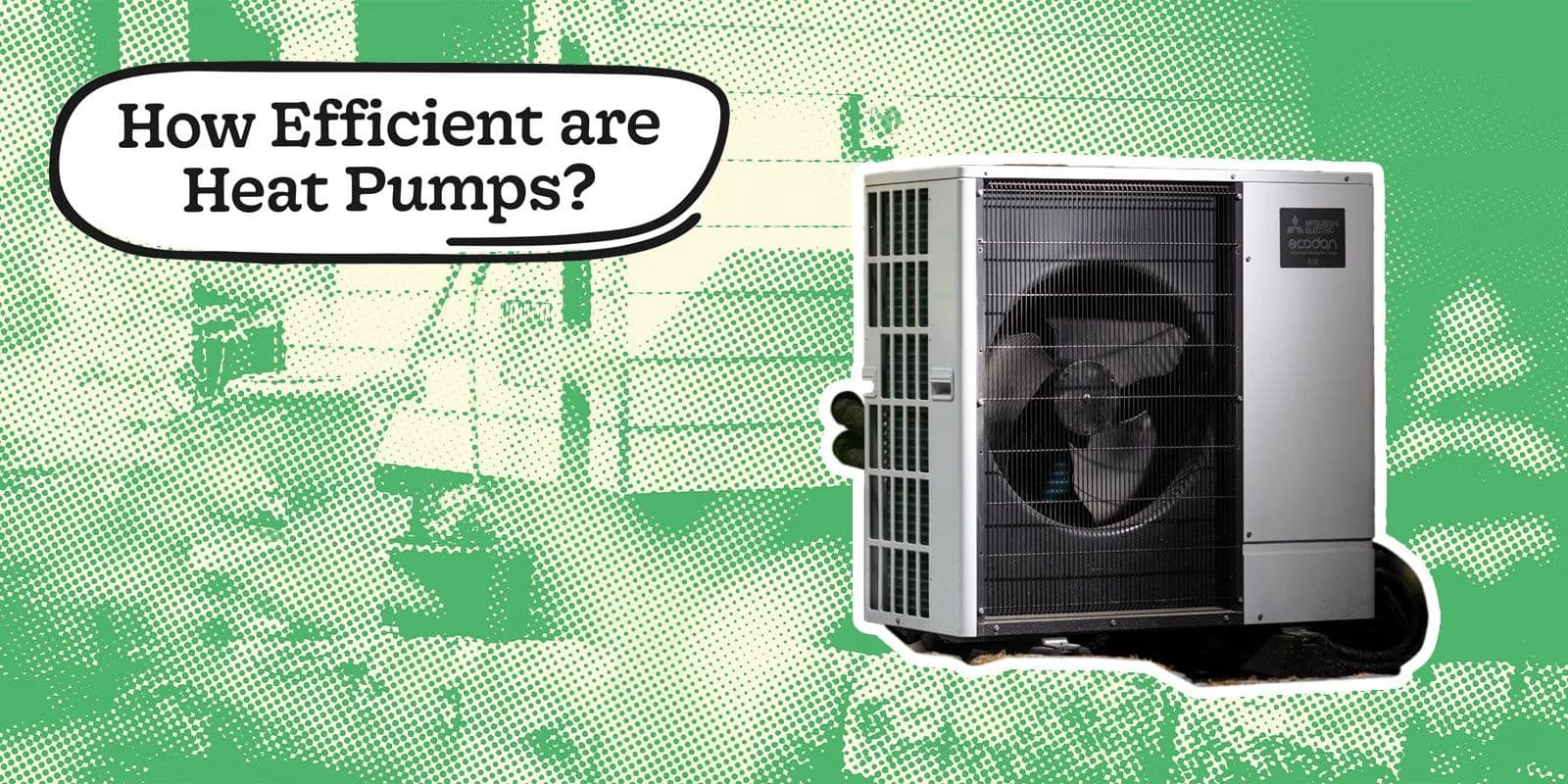
Mitsubishi Ecodan systems can use fixed flow temperature, room-temperature control or a weather-compensation curve, depending on the controller and installation.
For most households, the important Mitsubishi heat pump settings are:
Target room temperature
Heating schedule
Weather-compensation curve
Hot water schedule
Holiday mode
Energy monitoring
Weather compensation is generally the best place to start, provided it was commissioned correctly.
Mitsubishi’s commissioning paperwork includes the designed weather-compensation settings, so check your handover documents before changing them.
Make only small homeowner-level adjustments and monitor comfort over several days.
Different generations of Ecodan use different FTC controllers.
Mitsubishi provides model-specific instructions and quick-start guides through its Ecodan homeowner support pages.
If you have an older controller, have moved into a property without documentation or can’t identify the system’s design temperature, contact an Ecodan installer rather than copying settings from a different house.
Aira Heat Pump Settings
Aira heat pumps automate more of the optimisation process.
Rather than manually editing a heating curve, Aira Intelligence uses weather information and learns how the property responds.
Homeowners mainly control their preferred temperature, comfort level, hot water and schedules through the Aira app.
Useful Aira heat pump settings include:
Desired indoor temperature
Savings or comfort preference
Hot water tank temperature
Heating and hot water schedules
“Prepare extra” hot water
Electricity tariff connection
Aira recommends a stable room temperature and only a modest setback of around 1–2°C.
Its “Prepare extra” function is intended for occasional additional hot water, not daily use.
If you regularly run short, adjust the normal hot water settings or ask Aira to review the system.
You can find the manufacturer’s current explanation in its heat pump settings guide.
Heat Pump Settings That Can Increase Your Bills
Efficient heat pump settings are usually quite boring - and that’s a compliment.
Watch out for these common culprits:
Setting the room temperature higher than necessary
Turning the heating completely off every night
Using large temperature setbacks
Running an unnecessarily high flow temperature
Disabling weather compensation
Using boost or backup heat every day
Reheating the hot water cylinder continuously
Closing too many radiator valves
Changing several settings before assessing the result
Ignoring recurring warning codes
A heat pump should generally run for long, calm periods.
Frequent starting, stopping and frantic temperature changes suggest that the controls or wider heating system may need attention.
When to Stop Adjusting and Call an Installer
Homeowners can safely change ordinary controls such as room temperature, schedules and holiday mode.
Installer menus are another matter.
Contact a qualified heat-pump engineer if:
The home won’t reach its designed temperature
Electricity consumption rises unexpectedly
Backup or immersion heating runs frequently
The unit repeatedly starts and stops
Some rooms remain cold after balancing
The system shows recurring fault codes
The outdoor unit remains heavily iced
You don’t have the commissioning settings
You’re unsure about Legionella protection
You want to change pumps, water flow or installer-level limits
Settings cannot rescue an incorrectly sized heat pump, undersized radiators or a poorly balanced system.
Final Verdict: What Are the Best Heat Pump Settings?
The best heat pump settings for UK homes are the ones that provide steady comfort at the lowest practical water temperature.
For most households, that means:
A room target somewhere around 18–21°C
Long heating periods
A small overnight setback
Active weather compensation
The lowest effective flow temperature
Sensible hot water scheduling
Occasional rather than routine boosting
Start with the settings specified by your installer. Make one small change at a time and give the system enough time to react.
When it’s working properly, a heat pump shouldn’t feel dramatic. It should simply keep the house comfortable while quietly getting on with the job.
Next Steps For Your Heat Pump Journey:
When planning to install a heat pump for your home, there are several important factors to consider. Make sure to refer to the following guides to help you make informed decisions:
To dive deeper into these topics, head over to our advice section or check out our YouTube channel to learn more.
Get A Quote From Us Today
Without boasting, get your new heat pump quote and buy from us, here’s why:
Gas Safe installation within 24 hours.
Thousands of satisfied customers with an average score of 4.9 on Trustpilot, surpassing the market leader.
Which? Trusted Trader: Heatable is proudly recognised as a Which? Trusted Trader.
Flexible payment options, including interest-free finance.
Up to 12-year guarantee on selected heat pumps.
Fixed price guarantee: No hidden costs.
Save your quote and decide later.
Get an instant fixed price on a heat pump, here.
Heat Happy.