
Some myths are magical and entertaining, while others are simply untrue, here we debunk some of those that are wrong when it comes to solar.
- Solar Panel Myths Debunked
- Myth 1: The ‘payback’ period is so long, it isn’t worth the hefty upfront cost
- Myth 2: Solar savings are always exaggerated
- Myth 3: The UK does not get enough sun for solar panels to work
- Myth 4: Solar panels will make you completely off-grid
- Myth 5: Exporting electricity to the grid will make solar highly profitable
- Myth 6: Solar panels are high-maintenance
- Myth 7: Solar panels are ugly
- Myth 8: All solar panels and installers are basically the same
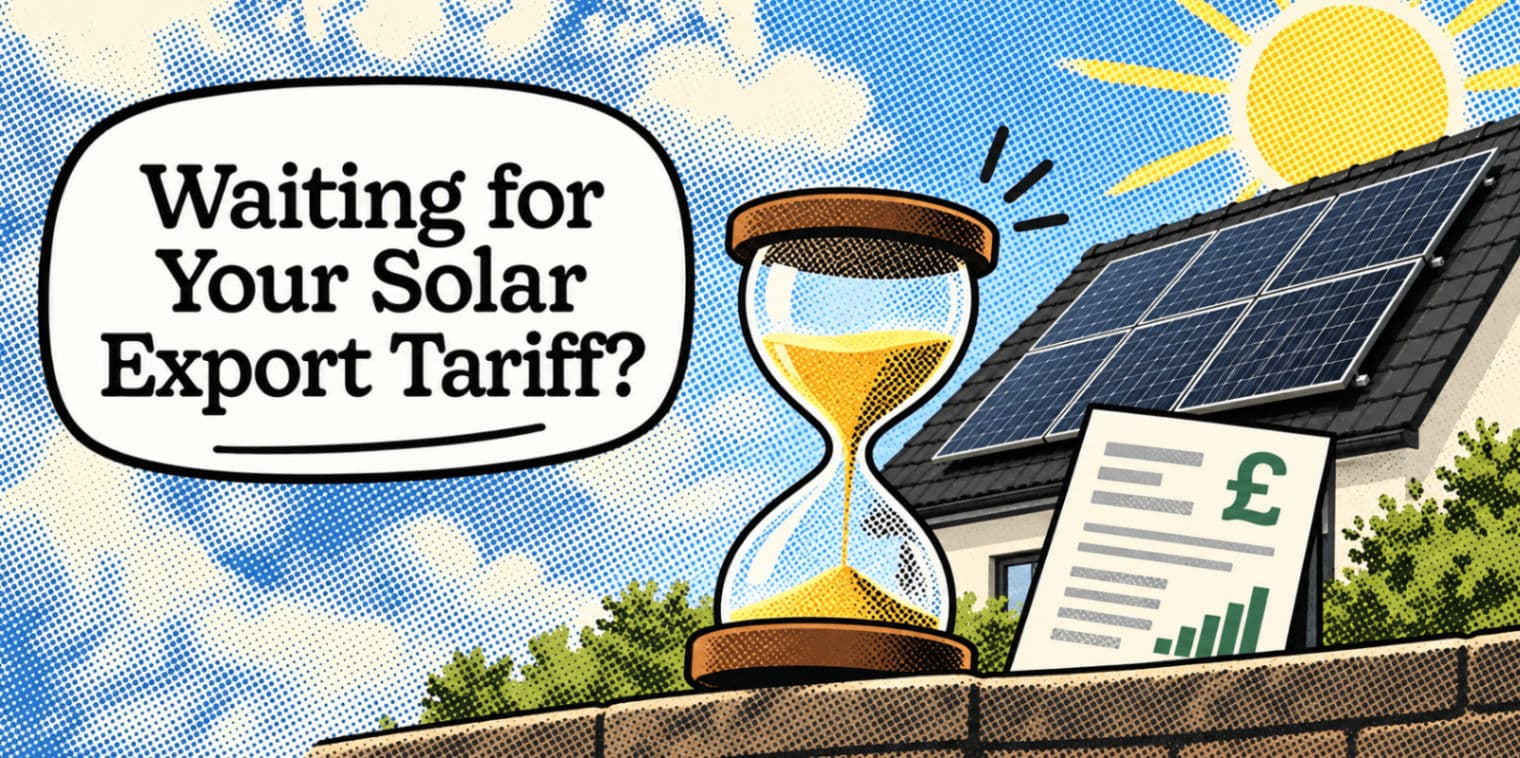
- Myth 9: They’re a money spinner (you can sell your energy back to the grid)
Some of those myths were based on real concerns years ago. Solar used to be more expensive, export payments were less attractive, and many homeowners were misled with exaggerated savings claims.
But the market has changed. Today, solar panel systems are more established, installation standards are clearer, and homeowners have better access to real pricing and performance data.
Solar panels work even on cloudy days, while Ofgem’s Smart Export Guarantee means eligible households can be paid for electricity they export to the grid.
That does not mean every claim you hear about solar is true. It means the conversation needs updating.
This guide breaks down some of the most common solar panel myths in the UK, explains where they came from, and sets out what homeowners should actually know before deciding whether solar is right for them.
PS We offer MCS-certified solar panel installation nationwide. Simply answer these questions, get your fixed price and arrange your free design.
Solar Panel Myths Debunked
Myth 1: The ‘payback’ period is so long, it isn’t worth the hefty upfront cost
This is one of the most common myths around solar panels, and it is easy to see why it stuck around.
A decade or two ago, solar panel systems were much more expensive than they are today, and many homeowners struggled to make the numbers work. That history still shapes how people think about solar now.
The truth is more balanced. Solar is still a significant upfront investment, but the blanket idea that it “takes forever to pay back” is no longer a reliable rule.
Whether solar is worth it depends on things like:
your electricity usage
how much of your generated electricity you use at home
whether you add battery storage
your export tariff
your roof’s orientation and shading
the quality of the design and installation
Energy Saving Trust currently says an average home solar panel system costs around £6,100 to install in the UK, and exported electricity can be paid through the Smart Export Guarantee.
Further considerations to solar PV payback times:
Quality of panels and their generation capability. Not all panels are created equal.
Good quality solar PV installations and panels also add value to your property.
Battery storage. Panels alone will typically offer less saving potential.
Your energy tariff and export rate (SEG) – if applicable.
🎥 Check out our YouTube video debunking solar panel myths below:
Myth 2: Solar savings are always exaggerated
This one has some truth behind it.
The UK solar market has a history of poor sales practices. Some homeowners were promised massive bill cuts, near-total energy independence, or systems that would effectively eliminate electricity bills. In many cases, those claims were unrealistic.
The truth is that solar can reduce electricity bills, but it is not magic.
A good installer should explain that:
savings vary by household
solar panels do not remove your need for grid electricity in most homes
performance depends on system size, roof conditions, usage habits and tariff choice
battery storage can change how much of your generated electricity you use yourself
Export income is real too, but it is not usually a “money spinner” on its own. Ofgem requires SEG tariff rates to be above zero, but suppliers set their own rates and terms, so returns vary.
The honest message is stronger than the old sales pitch: solar can save money, but the right estimate must be based on your home, not a fantasy.
Draw your own conclusion on solar panels here.
Myth 3: The UK does not get enough sun for solar panels to work
This is one of the most stubborn myths of all.
It sounds logical. The UK is hardly famous for year-round sunshine. But solar panels do not need blazing heat to generate electricity.
They work from daylight, not just direct sunshine. Solar panels work even on cloudy days, although they perform best on a south-facing roof with little or no shading.
That means the real question is not whether the UK is “sunny enough.” It is whether your roof is suitable enough.
What matters more is:
roof orientation
shading from trees, chimneys or nearby buildings
available roof space
panel quality
system design
inverter choice
So yes, sunnier conditions usually improve generation. But no, typical UK weather does not make solar pointless.
Myth 4: Solar panels will make you completely off-grid
For almost all UK homeowners, this is false.
Solar panels can reduce how much electricity you buy from the grid.
Add a battery and you can use more of your own generated electricity later in the day. But that is not the same as being fully off-grid.
Most homes with solar remain connected to the grid because:
solar generation changes by season and weather
household demand often peaks in the evening
winter solar output is much lower than summer output
a standard domestic battery does not give unlimited backup or independence
Battery storage can improve self-consumption and reduce reliance on imported electricity, but it does not automatically turn a home into a self-sufficient power station.
Batteries are mainly useful because they let households use more of the low-carbon electricity they generate themselves, not because they eliminate the grid entirely.
If someone is selling you “off-grid living” from a standard residential solar install in the UK, be careful.
Myth 5: Exporting electricity to the grid will make solar highly profitable
This is another half-truth.
Yes, eligible homeowners can get paid for exported electricity through the Smart Export Guarantee. But no, for most households this is not likely to become a major income stream.
Ofgem says SEG payments are based on export meter readings and that the tariff rate, contract length and terms are set by the supplier.
SEG can make solar more cost-effective, but the real financial value depends on how much electricity you export and the tariff you choose.
In practice, many homeowners are better off using more of their solar generation themselves rather than thinking of export payments as the main prize. Export income can help, but lower bills are usually the bigger story.
So the myth is not that SEG exists. It does. The myth is that export payments alone are enough to justify solar for most homes.
Myth 6: Solar panels are high-maintenance
In most cases, they are not.
Solar panels are generally considered a low-maintenance technology.
There are no moving parts in the panels themselves, and a properly installed system should not need constant attention.
That does not mean you should ignore maintenance entirely. It still makes sense to consider:
product warranties
workmanship guarantees
inverter lifespan
panel monitoring
bird protection where appropriate
Maintenance needs often depend more on the wider system than the panels alone.
For example, inverter replacement may become relevant during the life of the system, and some homes may benefit from mesh bird protection to prevent nesting beneath the array.
The key point is that solar should not feel like taking on a second job. A quality installation should be designed for long-term, straightforward use.
Myth 7: Solar panels are ugly
Some still are, and most definitely were.
As with many things (even extending to boilers), their designs improve over time as we come to terms with the hideous aesthetics of our past – including our own historic family photos.
Solar panels have certainly had their spotty teenage years, but don’t be deterred yet.
Modern solar panels, none more so than Heatable’s REA packages are getting remarkably attractive.
No more sky-blue panels, no silver trims and ugly square edges.
They let your neighbours know that you’re smarter than them, have more of a green conscience and lower energy bills. They’ll be reconsidering their gargoyles.

The image above shows the REA Fusion Solar Panels.
Myth 8: All solar panels and installers are basically the same
Definitely not.
There can be a huge difference between one solar quote and another, even when the headline system size looks similar.
The quality of a solar installation depends on things like:
panel specification
inverter technology
roof layout design
workmanship
warranties
aftercare
whether the installer is properly certified
In the UK, MCS certification remains an important benchmark for solar installations, and MCS certification is part of SEG eligibility for many domestic systems.
MCS also publishes dedicated installation standards for both solar PV and battery storage.
So no, solar is not a commodity purchase. The installer and the design matter.
Myth 9: They’re a money spinner (you can sell your energy back to the grid)
This myth is a little different, a false positive perhaps.
It’s often oversimplified that solar panels can become profitable for the homeowner based on their ability to ‘export to the grid’ for the energy that you haven’t used.
Fundamentally, this is true.
However, it’s likely on a much lesser scale than you might have imagined and comes with some caveats to consider. Hold off on your digital nomad plans for the moment:
You’ll need to be registered with SEG (Smart Export Guarantee). A Government scheme designed to encourage greener purchases in the UK.
Depending on your SEG provider (energy company) and tariff, export rates will vary and often be as low as 5p per kW which would yield a lower income than your last office whip-round.
You won’t be further incentivised to store energy in a battery – only what you export. It’s more likely in doing this, you would be buying more energy at a higher price instead of storing it and in turn, selling it at a very low price. I once had a friend who bought shares in Cineworld because ‘the Avengers was about to come out’ – same result.
Some energy companies (like OVO & Octopus) are starting to deliver some more compelling SEG rates, paying closer to 12-15 pence per kW.
The last point gives us hope that we can sell our bottled sunlight back to the energy companies – many of which have historically profited hugely from our misfortunes.
However, at present it's most likely that on current SEG rates, solar PV will generate around £100 - £200 a year if you’re exporting a large amount and choosing not to store it in a solar battery.
Whilst those figures are still absolutely fantastic – profit is profit after all – it might be some way below the ‘earner’ many homeowners were expecting.
Just remember the profit is after your substantially reduced electric bills!
Explore a Solar Case Study: Check out an insightful Q&A session featured in one of our detailed case studies on domestic solar panels. Hear directly from a Heatable customer in the UK and gain valuable perspectives on their experience here.

The image above shows a 23-panel solar installation, carried out by the MCS-certified solar team at Heatable, featuring the REA Fusion2 solar panels.
Is solar PV difficult to clean and maintain?
The simple answer here is; if you were to do this yourself – probably.
Most solar PV installation companies should provide you with:
A substantial product warranty (minimum 10 years)
An aftercare & maintenance plan
Bird protection option
The first two points should be standard issues for all MCS-registered solar installation companies and no DIY maintenance should be required.
Birds, however, do take a real shine to squatting underneath your panel array. It’s rain-free, safe and super warm.
In return for your hospitality, they’ll proceed to use the area as a toilet with such alarming regularity you’ll assume they’re also sharing your curry house.
Fortunately, discrete bird protection can be easily added onto most installations at the point of checkout or sourced afterwards should you be in a position of regret. Owning, training and keeping a large bird of prey locally is a more extravagant option.
Maintenance-wise, your warranty and aftercare plan should provide peace of mind and it’s more than likely your panels will last for many years without issue.
Should you have a standard array running on one string inverter, you should factor in 1-2 replacements for those over the course of the array’s lifetime. Another bonus of a micro-invertor system.
Next Steps For Your Solar Journey:
When planning to install solar panels for your home, there are several important factors to consider. Make sure to refer to the following guides to help you make informed decisions:
To dive deeper into these topics, head over to our advice section, check out our YouTube channel for informative videos, or read a customer case study to see how others have benefited from their solar installation.
Get a Quote for Solar Today
Without boasting you should get your solar installed with us, here's why:
Thousands of Happy Customers: We boast an average score of 4.9 on Trustpilot, outperforming the market leader.
Which? Trusted Trader: Heatable is proudly recognised as a Which? Trusted Trader.
MCS Accredited: Our accreditation by the Microgeneration Certification Scheme (MCS) ensures high-quality standards.
Exclusive Panels: We offer REA Fusion solar panels, available only through Heatable.
Consumer Protection: As members of the HIES consumer code, we provide 2-year deposit protection.
Flexible Payment Options: Choose from multiple payment methods, including finance options.
Fixed Price Guarantee: Enjoy transparency with no hidden costs.
Save Your Quote: You can save your quote and decide later.
Bespoke Design Tool: Draw your own conclusion (literally) on whether solar is worth it for you, here.