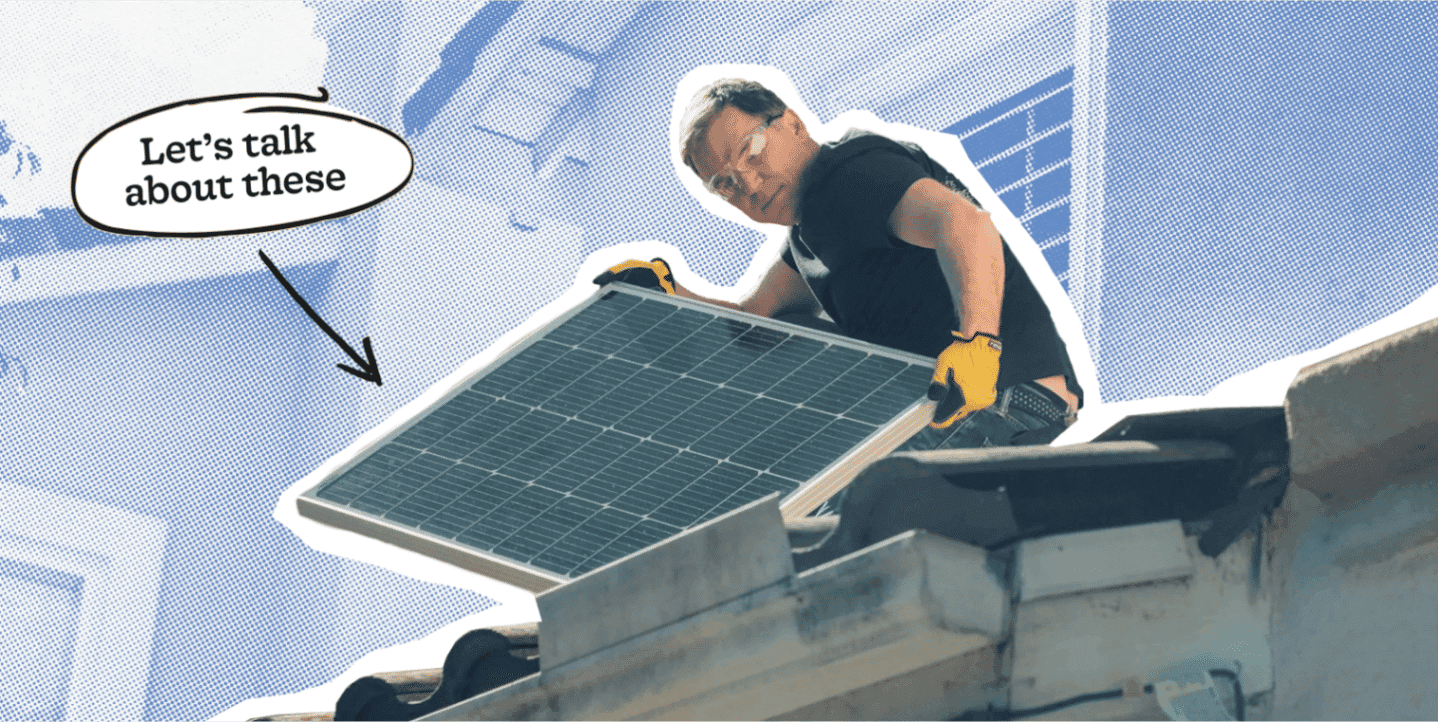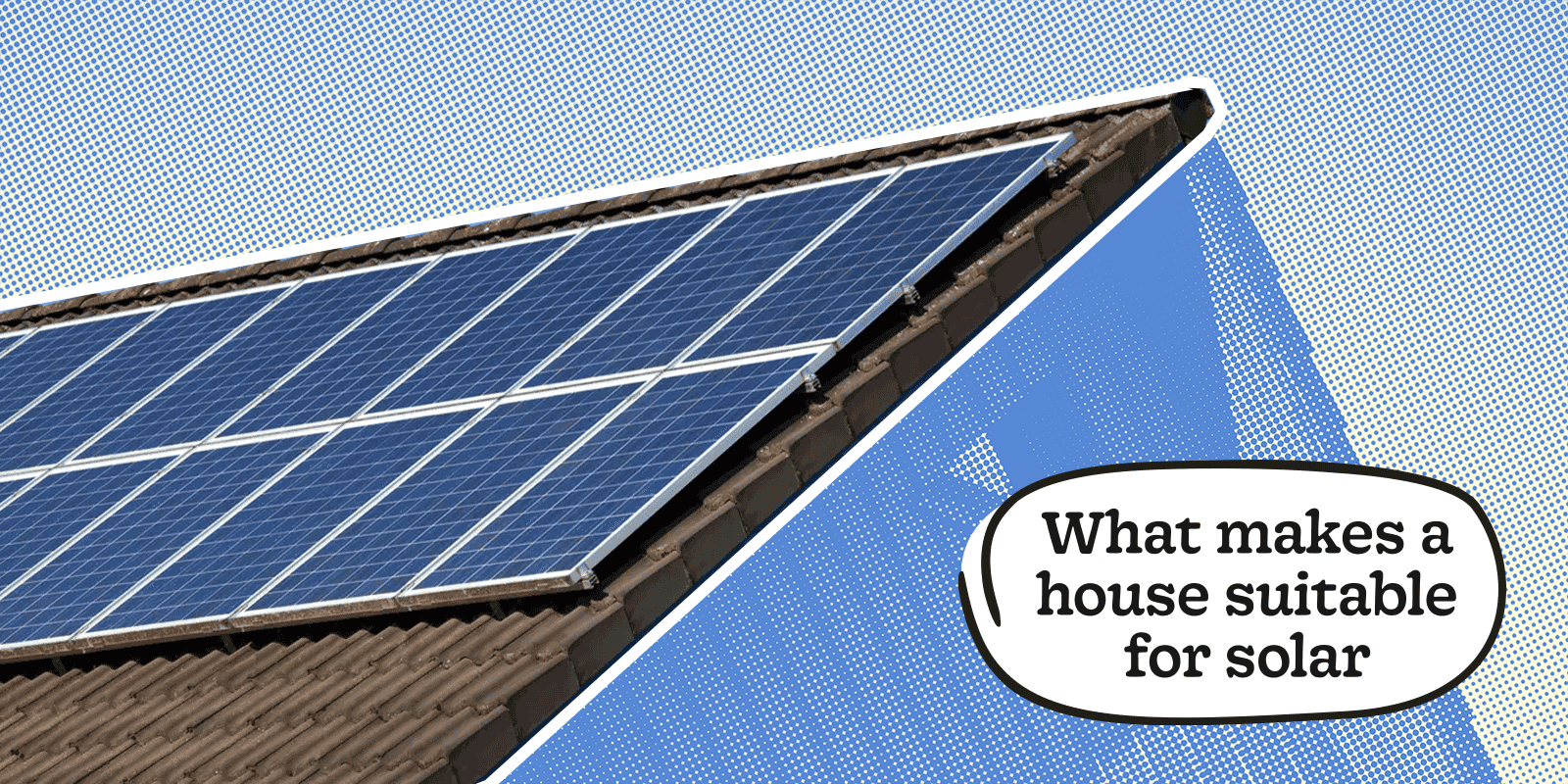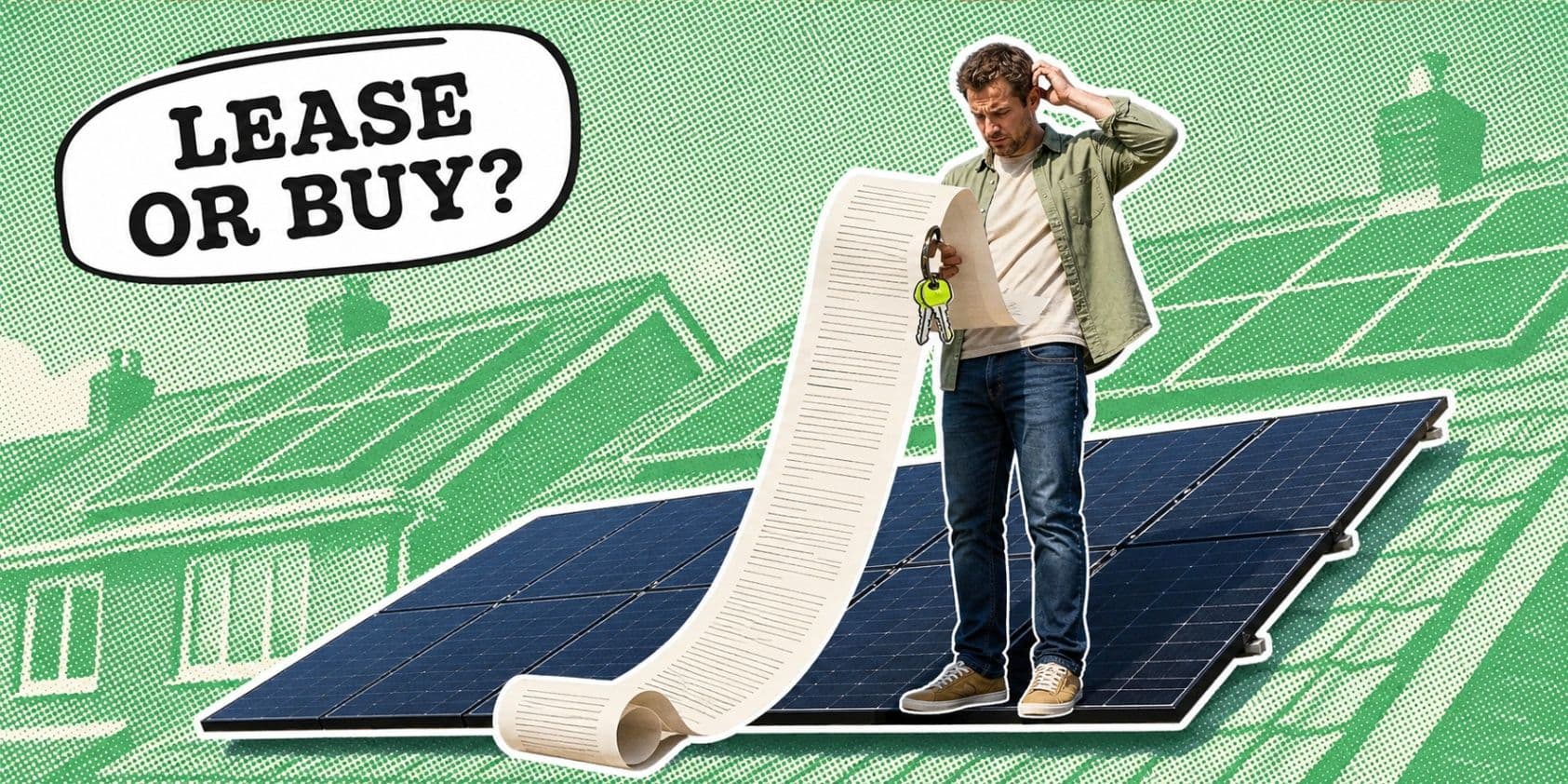

EDF Energy solar panels are worth a look if you want solar panels, battery storage and export tariffs from one of the UK’s biggest energy suppliers.
- What does EDF Energy Solar actually offer?
- Is EDF Solar actually installed by EDF?
- How does the EDF solar quote process work?
- Are EDF solar panels good value?
- Can EDF solar panels save you money?
- Are EDF solar tariffs the biggest advantage?
- EDF solar warranties - what is actually covered?
- EDF solar reviews - what should you actually read?
The appeal is obvious.
EDF is a household name. It already supplies energy to millions of homes. And its solar offer sits neatly alongside batteries, Smart Export Guarantee payments and wider home energy support.
So yes, EDF Solar could make sense.
But here’s the important bit.
Solar panels are not like switching energy tariffs.
You are not just choosing a brand. You are choosing a technical system that will sit on your roof for decades.
That means the details matter - the number of panels, panel wattage, inverter, battery size, roof layout, shading, workmanship, warranty cover, export rate, scaffolding, aftercare and total installed price.
EDF’s home solar offer is delivered through Contact Solar, which is part of the EDF Group. That gives EDF a credible installation route, but it does not mean you should skip the usual checks.
This review explains what EDF Energy Solar offers, where it looks strong, where customers should be careful, and how it compares with Heatable Solar.
PS We offer MCS-certified solar panel installation nationwide. Simply answer these questions, get your fixed price and arrange your free design.
🔑 Key Points:
EDF Energy Solar may suit homeowners who want solar panels, battery storage and energy tariffs from a large, familiar UK supplier.
EDF’s domestic solar installations are delivered through Contact Solar, which is part of the EDF Group.
The biggest EDF advantage is convenience: solar, battery storage, import tariffs, export tariffs and energy account support can sit under one wider energy brand.
That convenience is useful, but it should not distract from the basics: hardware, installation quality, system design, warranties and aftercare.
EDF currently promotes solar panels, battery storage, monitoring and export tariff options, but the exact system spec should always be checked before ordering.
EDF currently refers to warranty cover including 25 years on solar panels, 10 years on batteries, 10 years on inverters and a lifetime support guarantee.
EDF reviews should be read carefully. EDF Energy reviews often relate to energy supply, while Contact Solar reviews are more relevant for solar installations.
Heatable may suit customers who want a specialist solar installation route, clear online pricing, MCS certification, workmanship protection and insurance-backed cover.
EDF Energy solar panels vs Heatable Solar comparison
Category | EDF Energy Solar | Heatable Solar |
Quote process | Online enquiry and solar quote process through EDF/Contact Solar; final design depends on survey, roof details, usage and suitability checks | Online quote journey; final design depends on roof, usage, battery requirements, property details and survey checks |
Installer type | Major UK energy supplier offering solar through Contact Solar, part of the EDF Group | Specialist online installer offering solar, batteries, boilers and renewables |
Solar + battery | Offers solar PV and battery storage | Offers solar PV and battery storage |
Main advantage | Familiar energy brand with tariff integration | Specialist installer-led process with clear system and workmanship checks |
Tariffs | EDF offers import and export tariff options, including Smart Export Guarantee routes | Customers can still use suitable import and export tariffs, but energy supply is separate from installation |
What does EDF Energy Solar actually offer?
EDF Energy offers home solar panel and battery installations through Contact Solar, a solar installation company that is part of the EDF Group.
Put simply, EDF can help you with:
Solar panels.
Solar battery storage.
Solar monitoring.
Smart Export Guarantee payments.
Solar import and export tariff options.
A quote and installation journey through Contact Solar.
The main selling point is convenience.
EDF is not just selling panels. It is offering solar as part of a wider energy setup, which may include your electricity supply, export tariff, battery storage and account support.
For some homeowners, that will be a big plus.
If you already use EDF, like the brand, and want a joined-up solar-and-energy setup, EDF Solar could feel like the obvious route.
But solar is still a proper home installation.
It is not a quick product switch. It is not a generic appliance. And it is not something to buy just because the provider is well known.
Before accepting any solar quote, you should know exactly what is being installed.
That means checking:
Panel brand.
Panel wattage.
Number of panels.
Total system size.
Inverter brand and model.
Battery brand.
Usable battery capacity.
Mounting system.
Monitoring app.
Warranty terms.
Scaffolding.
Bird protection.
MCS certification.
DNO paperwork.
Export setup.
Aftercare route.
Solar rewards boring detail.
The best quote is not always the cheapest quote, and it is not always the quote from the biggest brand.
It is the quote that gives you the right system, installed properly, with clear protection if something goes wrong.
Is EDF Solar actually installed by EDF?
Not exactly.
EDF’s domestic solar offer is delivered through Contact Solar, which is part of the EDF Group.
That distinction matters.
It means you are dealing with EDF’s solar proposition, but the installation route sits with Contact Solar.
That is not a problem in itself. In fact, it is better than a vague referral model where an energy supplier simply passes your details to an unrelated installer.
But customers should still check who is responsible for what.
Ask:
Who is my contract with?
Who designs the system?
Who installs the panels?
Who arranges scaffolding?
Who handles the electrics?
Who signs off the installation?
Who provides the MCS certificate?
Who handles DNO notification or approval?
Who helps with export setup?
Who do I call if something breaks?
Who handles workmanship issues?
Who handles manufacturer warranty claims?
Who is responsible if scaffolding damages the property?
This is where solar can get messy.
A solar installation can involve surveyors, designers, scaffolders, electricians, installers, manufacturers, energy suppliers and network operators.
That is fine when responsibility is clear.
It is less fine when something goes wrong and everyone starts pointing at everyone else.
A good provider should be able to explain the aftercare chain before you order, not after the first problem.
How does the EDF solar quote process work?
EDF’s solar process starts with an online enquiry.
That is convenient, but an early-stage quote should not be treated as the final technical design.
With solar, the final system depends on your actual property. Roof direction, roof pitch, roof material, shading, chimneys, dormers, scaffolding access, consumer unit condition, battery location and DNO requirements can all affect the final recommendation.
EDF currently says customers can start with an enquiry and receive a call back for a remote survey within three working days, with installation possible in as little as four weeks once the remote survey is complete.
That sounds good, but “as little as” should not be read as a guaranteed installation date.
Solar timelines can shift because of roof access, scaffolding, weather, DNO requirements, stock availability, survey findings or design changes.
The question to ask is simple: “What would cause this quote, system design or timeline to change?”
A good installer will answer clearly.
A weaker one will skate past the detail.
Are EDF solar panels good value?
Maybe.
But nobody can honestly tell you EDF Solar is cheap, expensive or good value without looking at the actual quote.
That is because solar pricing is property-specific. Two homes can have the same number of panels but very different installation costs because of scaffolding, roof access, wiring complexity, battery choice, inverter setup or electrical upgrades.
The only fair comparison is quote against quote, line by line.
Not “who has the lowest headline price?”
Not “which company feels safest?”
Not “which calculator gave the biggest saving?”
You need to compare the number of panels, panel wattage, total system size, inverter, battery capacity, scaffolding, bird protection, MCS certification, workmanship cover, insurance-backed protection, finance costs and total installed price.
This is where a lot of homeowners get caught.
One quote looks cheaper, but includes fewer panels. Another has a smaller battery. Another leaves bird protection as an add-on. Another uses optimistic tariff assumptions to make the savings look better.
Solar quotes are not always directly comparable at first glance.
That is why the cheapest quote is not automatically the best quote.
And, bluntly, neither is the one from the biggest brand.
Can EDF solar panels save you money?
Yes, they can.
A well-designed solar panel system can reduce the amount of electricity you buy from the grid.
Add a correctly sized battery, and you may be able to use more of your own solar electricity in the evening instead of exporting it straight away.
Export tariffs can also pay you for surplus electricity sent back to the grid.
So the basic logic is sound.
But the savings are not automatic.
They depend on your roof, location, electricity usage, battery size, import tariff, export tariff, shading, smart meter setup and future energy prices.
This is why savings forecasts need to be read carefully.
A big solar system on a good roof, with strong daytime usage and sensible battery sizing, may perform very well.
A shaded roof, poor battery sizing or unrealistic tariff assumptions can change the maths quickly.
Before accepting EDF’s quote, ask what assumptions sit behind the savings estimate. You want to know the expected annual generation, expected self-consumption, expected export, assumed import rate, assumed export rate and estimated payback period.
A forecast without assumptions is just a sales number.
Are EDF solar tariffs the biggest advantage?
Possibly, yes.
EDF’s strongest advantage is not necessarily the panels themselves. It is the wider energy ecosystem.
EDF is a major UK energy supplier, so it can connect solar with import tariffs, export tariffs and account support. That may appeal if you want a simpler setup.
Instead of having one company for installation, another for supply, another for export and another for support, EDF may allow more of the journey to sit under one brand.
That is genuinely useful for some customers.
EDF promotes Smart Export Guarantee tariff options, which can allow eligible solar customers to get paid for electricity exported back to the grid.
But do not overrate the tariff angle.
A good export tariff does not fix a poor installation. It does not improve bad panel placement. It does not resize a battery. It does not repair a weak inverter choice. It does not make vague warranty terms better. It does not guarantee fast aftercare.
The tariff is one part of the value equation.
The system still has to be designed and installed properly.
Also, customers should remember that import and export tariffs do not always need to be with the same supplier.
So EDF’s tariff ecosystem may be convenient, but it should not stop you getting a second quote from a specialist installer.
Convenience is nice.
A better-designed system is nicer.
EDF solar batteries - what should you check?
EDF offers solar battery storage as part of its home solar proposition.
That can make sense.
A battery can help you store excess solar electricity during the day and use it later when your panels are not generating. For many households, that is more useful than exporting most of their surplus electricity straight away.
But batteries are not automatically worth it.
They need to be sized properly.
A battery that is too small may leave you buying more grid electricity than expected. A battery that is too large may look impressive on the quote, but weaken your payback because you paid for capacity you rarely use.
The useful question is not “does this quote include a battery?”
It is “why this battery, for this home, on this tariff?”
The answer should be based on your electricity usage, solar generation estimate, evening demand, import rate, export rate and whether you have larger electrical loads such as an EV or heat pump.
Some homes need a smaller battery. Some homes need a larger one. Some homes may not need one at all.
If a provider cannot explain why they have recommended a specific battery size, that is a bad sign.
Battery sizing should be based on your home, not whatever product happens to be easiest to sell.
EDF solar warranties - what is actually covered?
EDF currently states warranty cover including 25 years on solar panels, 10 years on batteries, 10 years on inverters and a lifetime support guarantee.
That sounds reassuring.
But solar warranties need reading carefully.
A “25-year warranty” may apply to the panels, not the whole system. The battery and inverter usually have different warranty terms. Workmanship may be separate again. Labour may or may not be included in the way customers expect.
This is one of the most common areas where solar quotes look simpler than they really are.
You may have a panel product warranty, panel performance warranty, inverter warranty, battery warranty, workmanship warranty, roof penetration cover, insurance-backed guarantee and monitoring/app support, all with different terms.
Before ordering, ask for the actual warranty documents.
Do not rely only on the headline numbers.
The useful questions are: who pays for labour if a manufacturer part fails, who handles the claim, whether scaffolding is covered if a roof component needs replacing, what the battery warranty excludes, what “lifetime support” means in practice, and whether workmanship is covered separately from product warranties.
The biggest number is not always the most useful warranty.
If there is a problem two years after installation, you will probably care more about workmanship, labour, response times and responsibility than a long-term panel degradation curve.
EDF solar reviews - what should you actually read?
EDF Energy has a large review profile as an energy supplier.
That is useful, but only up to a point.
Many EDF Energy reviews are about energy supply, billing, customer service, meter readings and account management. Those reviews do not necessarily tell you what an EDF solar installation is like.
For solar installation feedback, Contact Solar reviews are likely to be more relevant, because Contact Solar is the installation business behind EDF’s solar offer.
Even then, reviews need reading properly.
Look for solar-specific comments about installation quality, battery installation, scaffolding, survey accuracy, communication, delays, roof work, electrical work, MCS certificates, DNO paperwork, export setup, aftercare and snagging.
Ignore the emotional extremes at first.
The glowing one-liner tells you very little.
The furious one-star rant may also tell you very little.
What matters is pattern.
If customers repeatedly mention clean installation, clear communication and responsive aftercare, that is a positive sign.
If customers repeatedly mention delays, confusing handovers, poor post-install support or unclear responsibility, ask harder questions before ordering.
The same applies to Heatable, by the way.
Overall reviews are useful. Solar-specific reviews are better.
What to ask EDF before accepting a quote
Before choosing EDF Energy solar panels, get clear answers on four things.
First, responsibility. Who is your contract with, who installs the system, who arranges scaffolding, who handles MCS certification, who deals with DNO paperwork, and who do you call if something goes wrong?
Second, specification. Which panels, inverter and battery are included? What is the panel wattage? What is the usable battery capacity? Is bird protection included? Are electrical upgrades included? What is excluded from the quote?
Third, protection. What warranties apply to each component? Is workmanship covered? Is there insurance-backed protection? Does the warranty include labour? Who handles manufacturer claims?
Fourth, savings. What assumptions are used for generation, self-consumption, export, import rates, export rates and payback? Can you use another export tariff provider if a better deal is available?
These questions are not awkward.
They are basic checks before spending thousands of pounds on a system that should last for decades.
EDF Energy solar panels may be worth it if:
EDF Solar may be worth considering if you want a large, recognisable energy supplier, already use EDF, and like the idea of keeping solar panels, battery storage, import tariffs and export payments within one wider ecosystem.
It may also make sense if EDF gives you a competitive quote, clearly specifies the hardware, recommends a battery size that actually fits your usage, explains the warranty terms properly and provides a realistic savings forecast.
In other words, EDF should still have to earn the job.
Not because it is EDF.
Because the quote is good.
EDF Energy solar panels may not be the best fit if:
EDF may be less suitable if you want a more specialist installer-led process, if another installer offers better like-for-like value, or if the quote does not clearly explain the panels, inverter, battery, workmanship cover and aftercare route.
It may also be worth looking elsewhere if the savings forecast looks too optimistic, the battery recommendation feels generic, or the main reason you feel reassured is simply because EDF is a familiar brand.
EDF Solar may be a good option.
But it should still have to win on the fundamentals: system design, hardware, installation quality, warranty cover, aftercare and price.
Heatable may be worth considering if:
Heatable may be worth considering if you want a specialist online solar and battery installer, a quote built around your roof and usage, an MCS-certified installation route, clear workmanship protection, insurance-backed cover and straightforward online pricing.
The sensible move is simple.
Get both quotes.
Then compare them properly.
Not by brand name.
Not by the lowest monthly payment.
Not by the biggest savings claim.
Compare the panel quantity, panel wattage, battery size, inverter brand, warranty terms, workmanship cover, insurance-backed protection, scaffolding, bird protection, installation timeline, total cost, estimated annual generation, estimated savings, export assumptions and aftercare route.
That is how you find the better deal.
So, is EDF Energy Solar worth it?
EDF Energy Solar may be worth considering if you want solar panels and battery storage from a major UK energy supplier, with the added convenience of export tariff options and installation through Contact Solar.
Its strongest argument is convenience.
For some customers, keeping solar, battery storage, energy supply and export payments within one wider EDF ecosystem will be attractive.
But convenience is not the same as best value.
The real question is whether EDF’s proposed system is the right one for your home.
If EDF gives you a strong design, clear hardware specification, sensible battery sizing, realistic savings forecast, competitive price and reassuring aftercare, it may be a good choice.
If the quote mostly appeals because EDF is a familiar name, get another quote.
Solar is too expensive, too technical and too long-term to buy on brand comfort alone.
Compare EDF Solar with a Heatable quote
If you’re considering EDF Energy solar panels, it is worth getting a like-for-like quote from Heatable before you commit.
That way, you can compare panel quantity, panel wattage, battery size, inverter brand, warranty terms, workmanship cover, insurance-backed protection, installation timeline, scaffolding, total cost, estimated savings and export assumptions.
At Heatable, we offer solar and battery installations designed around your home, your usage and your budget - with MCS certification, clear workmanship cover and straightforward online pricing.
Next Steps For Your Solar Journey:
When planning to install solar panels for your home, there are several important factors to consider. Make sure to refer to the following guides to help you make informed decisions:
To dive deeper into these topics, head over to our advice section, check out our YouTube channel for informative videos, or read a customer case study to see how others have benefited from their solar installation.
Get a Quote for Solar Today
Without boasting you should get your solar installed with us, here's why:
Thousands of Happy Customers: We boast an average score of 4.9 on Trustpilot, outperforming the market leader.
Which? Trusted Trader: Heatable is proudly recognised as a Which? Trusted Trader.
MCS Accredited: Our accreditation by the Microgeneration Certification Scheme (MCS) ensures high-quality standards.
Exclusive Panels: We offer REA Fusion solar panels, available only through Heatable.
Consumer Protection: As members of the HIES consumer code, we provide 2-year deposit protection.
Flexible Payment Options: Choose from multiple payment methods, including finance options.
Fixed Price Guarantee: Enjoy transparency with no hidden costs.
Save Your Quote: You can save your quote and decide later.
Bespoke Design Tool: Draw your own conclusion (literally) on whether solar is worth it for you, here.