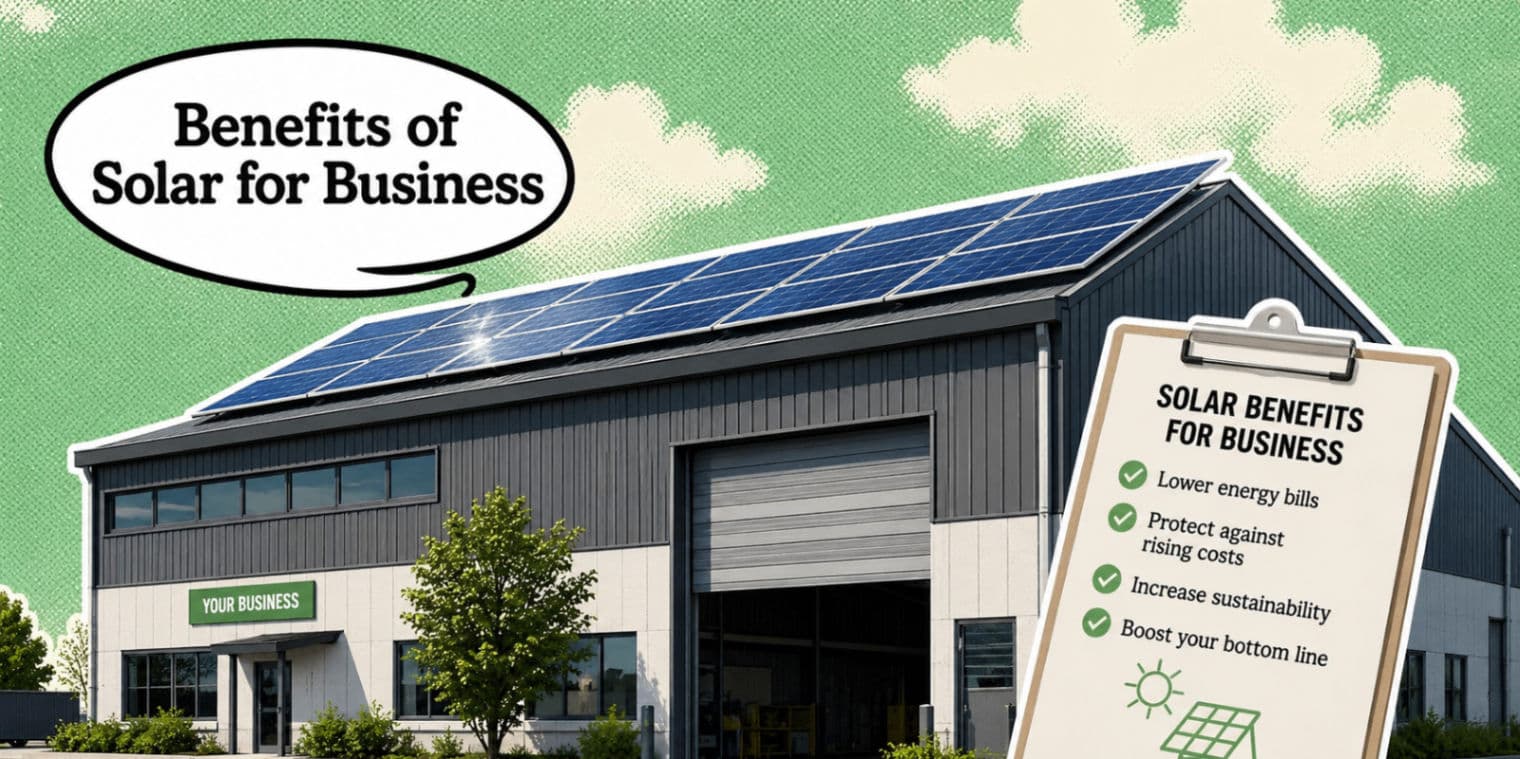

For UK businesses, solar panels are no longer just a sustainability add-on. They can be a serious commercial asset.
- The main benefits of commercial solar panels
- What is zero-CAPEX solar?
- Support EV charging and business electrification
- Earn money from surplus electricity
- Are grants available for business solar panels?
- How quickly does commercial solar pay for itself?
- Which businesses benefit most?
- Are solar panels worth it for UK businesses?
A well-designed commercial solar system can reduce electricity bills, make future energy costs easier to forecast and turn unused roof space into something genuinely productive.
That matters because electricity is one of the few business costs that can rise sharply without giving you anything extra in return. The lights are not brighter. The machinery does not work harder. You simply pay more for the same energy.
Solar gives businesses a way to take back some control.
Instead of buying every unit of electricity from the grid, you generate part of it from your own premises and use it on-site.
For businesses with large roofs and strong daytime energy demand, the financial case can be particularly compelling.
🔍 Speak to Heatable about a tailored commercial solar assessment for your business.
The main benefits of commercial solar panels
The biggest advantage is simple: lower electricity costs.
Every unit of solar electricity used by the business is a unit that does not need to be purchased from an energy supplier.
That can create meaningful long-term savings, particularly for offices, warehouses, factories, farms, schools, hotels and retail units that consume a lot of power during daylight hours.
The timing matters.
Solar panels produce most of their electricity during the day, so the best results are usually achieved when the building is already busy and using power at the same time.
This is known as self-consumption.
It simply means using the electricity your panels generate rather than exporting it back to the grid.
The higher the self-consumption rate, the stronger the financial case will usually be.
[1] Lower and more predictable energy bills
Commercial electricity prices can be difficult to plan around.
Contracts end, tariffs change and wholesale energy markets can move quickly. For businesses operating on tight margins, that volatility can make budgeting harder than it needs to be.
Solar will not remove the electricity bill entirely, but it can reduce the amount of power the business needs to buy externally.
That gives the company a degree of protection against future price increases.
It also makes a portion of the organisation’s energy costs more predictable. Once the system is installed, the business has an asset producing electricity for many years rather than relying entirely on whatever price the market happens to offer next.
This is especially useful for energy-intensive businesses where even a modest increase in electricity prices can have a noticeable effect on operating costs.
[2] Turn unused roof space into a business asset
Most commercial roofs are not doing very much.
They protect the building, collect rainwater and occasionally become home to an optimistic pigeon.
Solar panels can turn that unused space into a productive asset.
Warehouses, manufacturing sites, agricultural buildings and retail units often have large roof areas that are particularly well suited to solar.
The panels generate electricity without taking up valuable floor space or interfering with day-to-day operations.
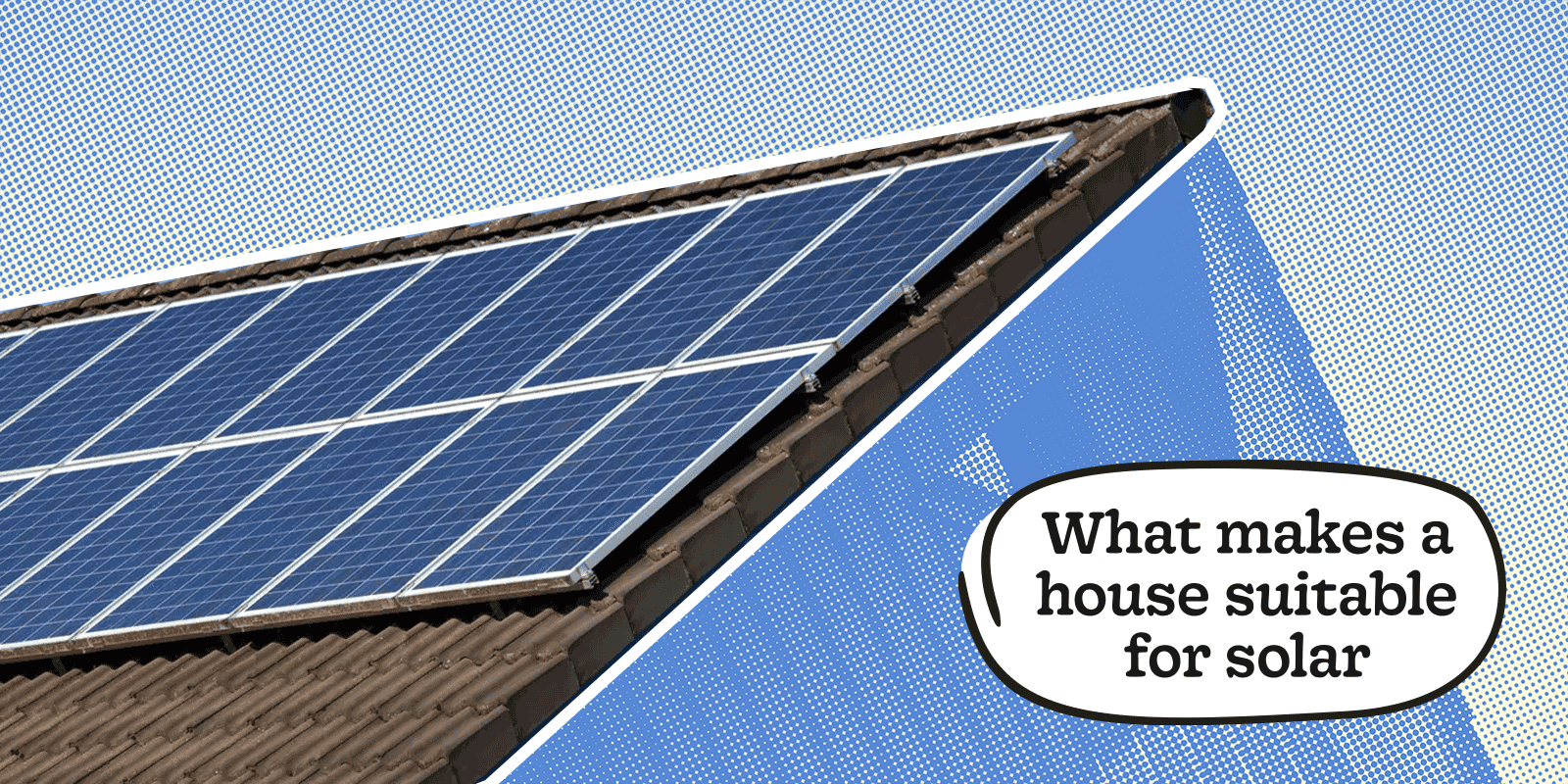
The roof still needs to be suitable.
Its condition, structural capacity, orientation, shading and remaining lifespan should all be checked before the system is designed.
There is little sense in installing a large solar array on a roof that will need replacing two years later.
A credible commercial solar proposal should consider the building first, not just the number of panels that can physically fit on it.
[3] Reduce carbon emissions without the greenwashing
Solar panels generate electricity without burning fossil fuels at the point of use.
By replacing part of the electricity normally drawn from the grid, they can reduce the emissions associated with a business’s operations.
This can support net-zero targets, carbon-reduction plans and environmental reporting.
It can also help businesses respond to customers, investors and procurement teams asking what practical steps are being taken to reduce emissions.
Commercial solar is often discussed in relation to ESG, which stands for environmental, social and governance.
That can sound more complicated than it is.
In this context, it usually means being able to show that the business is making measurable environmental improvements.
Solar provides real generation data, which is far more useful than vague sustainability statements.
It does not make an entire company sustainable overnight, and businesses should avoid making claims they cannot support.
What it does provide is a practical, visible and measurable way to reduce the carbon intensity of electricity use.
[4] Strengthen tenders and supply-chain credentials
For many businesses, sustainability is no longer just a branding exercise.
Larger companies increasingly ask suppliers to provide emissions data, environmental policies and evidence of decarbonisation.
The same applies to public-sector contracts and formal tender processes.
Installing solar may help strengthen a business’s response to these requirements by showing that it has invested in reducing operational emissions.
That does not guarantee a contract, obviously.
But where two suppliers are otherwise closely matched, credible environmental action can become a commercial differentiator.
This is particularly relevant for SMEs working with larger organisations that have their own supply-chain carbon targets to meet.
CAPEX, OPEX and what they actually mean
Commercial solar discussions can become unnecessarily jargon-heavy.
Two of the terms you will hear most often are CAPEX and OPEX.
CAPEX means capital expenditure.
In plain English, it is money spent buying a long-term asset.
If a business pays for a solar installation outright and owns the system, that is normally a CAPEX investment.
The advantage is that the business retains the full value of the electricity savings and owns the equipment from the start.
The disadvantage is obvious: it requires upfront capital.
OPEX means operating expenditure.
These are the ongoing costs involved in running the business, such as electricity bills.
Solar can reduce OPEX by lowering the amount of electricity purchased from the grid.
Some funding models also allow the solar system itself to be paid for as an ongoing operating cost rather than through a large upfront investment.
What is zero-CAPEX solar?
A business does not always need to buy a commercial solar system outright.
One alternative is a Power Purchase Agreement, usually called a PPA.
Under a PPA, a third party typically funds, owns and maintains the solar installation. The business then purchases the electricity generated by the system at an agreed rate.
This is often marketed as zero-CAPEX solar because the business does not fund the installation upfront.
That does not mean the electricity is free.
It means the cost is structured through a long-term agreement rather than an initial capital purchase.
PPAs can work well for businesses that want to preserve cash or avoid adding a major project to the capital budget.
However, the contract needs careful review.
The business should understand the electricity price, any annual increases, the agreement length, maintenance responsibilities and what happens if the property is sold, refinanced or vacated.
Zero upfront cost can be attractive, but only when the contract still makes commercial sense over the full term.
Support EV charging and business electrification
Many businesses are increasing their electricity demand rather than reducing it.
EV chargers, electric forklifts, heat pumps, air conditioning and electrically powered machinery can all add new loads to a site.
Solar panels can help meet part of that demand.
Workplace EV charging can pair particularly well with solar because vehicles are often parked and charging during daylight hours.
The same applies to offices, warehouses and production sites that operate mainly during the day.
Battery storage may also help by holding excess solar electricity for use later.
However, a battery should not be added automatically.
It increases the project cost and will only improve the financial case where the site’s energy profile supports it.
The decision should be based on real consumption data, not because batteries happen to look good in the brochure.
Earn money from surplus electricity
There will be times when a solar system produces more electricity than the business is using.
That surplus can potentially be exported to the grid in return for payment.
For eligible installations, this may be through the Smart Export Guarantee or a separate commercial export arrangement.
Export income is useful, but it should usually be treated as a bonus rather than the main reason to install solar.
Using the electricity on-site is generally more valuable because it replaces electricity that would otherwise be purchased at a higher rate.
This is why the best systems are sized around the business’s actual demand rather than simply covering every available part of the roof.
Bigger is not always better.
Better matched is better.
Are grants available for business solar panels?
There is no single UK-wide grant available to every business installing commercial solar.
Funding tends to be more fragmented.
It may be available through local councils, combined authorities, regional net-zero programmes, rural funding schemes or sector-specific support.
Some schemes contribute towards solar panels, battery storage or wider energy-efficiency improvements.
Availability changes regularly, and eligibility may depend on the location, size or industry of the business.
Grants can improve the financial case, but they should not be the foundation of it.
A suitable solar project should still make commercial sense without relying on funding that may be limited, competitive or temporary.
Businesses may also be able to claim capital allowances against qualifying expenditure, depending on how the system is purchased and the wider tax position of the company.
That should be confirmed with an accountant rather than assumed in advance.
How quickly does commercial solar pay for itself?
The payback period is the time it takes for the accumulated savings to equal the original cost of the installation.
The exact figure depends on the size of the system, installation cost, electricity tariff, annual generation and how much of the electricity is used on-site.
This is where weak solar proposals often fall apart.
A glossy headline figure can look impressive, but the assumptions behind it matter more than the number itself.
Businesses should ask whether the forecast includes realistic electricity prices, maintenance, system degradation, export rates and finance costs.
A good proposal should show more than one scenario and explain what happens if energy prices rise more slowly than expected.
The goal is not to produce the most exciting forecast.
It is to produce one the business can actually trust.
Which businesses benefit most?
Commercial solar tends to work best for businesses with high daytime electricity use, suitable roof or land space and plans to remain at the site for several years.
Warehouses, manufacturers, farms, offices, schools, leisure facilities and retail businesses are often strong candidates.
The property arrangement also matters.
Owner-occupiers usually have the most flexibility, while tenants may need landlord approval and should consider the remaining lease term before investing.
A business expecting to relocate in the near future may find that outright ownership makes less sense than a different funding structure.
The right answer depends on the building, the energy profile and the business plan.
Are solar panels worth it for UK businesses?
For many businesses, yes.
Commercial solar can lower electricity costs, reduce exposure to future price rises and turn unused roof space into a productive asset.
It can also support carbon-reduction plans, strengthen ESG reporting and help meet growing supply-chain expectations.
But the system needs to be designed properly.
The best commercial solar installation is not automatically the largest one.
It is the one matched to the company’s electricity use, operating hours, property plans and preferred funding model.
That requires more than a quick roof measurement and a generic savings estimate.
Heatable can assess your site, consumption data and commercial priorities before recommending a system that actually makes sense.
Book a commercial solar consultation with Heatable and find out how much of your business electricity could be generated on-site.
Next Steps for Your Commercial Solar Journey
Planning a commercial solar installation involves more than simply choosing a set of panels.
Your roof space, daytime electricity use, funding route, grid connection and long-term business plans can all affect the size and financial performance of the system.
These guides will help you explore the key considerations:
Benefits of solar panels for businesses
Commercial solar grants and funding
Solar panel finance for businesses
Business solar battery storage
Solar panel payback periods
Exporting surplus solar electricity
Solar panel maintenance and servicing
Planning permission for commercial solar panels
EPCs, carbon reporting and sustainability targets
For more practical guidance, visit our commercial solar advice section or explore the Heatable YouTube channel.
Speak to a Commercial Solar Expert Today ☀️
Commercial solar projects are rarely one-size-fits-all. Heatable will assess your property, electricity consumption and commercial objectives before recommending a suitable system.
Here’s why businesses choose Heatable:
Tailored System Design: Your solar installation is designed around your roof, energy profile and operating hours.
Clear Financial Forecasting: Understand the estimated installation cost, annual savings, payback period and return on investment before committing.
Multiple Funding Routes: Explore outright purchase, finance and Power Purchase Agreement options, depending on your business requirements.
Accredited Installation: Your project is completed by experienced commercial solar professionals in line with relevant industry standards.
End-to-End Project Support: From the initial survey and system design to installation, commissioning and ongoing support, Heatable manages the process for you.
Straightforward Advice: No unnecessary jargon, inflated claims or generic packages. Just a commercially sensible solar proposal based on your site.
Book your free commercial solar consultation today.