
Air source or ground source? One is easier and cheaper to install, while the other can offer greater efficiency. We compare the costs, grants, requirements and pros and cons of each.
- What is an air source heat pump?
- What is a ground source heat pump?
- How much does an air source heat pump cost?
- How much does a ground source heat pump cost?
- What about VAT?
- What space does a ground source heat pump need?
- Do both types need new radiators?
- Air source heat pump pros and cons
- Ground source heat pump pros and cons
- Which lasts longer?
- Which is better for the average UK home?
- Air source vs ground source: our verdict
If you're considering replacing your boiler with a heat pump, you'll usually come across two main options:
air source heat pumps and ground source heat pumps.
Both use electricity to move naturally occurring heat into your home, but they collect that heat from very different places.
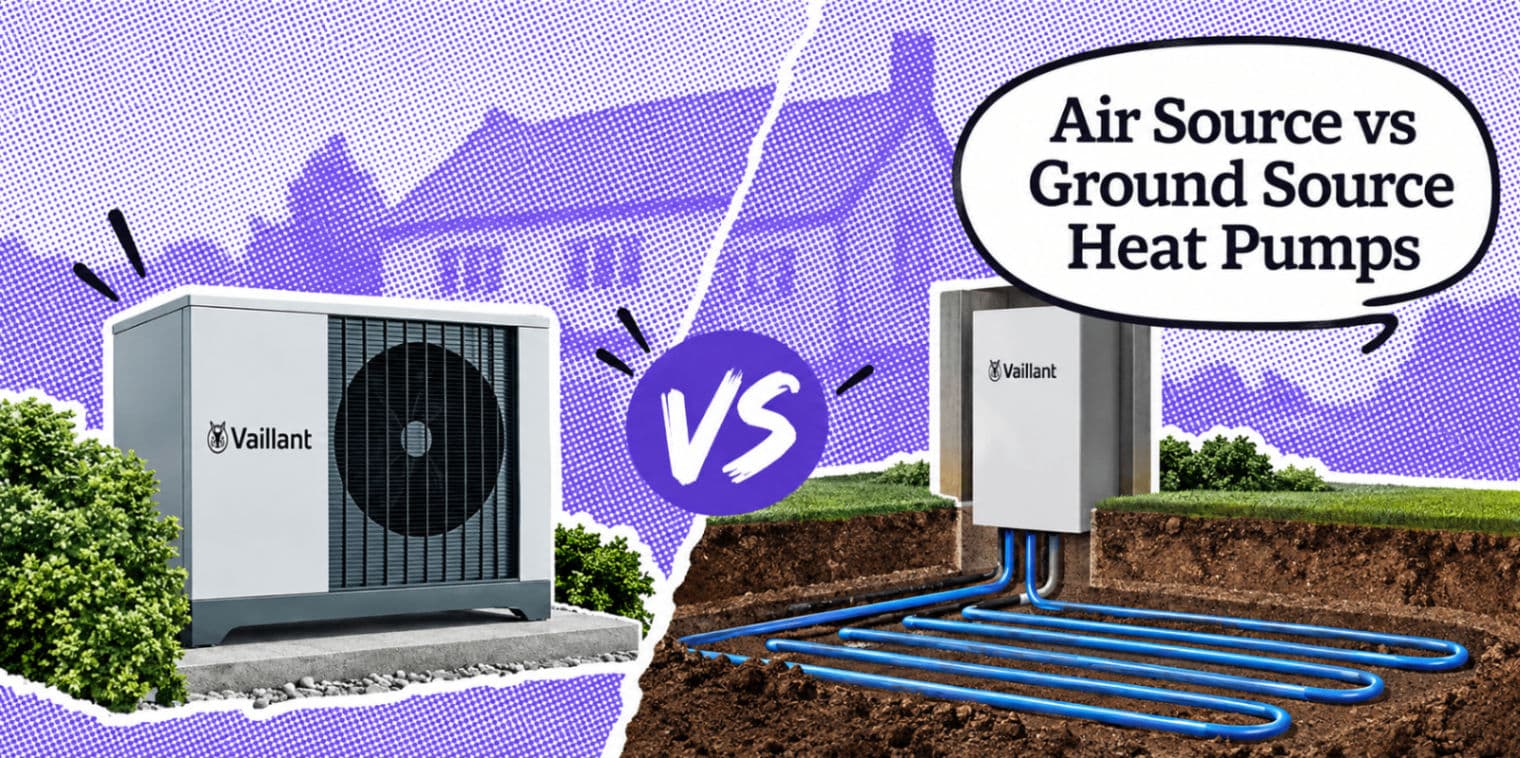
An air source heat pump takes heat from the outside air.
A ground source heat pump takes it from the ground beneath your property.
That one difference affects almost everything else, including installation cost, efficiency, disruption, space requirements and which type actually makes sense for the average UK home.
So, which is better?
💨 Ready to make your home more energy-efficient and cut down on your heating bills? Get a heat pump quote today.
Air source vs ground source heat pumps at a glance
Air source heat pump | Ground source heat pump | |
Heat source | Outside air | Ground |
Upfront cost | Lower | Higher |
Installation | Relatively straightforward | More complex |
Outdoor space needed | Small area for external unit | Land for trenches or access for boreholes |
Efficiency | Very high | Usually slightly higher and more consistent |
Winter performance | Efficiency changes with outdoor temperature | More stable due to consistent ground temperatures |
Outdoor fan unit | Yes | No conventional outdoor fan unit |
Boiler Upgrade Scheme grant | £7,500 standard | £7,500 standard |
Best suited to | Most UK homes | Larger properties with suitable land and budget |
In simple terms, ground source heat pumps usually win on efficiency, while air source heat pumps win on cost and practicality.
For most UK homeowners, that makes air source the more realistic option.
What is an air source heat pump?
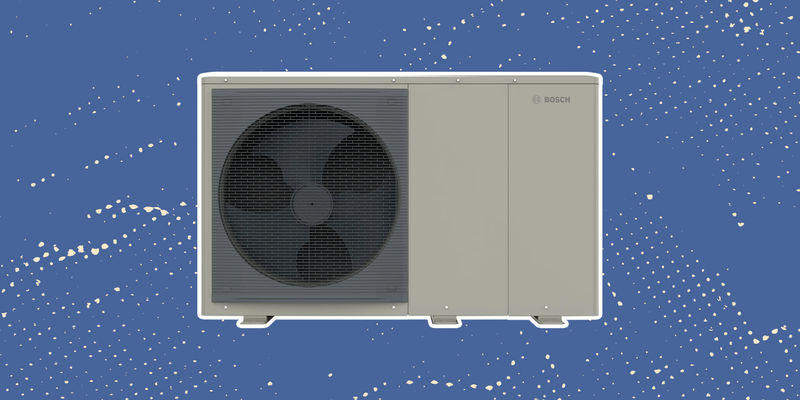
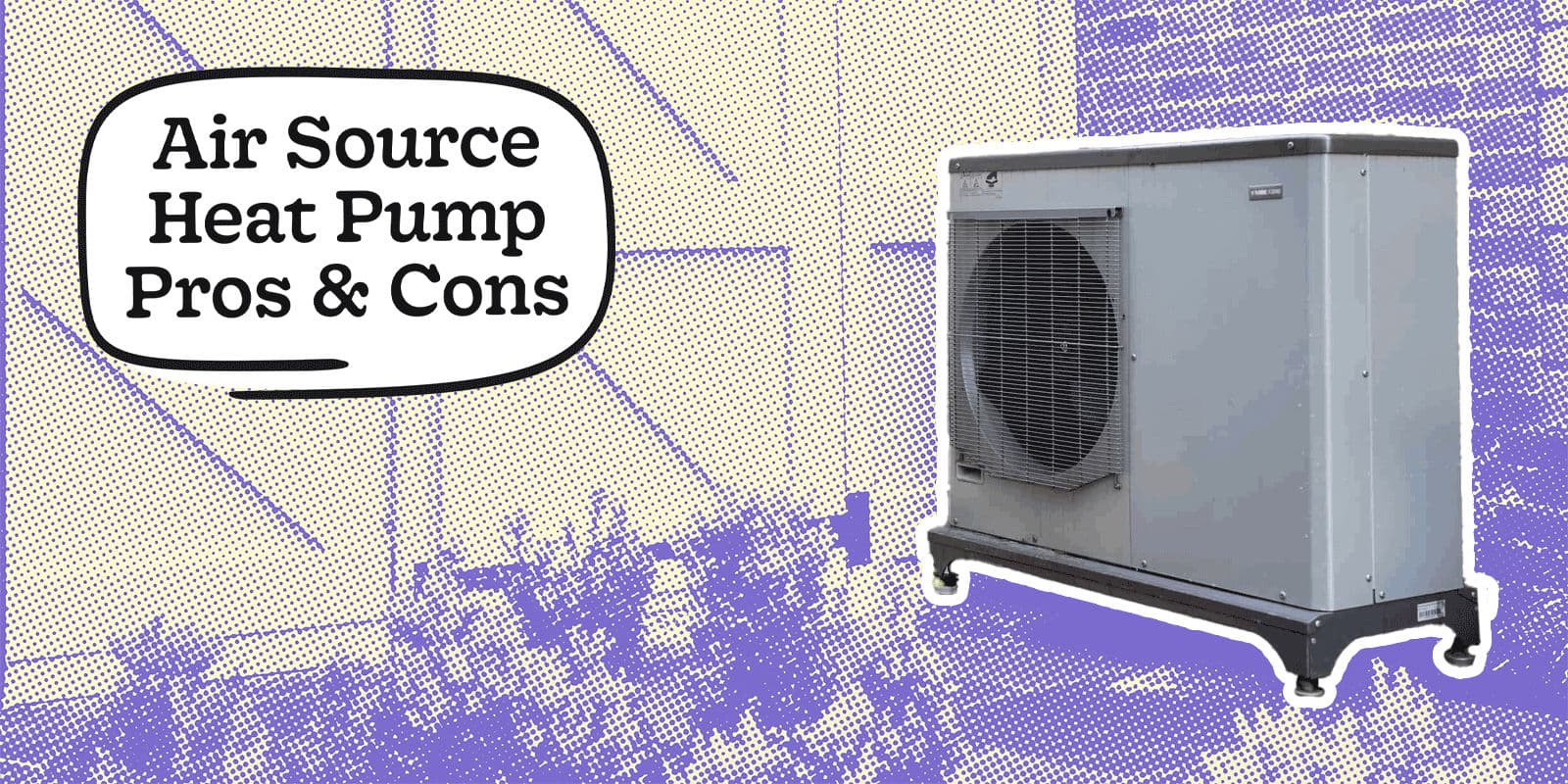
An air source heat pump extracts thermal energy from the outside air and uses it to heat your home.
And yes, it can still do this when it's cold outside.
Even at sub-zero temperatures, the air still contains usable heat energy. The heat pump absorbs that energy into a refrigerant before a compressor raises its temperature to a level suitable for heating your home.
Most domestic installations in the UK use an air-to-water heat pump.
These supply warm water to:
radiators
underfloor heating
a hot water cylinder
Think of it as a refrigerator working backwards.
Except instead of protecting a questionable tub of hummus, it's heating your house.
What is a ground source heat pump?
A ground source heat pump works on the same basic principle, except it takes heat from the ground rather than the air.
A network of pipes is installed underground and filled with a heat-transfer fluid.
As that fluid circulates through the ground, it absorbs naturally occurring heat before returning to the heat pump, where the temperature is raised and transferred into your heating system.
There are generally two ways of installing the ground loop.
Horizontal ground loops
Long lengths of pipe are buried in trenches across your land.
This is usually the cheaper option, but it requires a reasonably large amount of accessible outdoor space.
Vertical boreholes
Where there isn't enough land for horizontal trenches, boreholes can be drilled deep underground instead.
They require much less surface area but involve specialist drilling equipment and can add significantly to the cost.
This is one of the main reasons ground source heat pump prices vary so widely.
Which is more efficient?
Generally, ground source heat pumps are slightly more efficient and more consistent throughout the year.
The reason is fairly simple.
Air temperatures in Britain move around quite a lot.
A heat pump operating when it's 12°C outside has an easier job than one operating when it's -3°C.
Ground temperatures, however, remain much more stable.
That means a ground source heat pump is drawing heat from a relatively consistent source even during winter.
The smaller the temperature difference between the heat source and the temperature your heating system needs to produce, the less work the heat pump generally has to do.
So ground source has a technical advantage.
But efficiency isn't the only thing that matters.
Saving a little more electricity every year doesn't automatically justify spending substantially more money installing the system in the first place.
Do air source heat pumps work in winter?
Yes.
Modern air source heat pumps are designed to operate at temperatures well below those normally experienced across most of the UK.
Their efficiency does generally fall as the outside temperature drops, but that isn't the same as the heat pump suddenly failing when there's frost on the car.
The real issue is system design.
A properly specified heat pump needs to be capable of meeting the property's heat demand at its expected winter design temperature.
That means carrying out proper heat-loss calculations rather than simply replacing a 30kW boiler with a 30kW heat pump and hoping nobody notices.
How much does an air source heat pump cost?
There isn't one particularly useful fixed price.
Air source heat pump installations vary according to:
the size and heat loss of the property
the heat pump required
radiator upgrades
hot water cylinder requirements
electrical work
pipework
installation complexity
Government policy has increasingly focused on reducing this upfront cost through the Boiler Upgrade Scheme rather than prescribing a standard retail price.
For eligible properties in England and Wales, the standard BUS grant is currently £7,500 towards an air-to-water heat pump.
That can remove a very significant chunk of the installation cost.
How much does a ground source heat pump cost?
Ground source systems are generally more expensive to install.
The reason isn't necessarily the heat pump itself.
It's what needs to happen underneath your feet.
You may need:
substantial trench excavation
hundreds of metres of buried pipe
specialist drilling
boreholes
additional groundworks
reinstatement of the land afterwards
The cost therefore varies enormously depending on the property.
A house with a large accessible field where horizontal loops can be installed is a very different project from one requiring deep vertical boreholes.
For that reason, we'd be wary of any guide pretending there is one useful "average ground source heat pump price".
What can be said with confidence is that ground source installations are usually more expensive upfront than equivalent air source systems, and boreholes can increase that difference considerably.
What heat pump grants are available?
For homes in England and Wales, both air-to-water and ground source heat pumps can currently qualify for the Boiler Upgrade Scheme.
The standard grant values are:
£7,500 for an air-to-water heat pump
£7,500 for a ground source heat pump
£2,500 for an air-to-air heat pump
The scheme is administered by Ofgem on behalf of the Department for Energy Security and Net Zero.
There is also currently an enhanced grant for some off-gas-grid properties.
Until 31 March 2027, eligible homes that have no mains gas connection and are replacing an oil or LPG heating system can receive £9,000 towards an air-to-water or ground source heat pump. Ofgem
The scheme is installer-led.
Your MCS-certified installer submits the application, and the value of the grant is reflected in the price you pay rather than being paid directly into your bank account afterwards. Ofgem
What about VAT?
Qualifying heat pump installations currently benefit from 0% VAT until 31 March 2027.
That applies to energy-saving materials including heat pumps and can reduce the upfront cost further. Ofgem
Does the grant make ground source much cheaper?
It helps.
But it doesn't remove the fundamental cost difference.
Both air-to-water and ground source heat pumps receive the same standard £7,500 grant.
If an air source system requires relatively straightforward installation work, that grant can represent a substantial proportion of the total cost.
A ground source system may still require significant expenditure on trenches, drilling or boreholes.
So although the government support is equal, the amount you need to fund yourself may not be.
What space does an air source heat pump need?
Not a huge amount.
You'll need an appropriate outdoor location for the heat pump unit with sufficient airflow around it.
Inside the property, you may also need room for:
a hot water cylinder
controls
pipework
potentially a buffer vessel or volumiser
The outdoor unit needs to be positioned sensibly.
That means considering airflow, access, noise and the distance between the unit and the rest of the heating system.
Wedging it behind three bins, a broken barbecue and a garden shed probably isn't the optimum engineering solution.
What space does a ground source heat pump need?
Potentially quite a lot.
Horizontal ground loops require enough land for trenches to be excavated and the pipework installed.
How much land you need depends on things including:
property heat demand
ground conditions
loop design
available excavation area
The site also needs to be accessible to the equipment carrying out the work.
If you don't have enough land, vertical boreholes may be possible instead.
These take up considerably less surface space but require specialist drilling, which pushes costs higher.
Once horizontal loops have been installed, the trenches are filled back in and the land above can generally be used again.
So you're not permanently sacrificing the garden.
You just have to temporarily accept that it may look like somebody has started looking for Roman pottery.
Do both types need new radiators?
Possibly.
This isn't really an air source versus ground source issue.
Both heat pumps usually operate most efficiently at lower flow temperatures than a traditional gas boiler.
That means the heating system needs enough surface area to deliver sufficient heat into each room.
Depending on your heat-loss assessment, you may need to:
keep existing radiators
increase the size of some radiators
install higher-output radiators
use underfloor heating
Some homes will require very few changes.
Others will require more.
The key point is that the system should be designed around the heat requirements of the property.
Air source heat pump pros and cons
Advantages of air source heat pumps
Lower installation cost
They normally require much less groundwork than ground source systems.
Easier installation
There are no underground loops or deep boreholes to install.
Suitable for far more UK homes
You don't need a huge garden.
Generous government support
Air-to-water systems qualify for the same standard £7,500 Boiler Upgrade Scheme grant as ground source systems.
Wide range of systems
Manufacturers including Vaillant, Daikin, Viessmann and others now offer heat pumps designed specifically for European climates.
Disadvantages of air source heat pumps
Efficiency varies with outside temperature
They generally have to work harder when outdoor temperatures fall.
Visible outdoor unit
Some homeowners simply don't like how they look.
Some operational noise
Modern premium units can be extremely quiet, but they still use a fan and compressor.
Slightly lower seasonal efficiency
All else being equal, ground source usually has the edge.
Ground source heat pump pros and cons
Advantages of ground source heat pumps
Higher and more stable efficiency
The ground offers a relatively consistent heat source throughout the year.
Strong winter performance
Cold air temperatures have much less effect on the temperature underground.
No conventional outdoor fan unit
Most of the collection system is hidden below ground.
Long-lasting ground infrastructure
The underground pipework can potentially remain in service for a very long time, even if the heat pump itself is eventually replaced.
Excellent option for the right rural property
If you've got plenty of land, one of ground source's biggest drawbacks becomes considerably less important.
Disadvantages of ground source heat pumps
Higher upfront cost
The groundworks can make installations much more expensive.
Far more disruptive installation
Horizontal systems involve trenching, while vertical systems require specialist drilling.
Space requirements
Many UK homes simply don't have enough suitable land.
Same standard BUS grant
The £7,500 grant is valuable, but the starting installation cost can still be considerably higher.
Which is quieter?
Ground source wins outside the property.
There is no conventional outdoor fan unit moving large volumes of air.
Air source heat pumps do produce some sound from the fan and compressor.
That said, modern units can be impressively quiet.
Good positioning and correct installation also matter enormously.
A well-sited premium air source heat pump can be far less noticeable than many homeowners expect.
Which lasts longer?
Both systems should provide many years of service when properly installed and maintained.
Ground source does have one interesting long-term advantage.
The underground ground loop can have a very long working life.
So when the heat pump itself eventually needs replacing, some of the expensive underground infrastructure may still be reusable.
Air source systems don't have that same buried infrastructure.
But they are cheaper and simpler to install in the first place.
It's another example of the same trade-off running through this entire comparison:
ground source often wins technically, while air source often wins practically.
Which is better for the average UK home?
For most properties, air source.
Not because it beats ground source in every technical category.
It doesn't.
Ground source offers:
more stable source temperatures
potentially higher seasonal efficiency
no outdoor fan unit
excellent cold-weather consistency
But most UK homeowners aren't choosing a heating system in an engineering laboratory with an unlimited budget and several spare acres behind the conservatory.
Air source heat pumps are:
cheaper to install
easier to fit
suitable for more properties
less disruptive
eligible for the same standard £7,500 BUS grant
For the majority of homeowners, that makes them the more sensible option.
When does ground source make more sense?
Ground source becomes much more attractive if you:
have a large property
have plenty of accessible land
are building a new home
are carrying out a major renovation
have high heating demand
intend to stay in the property for a long time
prioritise maximum long-term efficiency over upfront cost
It can make particularly good sense for larger rural properties where there is already sufficient land for horizontal ground loops.
In those circumstances, the additional complexity becomes much easier to justify.
Air source vs ground source: our verdict
If we're judging purely on engineering elegance, ground source makes a very strong case.
The heat source is stable.
Seasonal efficiency can be excellent.
There's no big fan unit outside.
And the buried infrastructure can last an extremely long time.
But homes aren't spreadsheets.
Cost, disruption and practicality matter.
For the vast majority of UK households, an air source heat pump provides the better overall balance.
You get:
excellent efficiency
reliable winter heating
relatively straightforward installation
significantly lower upfront costs
strong government support
Ground source remains a fantastic option where the property and budget justify it.
Air source is simply the option that makes sense for far more people.
And, importantly, choosing air source isn't settling for the budget version of heat pump technology.
A properly designed modern air source system can provide extremely efficient heating throughout the British winter without requiring your back garden to become a civil engineering project.
Thinking about an air source heat pump?
Heatable installs high-efficiency air source heat pumps from leading manufacturers including Vaillant, with every system designed around the individual heat requirements of your home.
You can get an online heat pump quote and see what your installation could cost after any available Boiler Upgrade Scheme support.
Next Steps For Your Heat Pump Journey:
When planning to install a heat pump for your home, there are several important factors to consider. Make sure to refer to the following guides to help you make informed decisions:
To dive deeper into these topics, head over to our advice section or check out our YouTube channel to learn more.
Get A Quote From Us Today
Without boasting, get your new heat pump quote and buy from us, here’s why:
Gas Safe installation within 24 hours.
Thousands of satisfied customers with an average score of 4.9 on Trustpilot, surpassing the market leader.
Which? Trusted Trader: Heatable is proudly recognised as a Which? Trusted Trader.
Flexible payment options, including interest-free finance.
Up to 12-year guarantee on selected heat pumps.
Fixed price guarantee: No hidden costs.
Save your quote and decide later.
Get an instant fixed price on a heat pump, here.
Heat Happy.