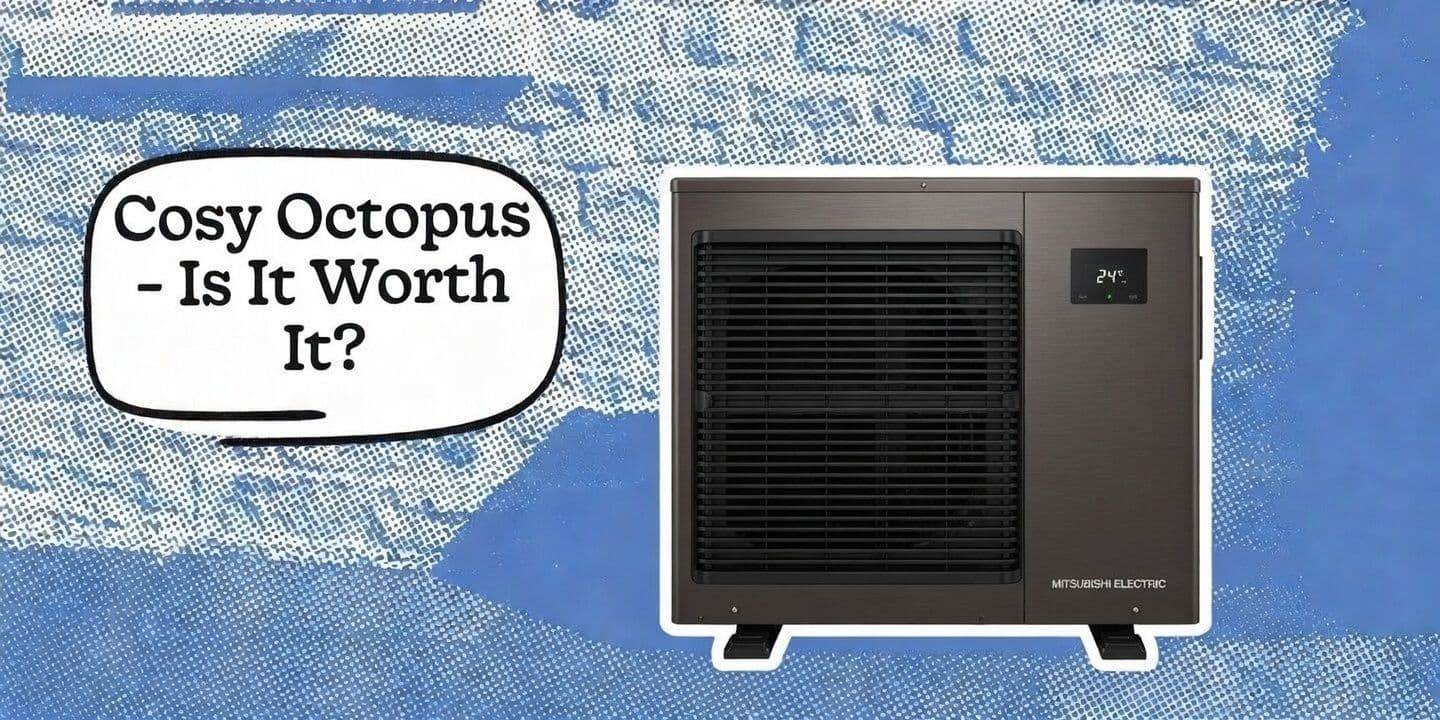

Most electricity tariffs follow the same tired formula - use power when you need it, cross your fingers, then wince when the bill lands.
Cosy Octopus tries something smarter.
Instead of charging the same old rate around your day, it rewards households that can shift energy use into cheaper off-peak windows - especially homes with heat pumps or electric heating.
On paper, that sounds great. Cheaper electricity, smarter heating, lower running costs. Lovely.
But real life is messier than tariff marketing. Homes don’t always hold heat properly, people don’t always stick to perfect schedules, and peak-time usage has a habit of sneaking back in.
So, is Cosy Octopus actually worth it? Or is it just another clever-looking tariff that only works if your life behaves like a spreadsheet?
Check Octopus Energy rates in your area.
Get £50 credit when you switch to Octopus. Existing customer? You may benefit too. T&Cs apply. One switching offer per household.
Referral disclosure: using our Octopus referral link may give you a referral credit, and we may receive a referral reward.
At a Glance:
Yes - if you’ve got a heat pump, decent insulation, and enough flexibility to make the cheap-rate windows work for you.
No - if your home holds heat badly or your usage stays stubbornly locked into peak hours.
The verdict - a genuinely good tariff for the right household, but not some magical bill-destroying cheat code.
What is Cosy Octopus?
Cosy Octopus is Octopus Energy’s smart tariff for homes that heat with electricity rather than gas - especially heat pump and electric boiler households.
Instead of giving you one standard rate all day, it offers three cheaper electricity windows designed to help you run your heating when power is cheaper and avoid the more expensive evening peak.
That’s really what the tariff is all about: timing.
If your home can be warmed up in advance and hold onto that heat reasonably well, Cosy Octopus can work very nicely.
If your usage is chaotic and your heating kicks in hardest at the wrong times, it starts to look less clever.
There are no exit fees, no long lock-ins, and no need to pretend this is more complicated than it is.
It’s simply a tariff designed to reward households that can shift demand and use electricity more strategically.
So no, it’s not your standard “leave everything on and hope for the best” tariff.
It’s a more hands-on deal - but for the right setup, that effort can pay off.
How does Cosy Octopus work?
Cosy Octopus splits the day into cheaper and pricier electricity periods, so the goal is simple: use more power when rates are low, and avoid the expensive peak where you can.
You get three cheaper-rate windows each day:
4am–7am
1pm–4pm
10pm–12am
That adds up to eight off-peak hours daily.
There’s also a peak period from 4pm–7pm, when electricity is at its most expensive - right when everyone gets home and starts hammering the grid.
That’s what makes Cosy Octopus different from a typical EV tariff.
Instead of one big cheap overnight slot, it spreads the lower rates across the day to better suit heat pumps and electric heating, which often work best little and often rather than all at once.
In short: heat your home during the cheaper windows, ease off during peak time, and the tariff starts to make sense.
Who is Cosy Octopus best for?
Cosy Octopus works best when your home can shift heating into the cheaper windows without sacrificing comfort.
That makes it a strong fit for heat pump homes, electric boiler households, and other properties that rely on electric heating rather than gas.
It also suits homes with decent insulation, where you can warm the place up cheaply and let it hold that heat through the pricier hours.
It is especially useful if you are home during the day, since that afternoon cheap window can be genuinely handy, and if you are happy to tweak timers or smart controls to get the best out of it.
In short, Cosy Octopus is best for households that can actually use the tariff strategically, rather than just hoping the cheap windows magically save them money.
Best for / not ideal for:
Best for - Heat pump homes, well-insulated properties, households with flexible heating schedules, and people happy to use smart controls.
Not ideal for - Draughty homes, heavy peak-time users, or households whose setup is better suited to solar, battery, or EV-focused tariffs.
Who should probably avoid Cosy Octopus?
Cosy Octopus is not for everyone.
If your home loses heat quickly, you may end up running heating during the expensive evening peak - which rather defeats the point.
The same goes if you do most of your electricity use between 4pm and 7pm, because that is when the tariff gets costly.
It is also not ideal if you want something completely hands-off.
Cosy Octopus works best when you are willing to use timers, apps, or smart controls to shift demand into the cheaper windows.
And if your setup is more EV-first or solar-and-battery-led, there are often better options.
EV households may get more value from a tariff with a longer overnight cheap window, while solar and battery homes may be better on something like Octopus Flux or a more export-friendly setup.
Reality check - if your usage cannot flex, Cosy Octopus can look clever on paper and underwhelming on the bill.
Related reading:
Is Cosy Octopus actually worth it?
For the right home, yes - Cosy Octopus can absolutely be worth it.
If you have a heat pump, decent insulation, and the ability to shift heating into the cheaper windows, it can be a very effective way to cut running costs.
For some households, that could mean savings of around £389 a year compared with a standard tariff.
That said, it is not some universal bill-slashing cheat code.
Cosy Octopus works best when your property, heating system, and daily routine all suit the tariff.
If your home loses heat quickly or most of your electricity use lands in the evening peak, the savings can shrink fast.
The good news is that once it is set up properly, the effort is fairly low. With smart controls or app scheduling doing most of the work, you should not need to redesign your life around it.
So our view is pretty simple: Cosy Octopus is genuinely worth it for many heat pump homes, but only when the setup matches the tariff.
If your home is more focused on solar, battery storage, or EV charging, there may be better options elsewhere.
Cosy Octopus pros and cons
Pros:
Eight cheaper-rate hours each day
Well suited to heat pumps and electric heating
No exit fees or long tie-ins
More flexible than a single overnight off-peak tariff
Can work very well with smart controls and scheduling
Cons:
The evening peak can be expensive
Not every home will benefit equally
More complex than a simple flat-rate tariff
Savings depend heavily on your usage pattern
May be beaten by better-fit tariffs for solar, battery, or EV-heavy homes
Cosy Octopus vs other Octopus tariffs
Cosy Octopus is good - but it is not automatically the best Octopus tariff for every home.
Vs Octopus Flux:
If you have solar panels and a battery, Flux is often the stronger fit.
It is built more around import and export optimisation, so homes generating their own electricity may get more value there than on Cosy.
Vs Intelligent Octopus Go:
If your setup revolves more around an EV than a heat pump, Intelligent Octopus Go will usually make more sense.
It is better suited to longer overnight charging windows, while Cosy is more geared towards spreading heating demand across the day.
Vs Outgoing Octopus or export pairings:
If solar export is a big part of your setup, it is worth looking at a more export-friendly arrangement.
Cosy can still work for cheap imports, but it is not the obvious first choice if maximising export value is the main goal.
The simple version - match the tariff to your setup, not the branding.
Cosy Octopus makes a lot of sense for heat pump homes, but solar, battery, and EV-heavy households may do better elsewhere.
Final verdict
Cosy Octopus is one of those tariffs that looks slightly chaotic until you realise it is actually built around a pretty sensible idea.
For homes with a heat pump, good insulation, and enough flexibility to use the cheaper windows well, it can be a very smart way to bring running costs down.
Once it is set up properly, it does not need to become your whole personality.
But it is not for everyone. If your home leaks heat, your usage is glued to the evening peak, or your energy setup is more about solar, batteries, or EV charging, there are stronger options out there.
The real verdict: Cosy Octopus is not the best tariff full stop - it is the best tariff for a specific kind of home. And if yours fits the brief, it can work very nicely.
Next Steps For Your Heat Pump Journey:
When planning to install a heat pump for your home, there are several important factors to consider. Make sure to refer to the following guides to help you make informed decisions:
To dive deeper into these topics, head over to our advice section or check out our YouTube channel to learn more.
Get A Quote From Us Today
Without boasting, get your new heat pump quote and buy from us, here’s why:
Gas Safe installation within 24 hours.
Thousands of satisfied customers with an average score of 4.9 on Trustpilot, surpassing the market leader.
Which? Trusted Trader: Heatable is proudly recognised as a Which? Trusted Trader.
Flexible payment options, including interest-free finance.
Up to 12-year guarantee on selected heat pumps.
Fixed price guarantee: No hidden costs.
Save your quote and decide later.
Get an instant fixed price on a heat pump, here.
Heat Happy.