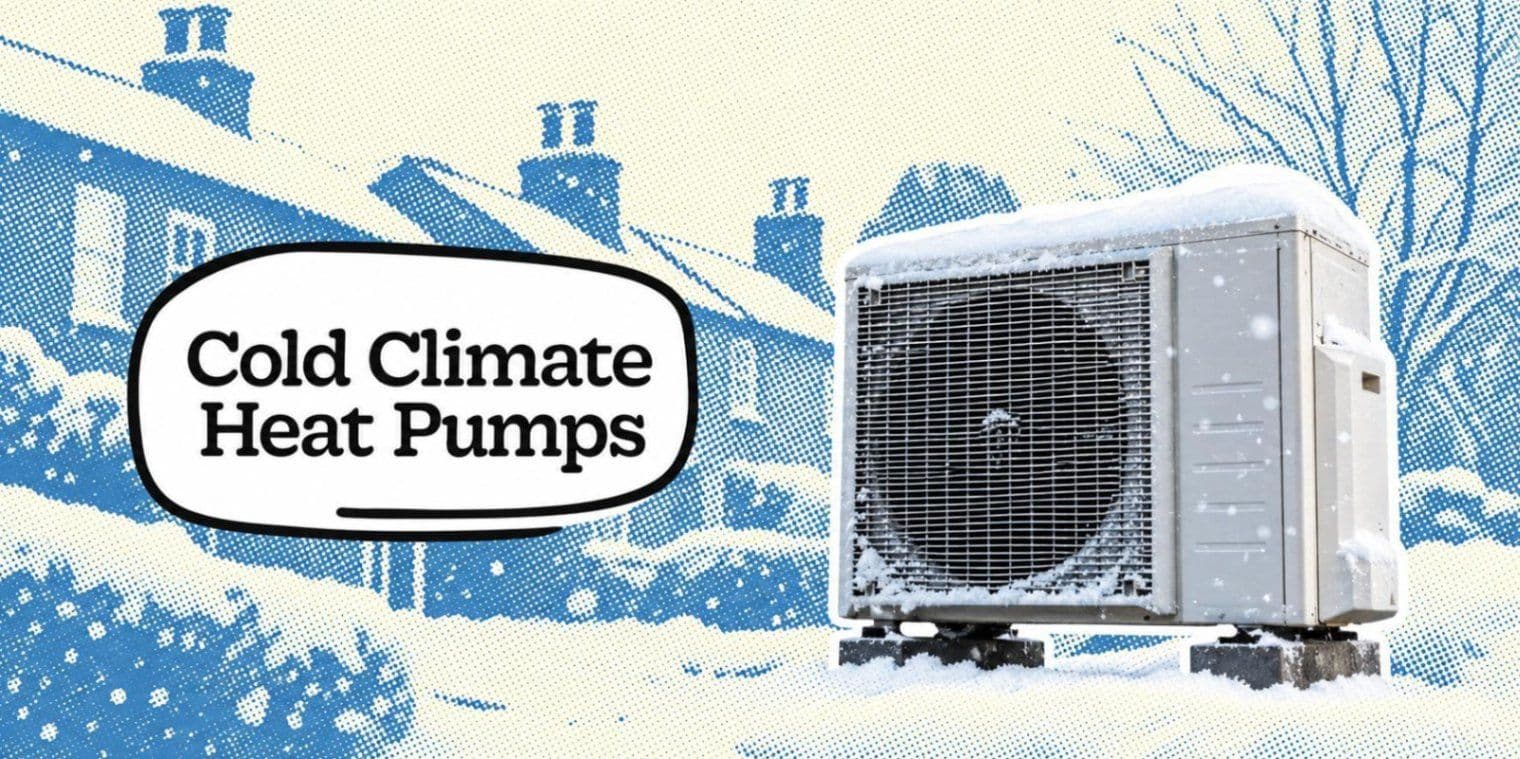

One of the more stubborn myths about heat pumps is that they stop working as soon as Britain gets properly cold.
It sounds plausible.
After all, an air source heat pump takes heat from the outside air, so what happens when that outside air is hovering around freezing and your patio furniture has developed its own layer of permafrost?
The slightly counterintuitive answer is that there is still plenty of usable thermal energy in cold air.
Modern air source heat pumps are specifically designed to extract it.
In fact, several of the heat pumps available to UK homeowners can continue operating at outdoor temperatures of -25°C or below. Vaillant states that its aroTHERM plus operates down to -25°C, while Daikin's latest Altherma 4 H can operate down to around -28°C.
For context, that is considerably colder than the conditions most British homes will ever encounter.
So, do you need a special "cold climate heat pump" in the UK?
Usually, no.
But cold-weather performance does matter, and some heat pumps handle falling temperatures considerably better than others.
Here's what you actually need to know.
Ready to make your home more energy-efficient and cut down on your heating bills? Get a heat pump quote today.
What is a cold climate heat pump?
A cold climate heat pump is essentially an air source heat pump engineered to maintain useful heating output and efficiency when outdoor temperatures fall well below freezing.
There isn't one universally meaningful UK definition that suddenly turns a normal heat pump into a "cold climate" model.
Instead, you should be looking at things like:
Minimum operating temperature
Heating capacity at low outdoor temperatures
COP at colder test conditions
Maximum flow temperature
Compressor design
Defrost performance
Refrigerant
How accurately the system has been sized for the property
That last one is particularly important.
A fantastic heat pump fitted to a badly designed heating system is still a badly designed heating system.
Do heat pumps actually work when it is freezing outside?
Yes.
Air at 0°C isn't devoid of heat.
In thermodynamic terms, absolute zero is approximately -273°C, so even freezing winter air contains thermal energy that a heat pump can collect.
The refrigerant inside the heat pump evaporates at extremely low temperatures, allowing it to absorb this energy before the compressor raises its pressure and temperature.
That heat is then transferred into the water circulating through your radiators or underfloor heating.
It is clever.
It is not magic.
And it doesn't require Bournemouth to suddenly acquire the climate of Benidorm.
💡See a Heat Pump in a Real UK Home
Want to see how a heat pump actually performs after installation? Read our real-world case study of Roger’s home, where we combined a Vaillant heat pump with solar panels and battery storage.
Do heat pumps actually work when it is freezing outside?
Yes.
Air at 0°C isn't devoid of heat.
In thermodynamic terms, absolute zero is approximately -273°C, so even freezing winter air contains thermal energy that a heat pump can collect.
The refrigerant inside the heat pump evaporates at extremely low temperatures, allowing it to absorb this energy before the compressor raises its pressure and temperature.
That heat is then transferred into the water circulating through your radiators or underfloor heating.
It is clever.
It is not magic.
And it doesn't require Bournemouth to suddenly acquire the climate of Benidorm.
How cold is too cold for a heat pump in the UK?
For a correctly specified modern system, typical UK winter weather isn't remotely approaching the equipment's absolute operating limit.
Take the Vaillant aroTHERM plus, one of the heat pumps we rate particularly highly.
Vaillant specifies operation down to -25°C, while the unit can also produce flow temperatures of up to 75°C.
Daikin's Altherma range goes further still in some configurations.
The newer Altherma 4 H can continue operating at approximately -28°C, according to Daikin's published specifications.
Even Daikin Altherma 3 models have published operating ranges down to around -25°C.
Temperatures below -20°C aren't exactly a routine Tuesday morning in Manchester.
In reality, most modern heat pumps can handle a British cold snap just fine.
The bigger question is whether the system has been sized and designed properly enough to keep your home warm without efficiency falling off a cliff.
That is where proper heat-loss calculations become important.
But don't heat pumps become less efficient when it gets colder?
Yes.
This part of the criticism is legitimate.
As the outdoor temperature falls, the heat pump has to work harder to move heat from the colder outside air into your warmer home.
The temperature difference it needs to overcome increases.
As a result, its coefficient of performance (COP) generally falls.
A heat pump that might produce four or five units of heat for each unit of electricity under milder conditions may produce less during a freezing spell.
That doesn't mean it has stopped working.
It means its efficiency changes with operating conditions.
Exactly how much depends on the heat pump, flow temperature and system design.
And this is why comparing heat pumps solely using a glorious headline COP measured under favourable laboratory conditions can be misleading.
The bigger issue is usually flow temperature
Cold outdoor temperatures are only half of the equation.
The other temperature that matters is the water your heat pump is being asked to produce.
A system supplying underfloor heating at 30–35°C has a much easier job than one desperately trying to feed undersized radiators with 65°C water.
The greater the temperature lift, the harder the compressor works and the lower efficiency generally becomes.
That is why a good heat-pump installation doesn't simply involve removing a boiler and attaching a heat pump to whatever happens to be there.
The installer should assess:
The property's heat loss
Individual room heat requirements
Radiator outputs
Pipe sizing
Required flow temperatures
Hot-water demand
Outdoor design temperature
Controls and weather compensation
Get those things right and a heat pump can operate steadily at relatively low temperatures for most of the year.
Get them wrong and even an excellent machine can end up performing like a very expensive garden ornament.
What happens when a heat pump freezes?
You may have heard that heat pumps "freeze up" during winter.
There is some truth hiding underneath the drama.
When the outdoor coil becomes very cold, moisture in the air can condense and freeze onto it.
Heat pumps are designed for this.
When necessary, the unit temporarily enters a defrost cycle, reversing operation sufficiently to warm the outdoor coil and melt the ice.
You may notice steam coming from the outdoor unit during this process.
That is generally normal.
It is not your heat pump quietly reenacting Chernobyl.
Good cold-weather performance therefore isn't simply about having a low quoted operating temperature. Defrost strategy and system design also affect real-world winter efficiency.
Best heat pumps for cold UK weather
There are several strong options currently available.
Vaillant aroTHERM plus
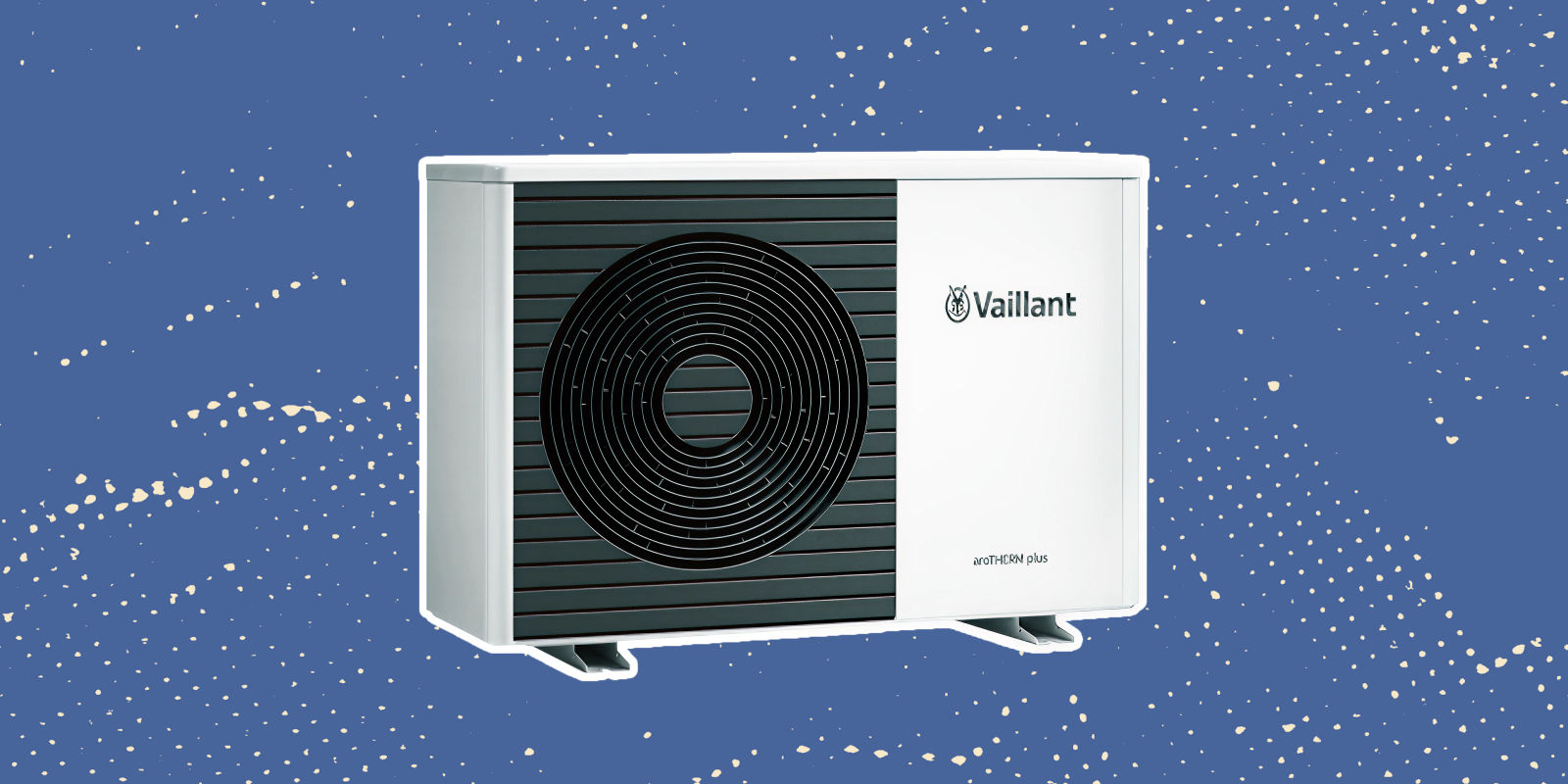
The Vaillant aroTHERM plus remains one of our favourite all-round heat pumps for UK homes.
Available in outputs from approximately 3.5kW to 12kW, it combines:
Operation down to -25°C
Flow temperatures up to 75°C
R290 natural refrigerant
A+++ heating efficiency
Excellent noise performance
Vaillant's established UK heating ecosystem
Vaillant also states that its heat-pump range has been tested down to -25°C.
The ability to reach higher water temperatures is particularly useful in retrofit properties.
That doesn't mean we recommend running an aroTHERM plus at 75°C all winter.
Efficiency will generally be much better at lower flow temperatures.
What it gives the system designer is headroom.
And in Britain's enormous stock of older houses, headroom is useful.
Daikin Altherma 4 H
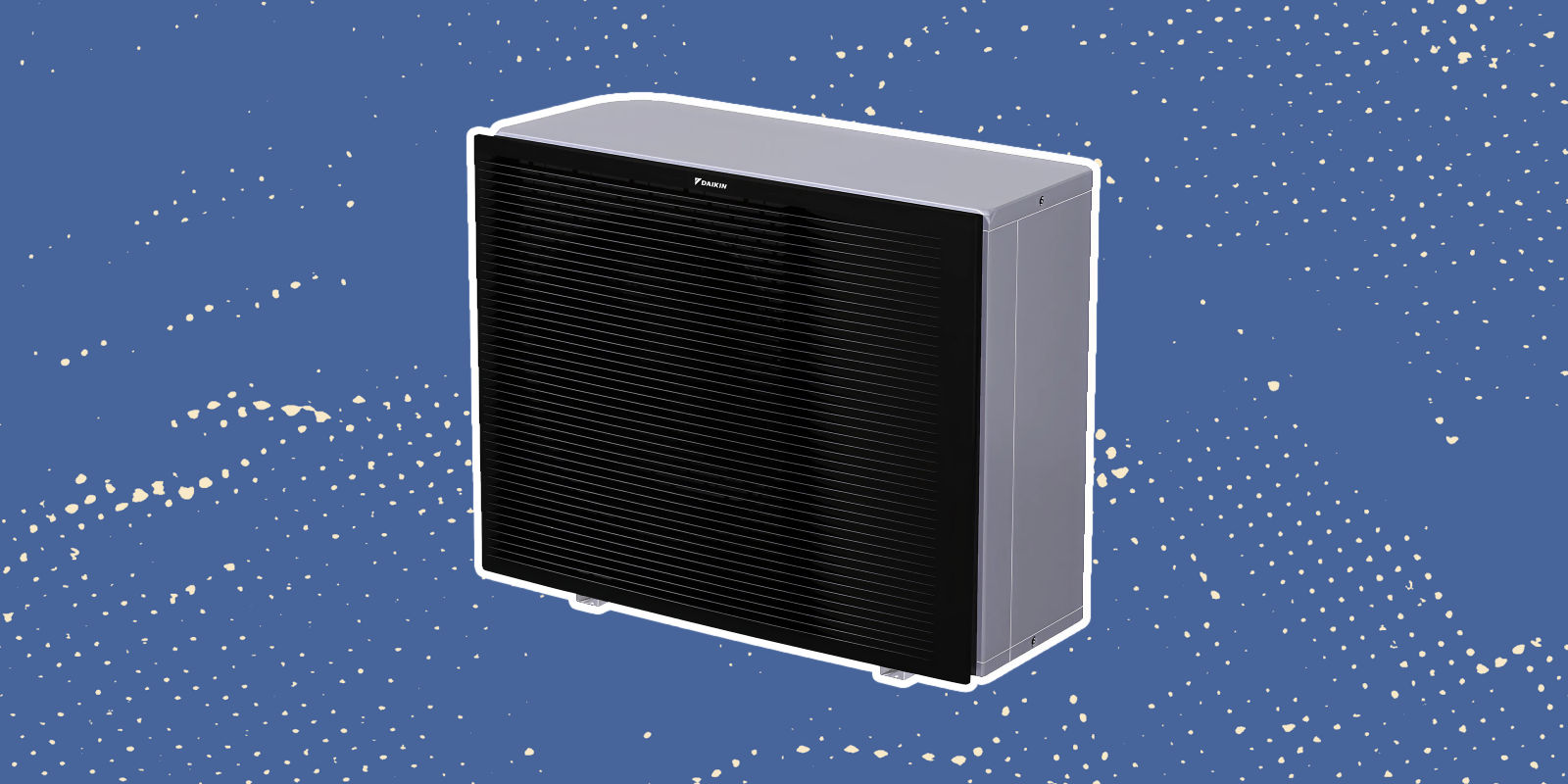
If cold-weather capability is particularly high on your shopping list, the Daikin Altherma 4 H deserves serious attention.
It is Daikin's newer R290 high-temperature system and can reportedly:
Continue operating down to approximately -28°C
Produce leaving-water temperatures of around 70–75°C even at -15°C outside
Provide heating and hot water
Integrate with Daikin's Onecta controls
Suit demanding retrofit applications
Frankly, if your garden reaches -28°C, the heat pump may no longer be the most interesting thing happening outside.
For older UK properties requiring greater heating output at colder conditions, though, the Altherma 4 H is a very capable bit of equipment.
Bosch Compress 5800i AW
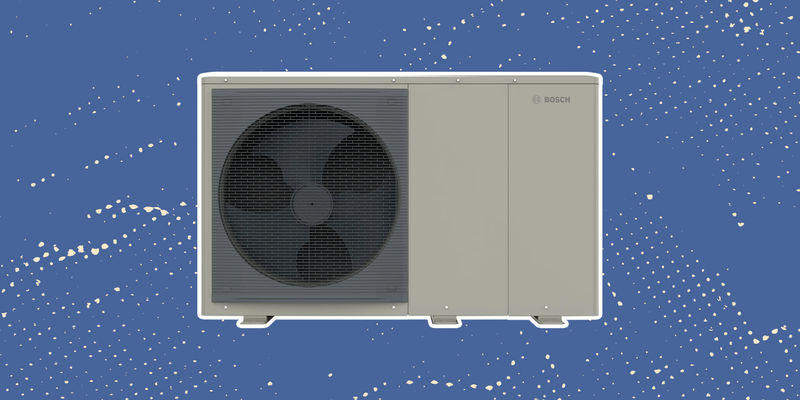
The Bosch Compress 5800i AW is another strong retrofit option.
It offers:
4kW, 5kW and 7kW models
Flow temperatures up to 75°C
R290 refrigerant
A+++ efficiency at lower flow temperatures
Particularly low noise levels
Compact installation options
Its main limitation is simply capacity.
With the range currently topping out around 7kW, it won't be appropriate for every large or high-heat-loss property.
For smaller and medium-sized homes, however, it is an exceptionally polished heat pump.
Samsung EHS Mono R290
The Samsung EHS Mono R290 is particularly interesting for homes requiring more output.
Samsung offers a considerably broader capacity range than Bosch, while retaining high-temperature capability and modern connected controls.
That makes it an attractive option for:
Larger properties
Higher heat-loss homes
Smart-home users
Retrofit installations requiring higher flow temperatures
Our main caution is that Samsung offers numerous controller, cylinder and accessory combinations, so quotations need to be compared carefully rather than simply comparing the outdoor box.
Which cold climate heat pumps does Heatable install?
At Heatable, we don't start with a favourite badge and then attempt to make your house fit around it.
The right heat pump depends on the property.
Our current heat-pump range includes leading systems from manufacturers such as Vaillant, Bosch and Samsung, with different output ranges and system configurations available depending on your home's requirements.
The important part happens before the shiny new box arrives.
Your system needs to be designed around the actual heat loss of your home so that it can maintain the required indoor temperature during the colder conditions used for the system design.
That might mean a compact Bosch system in one property, a Vaillant aroTHERM plus in another or a higher-output Samsung system somewhere else.
Heat pumps aren't trainers.
Buying the most expensive one doesn't automatically make it the best fit.
Are heat pumps suitable for Scotland and northern England?
Absolutely, provided the system has been correctly designed.
Colder parts of Scotland obviously experience lower winter temperatures than southern England, so the property's local design conditions need to be incorporated into the heat-loss calculation.
That can result in:
A larger heat pump
Different radiator sizing
Different design flow temperatures
Greater attention to defrost drainage and outdoor positioning
But that is an engineering and sizing question, not evidence that heat pumps somehow stop working north of Watford.
Heat pumps are already extensively used in considerably colder European climates than Britain's.
Are UK homes too old for heat pumps?
Not inherently.
This is another claim that tends to bundle several separate issues together.
An older home may:
Lose more heat
Have smaller radiators
Have narrow heating pipework
Need higher water temperatures
Have limited cylinder space
Those can make a heat-pump conversion more involved.
But "old house" doesn't automatically mean "heat pump unsuitable".
Modern high-temperature systems such as the Vaillant aroTHERM plus, Bosch Compress 5800i AW and Daikin Altherma 4 H have made retrofit installations substantially more flexible.
You may still need some radiator replacements or other heating-system improvements.
The correct answer comes from surveying the house rather than guessing from its birthday.
Should you oversize a heat pump for cold weather?
No.
This is where sensible concern about winter performance can produce a bad solution.
Buying a substantially oversized heat pump "just in case" isn't necessarily safer.
An oversized system can cycle more frequently during milder weather, potentially reducing efficiency and increasing wear.
The aim is to select equipment capable of satisfying the building's calculated design heat loss under the appropriate local outdoor conditions.
Neither too small nor comically large.
Goldilocks would have made an excellent heating engineer.
Cold climate heat pumps: the Heatable verdict
Modern heat pumps can comfortably operate in British winter weather.
The strongest models aren't scraping by at 0°C either.
Vaillant's aroTHERM plus is specified for operation down to -25°C, while some Daikin systems reach approximately -28°C.
That doesn't mean outdoor temperature is irrelevant.
Heat-pump efficiency and available capacity change as temperatures fall, and the heating system still needs to be designed accordingly.
But the widespread idea that air source heat pumps simply don't work when Britain gets cold is outdated.
The more important questions are:
Has the property had a proper heat-loss calculation?
Is the heat pump correctly sized?
Can the radiators deliver enough heat at an efficient flow temperature?
And has the whole system been designed properly?
Get those right and there is very little about a normal British winter for a modern heat pump to be frightened of.
Even if the rest of us are already complaining about it.
Thinking about replacing your boiler with a heat pump?
Heatable can design a system around your home's actual heating requirements and recommend an appropriate heat pump from our range rather than simply throwing the biggest unit available at the problem.
Next Steps For Your Heat Pump Journey:
When planning to install a heat pump for your home, there are several important factors to consider. Make sure to refer to the following guides to help you make informed decisions:
To dive deeper into these topics, head over to our advice section or check out our YouTube channel to learn more.
Get A Quote From Us Today
Without boasting, get your new heat pump quote and buy from us, here’s why:
Gas Safe installation within 24 hours.
Thousands of satisfied customers with an average score of 4.9 on Trustpilot, surpassing the market leader.
Which? Trusted Trader: Heatable is proudly recognised as a Which? Trusted Trader.
Flexible payment options, including interest-free finance.
Up to 12-year guarantee on selected heat pumps.
Fixed price guarantee: No hidden costs.
Save your quote and decide later.
Get an instant fixed price on a heat pump, here.
Heat Happy.